
The biggest signup bonus isn't necessarily the best referral deal. A large one-time reward can pay less over a year than a modest recurring fee share from users who stay active. But recurring income isn't automatically better, either. If your audience buys crypto once and stops, a trading-fee commission may produce very little.
Crypto referral programs differ on three practical questions: whether they pay once or repeatedly, what the new customer must do, and when qualification windows or withdrawal restrictions apply. A registration, verified account, funded wallet, and completed trade are different events. Creators who treat them as interchangeable end up promoting rewards their readers never qualify for.
Gemini, Binance.US, Kraken, Uphold, Crypto.com App, Coinbase, and Crypto.com Exchange illustrate those differences. The useful comparison isn't the largest advertised amount. It's the payout structure that matches your audience's existing behavior.
Track qualified referrals and payable commissions, not clicks alone. If your reporting can't distinguish those events, find a replacement for HubSpot attribution before scaling promotion.
Table of Contents
1. Gemini
Where the simplicity helps
2. Binance.US
Treat the hold as part of the offer
3. Kraken
A bonus isn't a staking return
4. Uphold
Explain the purchase, not just the deposit
5. Crypto.com App
Don't sell the top milestone as the standard reward
6. Coinbase
Advanced requires an Advanced audience
7. Crypto.com Exchange
Compare the fee base and the commitment
Crypto Referral Programs Compared
Matching Payout Structure to Your Audience
Compare payable income, not advertised rewards
1. Gemini
Gemini fits a straightforward, one-time referral pitch: both participants receive a reward after the new customer completes qualifying trading activity. It's easier to explain than a fee-share arrangement, but it doesn't generate continuing creator income from that customer's later trades.
The offer described by Gemini gives the referrer and eligible new US customer a $50 crypto reward each when the new customer trades at least $100 within their first 30 days. The referral must apply to a new account, and the current terms determine eligible regions and offer availability.
Where the simplicity helps
For a beginner already planning to purchase crypto, the qualifying action is understandable. The creator can explain the account requirement, trading threshold, and deadline without introducing a token lockup or an ongoing commission calculation.
Strength: The two-sided reward gives the new customer a reason to use the referral, rather than benefiting only the promoter.
Restriction: Signing up isn't enough. The customer must complete qualifying trading activity.
Payout distinction: A crypto reward isn't a guaranteed cash payment, and its value can change after receipt.
I'd use this structure for purchase-focused educational content, not passive-income content. Readers comparing crypto interest platforms need to understand that a referral bonus and ongoing earnings from deposited assets are separate propositions.
The main operational weakness is that every successful referral finishes its earning cycle after qualification. You'll need new eligible customers to keep generating new rewards, and you should recheck the offer before reusing an older tutorial or campaign.
2. Binance.US
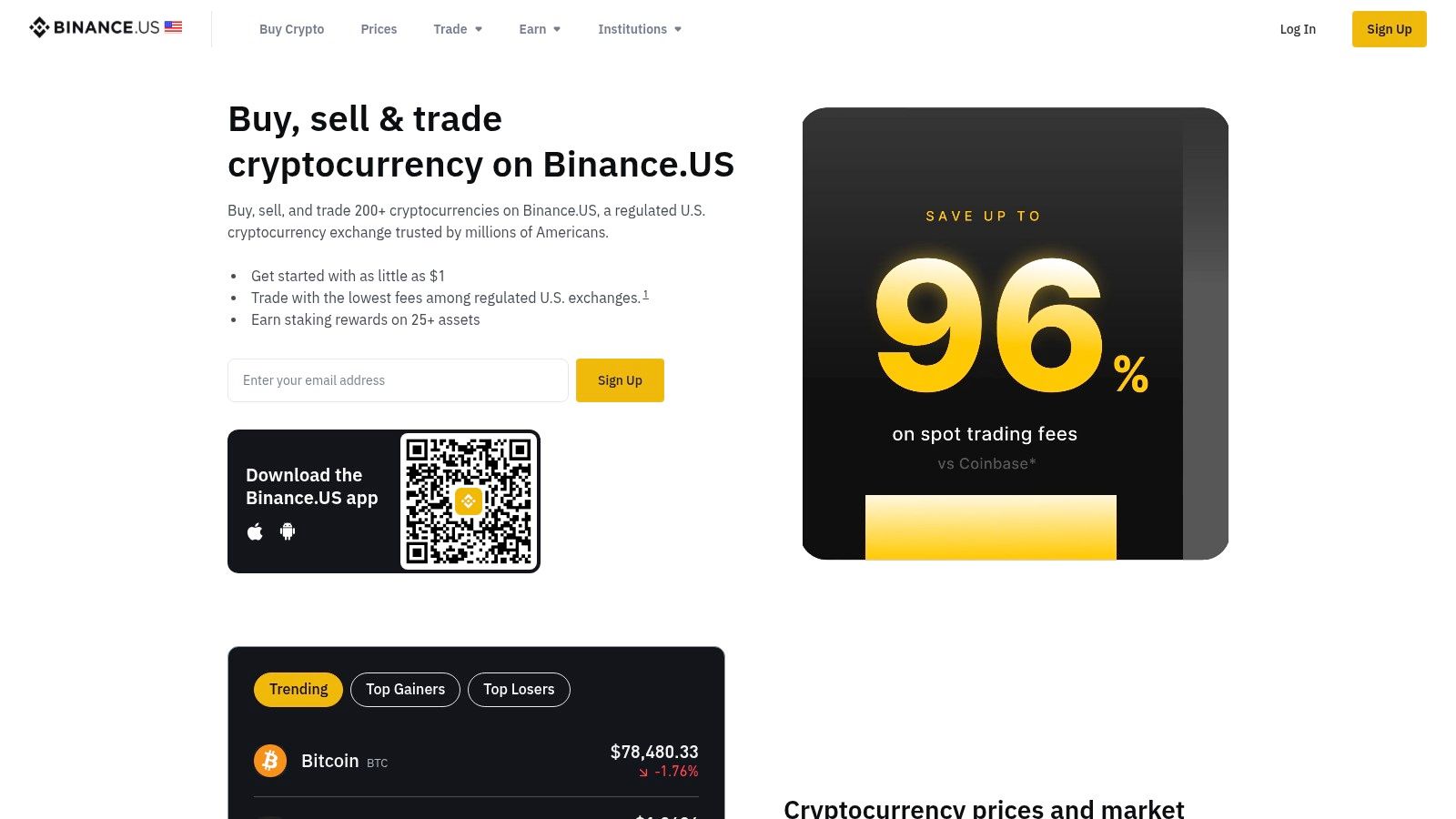
A stated reward doesn't tell you when you can withdraw it. Binance.US separates earning the referral reward from gaining withdrawal access, which matters when creators plan campaign cash flow.
Binance.US advertises $10 for each participant when the referred customer registers through a referral link, code, or QR code, passes Advanced Verification, and completes at least $100 in qualifying crypto purchases or spot trades within 30 days of verification; rewards are subject to a 30-day withdrawal hold.
That sequence should appear in promotional copy, not just in a footnote. A reader who registers but delays verification hasn't completed the same journey as someone who verifies and trades.
Useful feature: Referral links, codes, and QR codes support different distribution channels, including community events.
Operational benefit: Account-level referral tracking helps distinguish an invitation from a completed referral.
Friction: Identity verification, qualifying activity, and the withdrawal hold all stand between the first click and usable proceeds.
Treat the hold as part of the offer
For creators, this is a one-time acquisition reward, not recurring revenue. Continued customer trading doesn't turn the described referral offer into a fee-sharing arrangement.
For new users, the sensible question is whether they wanted to make the qualifying purchase anyway. Trading solely to earn a bonus introduces costs and market exposure that the headline reward doesn't explain.
Program terms can change or be suspended. Keep qualification instructions separate from evergreen platform education so you can update the offer without rewriting an entire onboarding guide.
3. Kraken
The reward amount is only part of Kraken's offer. Signup route and qualifying activity determine whether a referral counts, so creators should explain the app-based process before quoting the bonus.
Kraken describes a fixed $20 reward for eligible users who sign up through the app, deposit cash, and trade crypto within the offer's stated window. Deposit and trading thresholds can vary by offer. Direct readers to the terms shown in their app rather than presenting one threshold or deadline as universal.
The published guidance excludes Maine and New York, and stablecoin trades and bundles don't qualify. Readers focused on stablecoins should know that trading a dollar-linked asset won't meet the stated activity requirement.
Practical rule: Explain the qualifying app signup route first. An account opened through another route may not count toward the referral.
A bonus isn't a staking return
Kraken's referral offer suits readers who already plan to fund an account and trade. Readers primarily interested in earning yield may be better served by comparing crypto staking platforms, while keeping referral bonuses separate from potential investment returns.
The app's referral status helps users track progress, but visible progress doesn't guarantee final payout approval. Explain the deposit-and-trade sequence, point readers to their specific offer terms, and avoid promising a settlement date those terms don't state. The trade-off is a fixed reward with restrictions on signup route and qualifying assets.
4. Uphold
Uphold's referral promotion pays in BTC, so the reward's dollar value can rise or fall after it is received. For eligible US residents outside New York, the described offer requires signing up through a personal referral link, completing verification, funding the account with at least $100, and making a qualifying purchase of at least $100 from national currency into crypto within 30 days. Check the offer's terms before acting, since promotions can change or end.
Explain the purchase, not just the deposit
Spell out the steps for invitees:
Referral entry: Use the personal referral link. Don't assume an existing account can be attached later.
Account readiness: Complete verification before relying on eligibility.
Qualifying transaction: Make the required national-currency-to-crypto purchase. A transfer into the account alone does not satisfy this step.
Reward asset: The reward is credited in BTC to the participant's Uphold wallet, where its market value can fluctuate.
This is a one-time promotion, not a continuing share of a referred customer's later activity. It fits acquisition-focused content better than a campaign promising recurring creator income.
The required funding and purchase add friction for invitees who weren't already planning to buy crypto. Explain that distinction plainly, and encourage readers to consider the purchase, its fees, and their own financial objective before pursuing the referral reward.
5. Crypto.com App
Crypto.com App uses milestone-based bonuses, not an ongoing fee share. More qualifying activity can lead to a larger reward during the offer window, but that isn't the same as earning indefinitely from a referred customer.
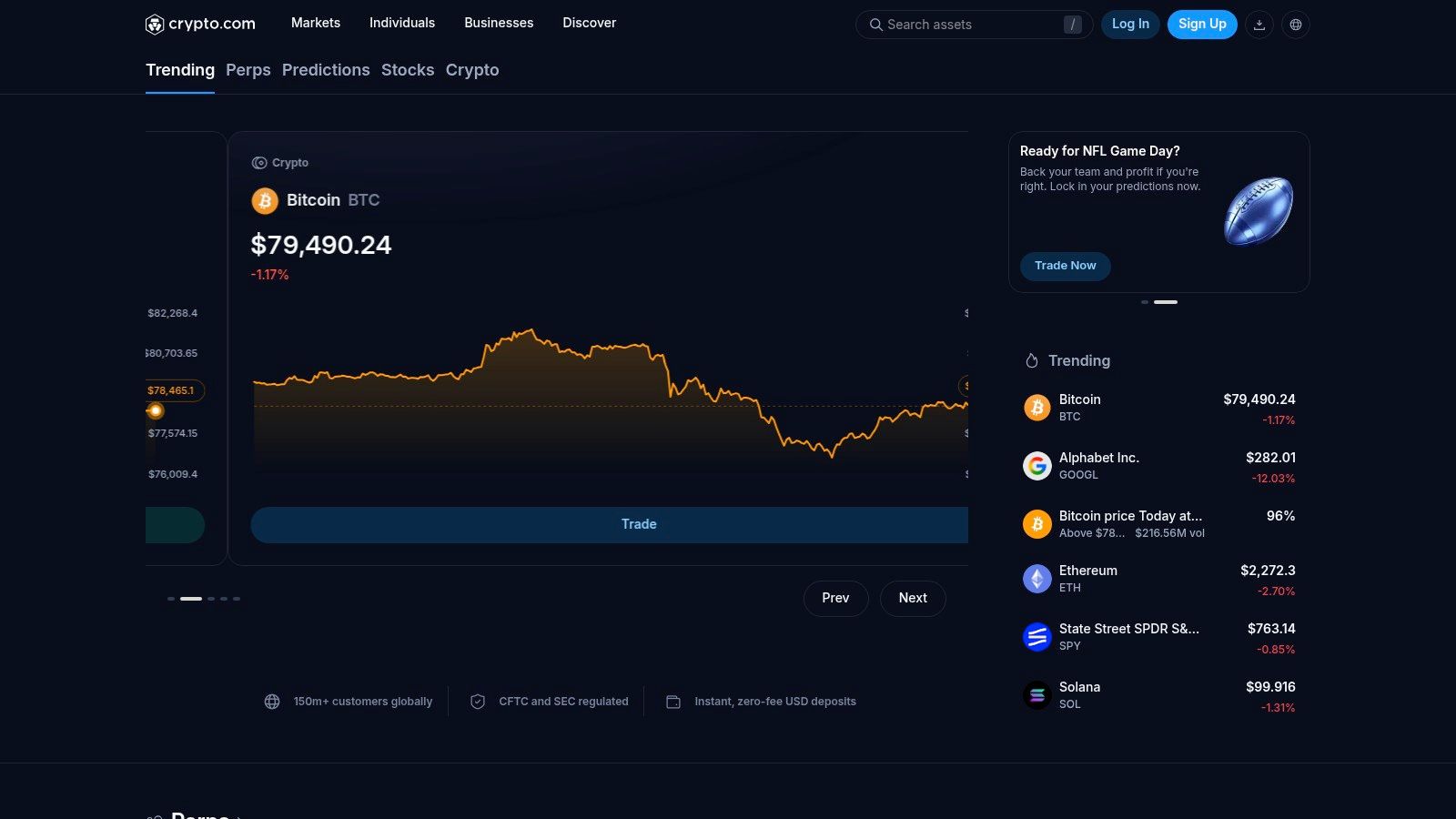
For the US offer, Crypto.com lists rewards for each participant of $5 at $100, $15 at $500, $25 at $1,000, and $75 at $5,000 in eligible trading volume during the 30 days after KYC approval. Rewards are credited to the app wallet when qualifying milestones are reached.
Stablecoin trading is excluded. That makes this a poor match for a campaign aimed specifically at readers who only want to move stablecoins into a savings-oriented strategy.
Don't sell the top milestone as the standard reward
The useful feature is flexibility: eligible customers can qualify at different activity levels. The drawback is that headline promotion can easily obscure how much trading the higher milestone requires.
Audience fit: Readers who already plan eligible crypto transactions during onboarding.
Main restriction: Only eligible volume counts, not every transaction displayed in the account.
Offer conflict: Referral enrollment may conflict with a separate welcome offer, so compare eligibility before enrolling.
For readers exploring crypto savings accounts, distinguish a trading-volume promotion from earnings on a retained balance. They reward different behavior.
Creators should also avoid encouraging unnecessary turnover to reach a milestone. Trading costs and market exposure remain the customer's responsibility, while the promoter may receive compensation regardless of the customer's eventual investment outcome.
6. Coinbase
Coinbase makes the central comparison unusually clear because its general referral offer and Coinbase Advanced referral program use different payout structures. Choosing the right track matters more than choosing the brand alone.
Coinbase offers a general referral program for eligible new customers who open an account and make a qualifying crypto purchase using an eligible payment method, while its separate Advanced program pays referrers 30% of qualifying exchange trading fees in USDC. General referral amounts vary by country and referral link.
For beginner-focused content, the standard offer may be easier to explain. A qualifying purchase completes the essential acquisition action, and the customer doesn't need an ongoing trading habit to make the structure relevant.
Advanced requires an Advanced audience
The recurring track makes more sense when readers already use eligible Advanced trading. Simple Trade and Prime purchases don't qualify for that fee share, so a familiar Coinbase account alone isn't enough.
Standard track: Check the country-specific amount, eligible payment method, and purchase requirements in the actual referral offer.
Advanced track: Explain eligible trading activity and the fee base rather than implying a percentage of trading volume.
Creator restriction: Review the Advanced program's promotional and marketing rules before distributing content or buying traffic.
A recurring commission is only valuable when the audience naturally performs the activity that generates it. Don't turn a beginner into an active trader to improve referral economics.
Readers comparing cryptocurrency exchanges for beginners should first choose the interface and trading approach they understand. The creator's preferred payout model shouldn't determine the customer's product choice.
7. Crypto.com Exchange
Crypto.com Exchange is separate from Crypto.com App, and its recurring commission comes with a material activation requirement. Sending an App user to Exchange terms, or describing the offers as interchangeable, creates misleading expectations.

Under the described Crypto.com Exchange program, the referred user must complete Advanced KYC and lock up at least 1,000 CRO for the referrer's CRO bonus and trading commission to become payable; the referrer may receive 50% of the referred user's net trading fees for 12 months.
That's recurring, but time-limited. It also depends on attracting customers willing to meet the lockup requirement, not just people willing to register.
Compare the fee base and the commitment
The CRO requirement creates token-price exposure alongside the referral opportunity. A creator should explain that commitment before discussing potential commissions, and US users should confirm Exchange availability in their account.
YieldSeeker offers a different recurring model: creators can earn 50% of yield fees from qualifying referrals under current terms while referred users keep funds invested. That means a share of platform yield fees, not deposits or all investment yield.
Trading-fee model: Creator income depends on eligible customer trading and the program's commission duration.
Yield-fee model: Creator income depends on qualifying invested funds generating platform yield fees.
Lockup-gated bonus: Qualification can require a separate commitment with its own financial risks.
For a broader review of crypto affiliate programs, compare those mechanics before comparing headline percentages. A generous share of fees won't help if your readers don't qualify, don't generate eligible fees, or shouldn't make the required commitment.
Crypto Referral Programs Compared
The headline reward does not show when creator income arrives. This comparison separates one-time participant rewards from recurring fee shares, then lists the action and timing conditions that determine whether a referral qualifies.
Program | Payout Type | Typical Qualifying Action | Qualification Window | Best For |
|---|---|---|---|---|
Gemini | $50 crypto reward for each participant | New customer trades at least $100 | First 30 days | Straightforward two-sided rewards |
Binance.US | $10 reward for each participant | Sign up, pass Advanced Verification, and complete $100 in qualifying purchases or trades | 30 days after verification | Referrals seeking a clearly stated dollar reward |
Kraken | Fixed $20 reward under the described offer | Sign up through the app, deposit cash, and trade crypto | Varies by offer; check in-app terms | App-based referrals where deposit and trade terms are acceptable |
Uphold | BTC reward paid to participants' Uphold wallets | Verify, fund with at least $100, and make a qualifying $100 crypto transaction | 30 days | Referrals comfortable with funding and buying crypto |
Crypto.com App | Tiered rewards for each participant, from $5 to $75 | Reach eligible trading-volume milestones | 30 days after KYC approval | Referrals with varying levels of trading activity |
Coinbase | Standard reward varies by country and referral link; Advanced pays 30% of qualifying trading fees in USDC | Make a qualifying crypto purchase, or trade eligible assets on Advanced | Varies by offer; no fixed window stated | Beginners or regular Advanced traders |
Crypto.com Exchange | CRO bonus and 50% of net trading fees for the referrer | Referred user completes Advanced KYC and locks up at least 1,000 CRO | Fee share lasts 12 months; other qualification timing not stated | Referrers with committed, active trading audiences |
One-time rewards depend on a referral completing the required action within the stated window. Recurring fee shares depend on qualifying activity after signup, and may be limited by a set commission period. Compare the qualification steps and payout timing before weighing the advertised amounts.
Matching Payout Structure to Your Audience
Headline reward size tells you little about long-term creator income. Match the payout to what your audience does: one-time bonuses suit people making an initial purchase, while recurring fee shares depend on continued qualifying activity.
Gemini, Binance.US, Kraken, and Uphold use one-time rewards in the offers described above. A deposit alone may not qualify; check whether the referral must also make a purchase or trade. Coinbase Advanced and Crypto.com Exchange offer fee shares tied to trading, so earnings depend on referred users continuing to trade and generating eligible fees.
Compare payable income, not advertised rewards
Before promoting a program, check the qualifying action, eligible regions, commission duration, settlement conditions, and payout asset. A recurring share can continue beyond a one-time bonus, but only while the program's terms and qualifying activity support it.
For acquisition campaigns: Track completed qualifications and payable rewards, not registrations alone.
For recurring campaigns: Monitor retained qualifying users and actual fee income. Do not assume attribution lasts indefinitely.
For every promotion: Disclose compensation and keep the applicable offer terms available.
For audiences who prefer holding stablecoins to trading, Yield Seeker offers a different product category. Its AI agent runs on Base, allocating USDC into curated, audited, low-risk vaults. The service is non-custodial, and users can withdraw funds and earned yield at any time, with no lockups. Yield varies, and automated allocation cannot remove DeFi protocol or execution risks.
Keep reward records, too. Kraken's tax guidance explains that US referral rewards can create ordinary income when received, while a later disposal can create a separate capital gain or loss. Tax treatment elsewhere may differ.
Program terms and regional eligibility change, so check the live offer before recommending it. Choose a product your audience would use without a bonus, then assess whether its payout structure fits your business.
Yield Seeker automates stablecoin yield through AI-managed allocation on Base, with funds remaining accessible to users. Its fit depends on whether your audience wants to hold stablecoins and pursue yield rather than trade for referral-linked fees.