
A teaching activity can be popular, engaging, and still produce little learning. A high-yield instructional strategy earns its place when it targets a clear learning goal, makes student thinking visible, and gives the teacher useful information for the next move. That standard matters because research has produced strong average effects for several instructional approaches, but those effects aren't guarantees for every class, subject, or assessment.
Robert Marzano's 2001 synthesis reviewed more than 100 independent studies and helped establish a research-based foundation for high-yield instruction. The later clarification that the literature identified 41 distinct strategies, rather than only the familiar nine, is a useful warning against treating a short list as a universal ranking. The original synthesis and percentile-gain figures are summarized in this instructional strategies document.
The eight approaches below are complementary, not competing recipes. Each one follows a practical decision cycle: explain the move, connect it to the available evidence, model classroom implementation, adapt it for learner differences, and finish with a fast formative check. Use student work, responses, and misconceptions to decide whether to continue, reteach, scaffold, or increase the challenge. If you're also teaching online, consider these methods alongside guidance on boosting engagement in virtual classes.
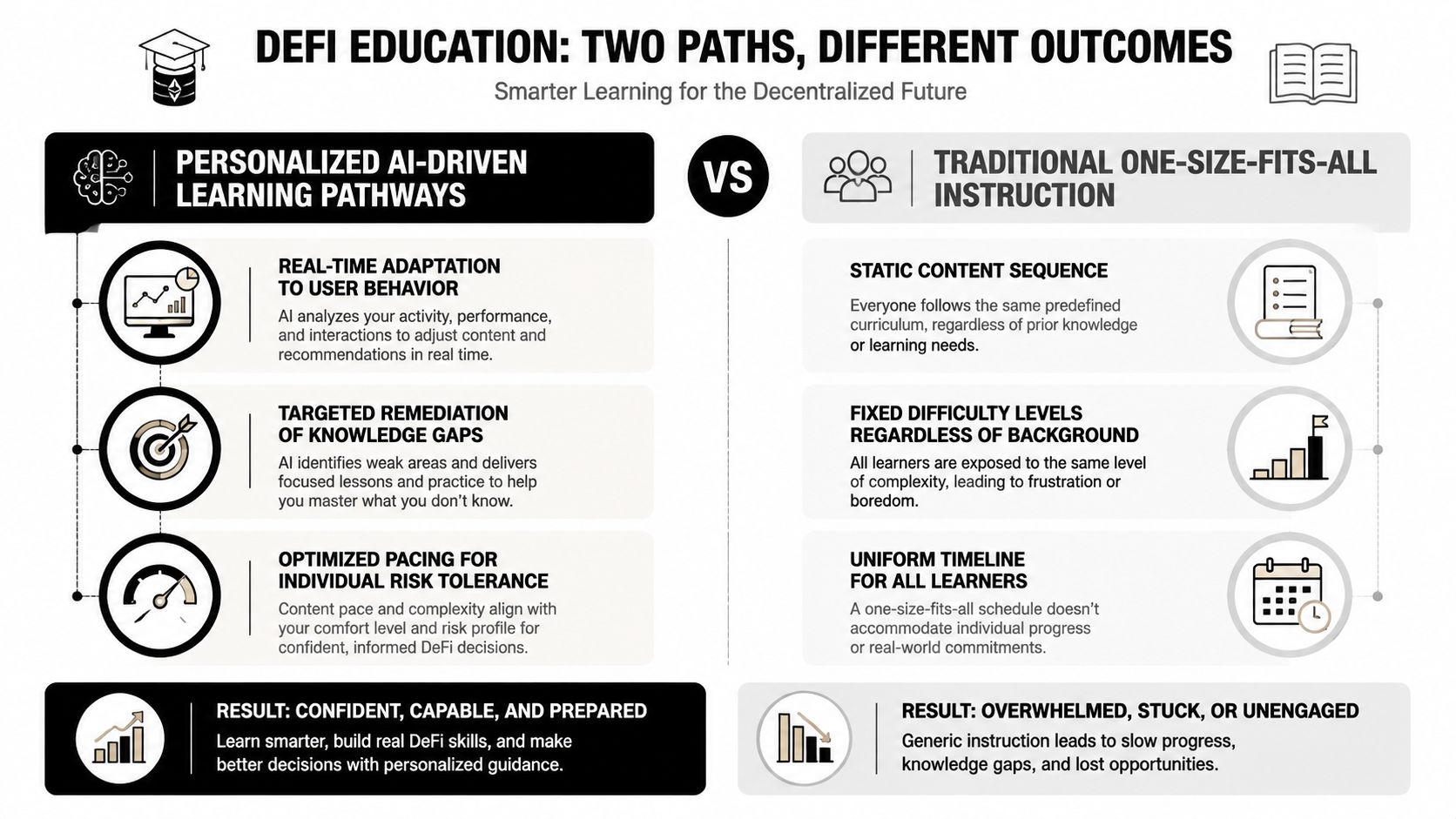
1. Personalized AI-Driven Learning Pathways
A student opens a data task and immediately chooses a visual explanation. Another starts with a worked example, while a third receives a more demanding dataset. The teacher's decision is not whether to personalize everything. It is which support helps each learner reach the same competency.
Begin by defining the intended performance. Then use a diagnostic question, brief task, or sample of prior work to identify gaps that may block progress. The pathway should adjust the sequence, support, or challenge while keeping the learning goal stable.
Practical rule: Personalization should change the support, sequence, or challenge. It shouldn't lower the learning goal.
The classroom decision cycle can run as follows:
Explain the move: Group learners by observable needs, such as vocabulary support, guided practice, or extension.
Use the evidence: Treat diagnostic responses and prior work as starting evidence, not as permanent labels.
Model implementation: Offer a visual explanation, worked example, or challenge task, then show students how to use the option.
Adapt responsibly: Provide a second explanation when an automated response is unclear, incomplete, or mismatched. Review access to challenging work across learner groups.
Check quickly: Ask every student to complete a common task so the teacher can compare understanding across pathways.
For data interpretation, students might choose one of three routes, then all explain what a graph shows, identify a limitation, and justify a conclusion. Their exit responses reveal whether the chosen support worked. The next decision is specific: continue, reteach a concept, add a scaffold, or increase the challenge.
Digital examples clarify the range of possible pathways. Yield Seeker's AI-driven DeFi agent presents information around a user's context. Khan Academy's mastery progression and Duolingo's adaptive practice show how systems can sequence practice. Teachers evaluating how teachers use AI tools should still inspect the explanations, tasks, and recommendations rather than treating a dashboard label as proof of learning.
The final check is student reasoning, not platform activity. If learners select different routes but produce evidence of the same competency, personalization is serving instruction. If outcomes diverge, revise the support or pathway before assigning more content.
2. Microlearning and Spaced Repetition
Brief lessons work best when each one has a clear job and returns at the right time. A two-minute explanation of one vocabulary term may teach more than a long presentation covering several disconnected ideas. Start by mapping prerequisites, because students cannot retrieve a concept they have not yet understood.
Use a repeatable decision cycle: prompt prior knowledge, introduce one idea, ask students to use it, then record the misconception that surfaces. The next review should change the demand. Students might recall the idea, distinguish it from a related concept, or apply it in a new context. Repeating the same explanation can hide confusion, while a small change in task makes understanding easier to inspect.
Evidence-based guidance supports short reviews of prior learning, small instructional steps, guided practice, frequent questioning, and review cycles. It also describes a high success rate of about 80% during learning, a benchmark based on observable student success rather than general engagement. The guidance on small steps, practice, questioning, and success rates is available from the Institute of Education Sciences. For a focused explanation of the method, teachers can browse the MasteryMind guide.
A simple classroom rhythm
A history teacher could introduce one cause of a conflict, ask students to explain it in their own words, and begin the next lesson with a short retrieval prompt. Later, students compare that cause with a different event. The content remains connected, but the task changes enough to show whether students understand the concept or have memorized a sentence.
Teachers can set up the cycle this way:
Identify dependencies: List the terms, procedures, or concepts students need first.
Keep each lesson focused: Set one clear outcome and one small application task.
Use low-stakes retrieval: Ask students to recall without notes, then correct errors promptly.
Space the reviews: Revisit the idea across later lessons instead of grouping all practice together.
Connect review to use: Place the old idea inside new content and ask students to apply it.
Adapt the prompt to the learner. Students who struggle to recall may need a cue or a shorter interval, while students who recall accurately can work with a less familiar example. The fast formative check can ask students to define the idea, show an example, and name a situation where it would not apply. A student who can define but not apply needs a different next step from one who applies the idea but confuses key terms.
Teachers using digital learning can also examine automated portfolio rebalancing as an example of how a complex process can be introduced through focused stages rather than one uninterrupted explanation.
3. Active Learning and Hands-On Practice
Active learning turns student thinking into visible evidence. Students learn a process more fully when they must predict, manipulate, explain, test, and revise. The teacher designs the decision, watches the reasoning, and responds while students can still change course.
The evidence is substantial. A meta-analysis of 225 studies found that active learning reduced failure rates by 55% and improved exam performance by 0.47 standard deviations compared with traditional lecturing. The evidence-based teaching summary from the Institute of Education Sciences reports these findings and their source context. These are average findings, not a guarantee for every activity. A poorly designed task can produce busywork, so the decision, evidence, and feedback must align.
Begin with a decision students can handle. In science, students might predict which variable will affect a reaction, run a controlled test, and explain whether the results support the prediction. In mathematics, students can compare two solution strategies and defend the more efficient choice. Each task gives the teacher something concrete to inspect, such as a prediction, calculation, explanation, or revision.
Students should show how they arrived at an answer, not only whether it is correct.
Build the classroom cycle in stages:
Make one manageable decision: Start with one variable, procedure, or worked example before combining elements.
Watch the evidence: Check predictions, representations, or explanations as students work.
Respond quickly: Correct a misconception or ask for stronger reasoning before students rehearse the error.
Require reflection: Ask what changed, what failed, and which evidence supports the conclusion.
Increase complexity deliberately: Combine skills only after students show control of the first one.
Adapt the task to the learner. A student who records the right result but cannot explain it needs conceptual questioning. A student with sound reasoning and an inaccurate calculation needs procedural correction. The fast formative check can require every student to submit a prediction, result, and one-sentence explanation. Sort the responses by the next teaching move, then adjust the following task.
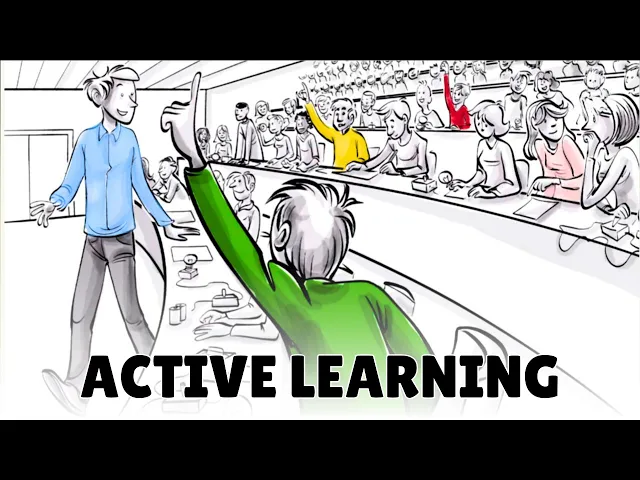
For an accessible visual prompt, the video below illustrates active participation and can support discussion before students complete their own practice. It should supplement, not replace, prediction, testing, and revision.
4. Scaffolding and Graduated Support Structures
Scaffolding gives students temporary assistance while keeping the final expectation visible. A model, sentence frame, checklist, partially completed example, hint, graphic organizer, or limited set of choices can reduce unnecessary difficulty. The support must remain adjustable. It should match what students can do now and decrease as they gain independence.
Begin by identifying the decisions inside the task. In an argument, students may need to state a claim, select relevant evidence, explain the connection, and address a counterpoint. Support one decision at a time rather than simplifying the entire assignment. This keeps the learning goal intact while making the next move clear.
Remove support based on evidence
Model how to select evidence, complete one example with the class, and then give pairs a partially completed organizer. Later, provide a blank organizer, followed by an opportunity to construct the argument without one. This sequence is not a fixed timetable. After each attempt, inspect student work and decide whether the next scaffold should remain, change, or disappear.
Use the same learning goal while varying the route:
For beginners: Show the relevant information first and provide step-by-step prompts.
For developing learners: Remove selected prompts and ask students to explain each decision.
For advanced learners: Offer an open problem, several methods, or a requirement to critique the model.
For students with language needs: Add sentence frames, preview vocabulary, and allow oral rehearsal.
For experienced students: Let them skip introductory guidance, then confirm readiness through the task.
The evidence is the quality of student work, not just completion speed. If many students stop at the same step, the scaffold may be unclear or may have been removed too soon. If students follow it mechanically without understanding, it may be doing the thinking for them.
Adapt the next move to the learner. A student who selects suitable evidence but cannot explain its relevance needs a prompt for the connection. A student with a sound explanation but weak organization needs procedural support. A student who works independently may need a less structured problem.
Finish with a fast formative check: students complete a new, comparable example independently, without the scaffold. Their responses show whether the support built competence or only helped them follow directions.
5. Socratic Method and Guided Discovery
Strategic questions can reveal whether students understand a principle or are repeating a familiar answer. The Socratic method works when questions are sequenced toward a learning goal. Randomly asking “Why?” isn't guided discovery. Students need prompts that move from observation to explanation, evidence, and transfer.
Consider a literature discussion. Instead of asking whether a character is trustworthy, begin with what the character did, ask which detail matters most, invite students to compare an alternative interpretation, and then require them to defend a conclusion with evidence. The teacher can provide information when necessary, but the questions make the reasoning visible.
A strong sequence often includes:
Clarification: What does this term or statement mean in this context?
Evidence: Which detail supports your interpretation?
Connection: How does this compare with an earlier idea?
Challenge: What might someone who disagrees point out?
Transfer: Would the same reasoning work in a different situation?
The approach needs careful adaptation. Some students may need questions in writing before speaking. Others may benefit from rehearsal with a partner, vocabulary support, or a choice between two possible starting claims. A teacher shouldn't mistake silence for deep thinking, or quick participation for understanding.
Ask the next question that exposes the reasoning, not the question that produces the fastest answer.
In a financial literacy lesson, students might first explain what an advertised return means, then identify assumptions behind the figure, and finally name risks that could change the outcome. In a programming lesson, students can predict what a line of code will do before running it, then revise the prediction after observing the output.
The quick check is a written “because” response. Give students a claim and ask them to support it with one piece of evidence and one qualification. Review the reasoning, not merely the conclusion. If students can answer factual prompts but cannot justify an inference, the next lesson should model justification before adding more content.
6. Multimodal Instruction and Cognitive Load Theory
Multiple modes help when each mode performs a clear instructional job. A diagram can show relationships, narration can explain a process, text can define terms, and an interactive task can let students manipulate variables. Adding every available format at once can overwhelm learners, especially when visual elements compete for attention.
Cognitive Load Theory gives teachers a practical design question: which information is essential, which supports the task, and which is decorative? A mathematics animation showing how a graph changes can support understanding. Decorative motion, crowded labels, and repeated text can pull attention away from the relationship students need to see.
A teacher explaining compound growth might display a clean graph, narrate the change in plain language, and then ask students to annotate a new graph. Captions make the explanation more accessible, but the teacher should avoid reading a dense paragraph aloud while students try to locate the same words on screen.
Design for access and attention
Use multimodal instruction deliberately:
Pair representations with purpose: Match a visual to the relationship or process students need to understand.
Segment the explanation: Pause after a meaningful step so students can predict or explain.
Reduce visual noise: Remove labels, images, and animation that don't support the objective.
Offer accessible routes: Provide captions, readable contrast, text alternatives, and input methods that don't depend on one sensory or motor ability.
Ask students to produce: Have learners draw, explain, sort, annotate, or manipulate rather than only watch.
The formative check should isolate the intended learning. After viewing a diagram, ask students to recreate the relationship from memory or explain it using a new example. If students can describe the image but can't apply the concept, the media may have supported recognition without building understanding.
7. Competency-Based Progression and Mastery Learning
Mastery depends on what students can do, not how long they stay on a lesson. A learner may finish every screen and copy each definition, yet struggle to apply the idea in a new situation. Competency-based progression shifts the classroom decision from “Did students cover the material?” to “Can they perform the target skill independently and accurately?”
Start by defining the competency as an observable action. “Understand fractions” is too broad to assess reliably. “Compare two fractions and justify the comparison using a visual model or common denominator” gives the teacher a clear target and gives students a visible standard for success. The same approach works in history, science, writing, vocational education, and digital learning.
John Hattie's Visible Learning synthesized more than 800 meta-analyses and reported an average effect size of 0.69 for metacognitive strategies, above the commonly cited 0.40 benchmark for a meaningful educational effect. The evidence-based teaching summary links these findings to the importance of metacognitive learning. Students therefore need practice planning, monitoring, and evaluating their performance, rather than merely completing a sequence.
Use several forms of evidence to decide the next instructional move:
Recall evidence: Can the student identify the relevant terms or steps?
Application evidence: Can the student use the skill in a familiar task?
Transfer evidence: Can the student adapt it to a new context?
Explanation evidence: Can the student justify choices and identify limitations?
If a learner misses the criterion, assign a remedial pathway rather than a label. Reteach the misconception, change the representation, provide guided practice, and reassess with a related task. If the learner meets the criterion, increase the challenge through analysis, comparison, or an unfamiliar application.
Finish with a short performance task and a visible rubric. Students should know what successful work includes. Collect the task, inspect each criterion, and choose whether to reteach, maintain support, or extend the task. This quick check turns mastery into an instructional decision, not merely a completion mark.
8. Real-Time Feedback and Performance Analytics
A student changes “Your answer is wrong” into progress only after seeing what to fix. Replace it with: “Your claim is clear, but the second example does not show how the evidence supports it. Add one sentence explaining that connection.” The first comment reports an outcome. The second identifies the decision, points to evidence, and gives a next action.
Start the classroom cycle with the target and a visible signal of progress. A writing teacher can mark the claim, evidence, and explanation separately. A science teacher can ask which control was missing and how that omission could affect the conclusion. Students then revise the same work, so feedback becomes a usable instruction rather than a final verdict.
Teacher knowledge and instructional quality also shape what feedback can accomplish. A meta-analysis of experimental evidence estimated that a 1 standard deviation increase in teacher knowledge and instruction outcomes was associated with a 0.18 standard deviation improvement in student achievement. The full ERIC report discusses the relationship between teacher practice, professional learning, and student outcomes. Feedback tools therefore support, rather than replace, teacher judgment, coaching, and time spent examining student work.
Use analytics to choose the next move, not to create a score chase. A dashboard can show which competencies students attempted, where errors cluster, and whether performance improves after feedback. Inspect the work behind each metric. A correct answer may hide guessing, an incomplete process, or a misconception that will reappear in a new context.
Feedback should answer three questions: What did I do well? What needs changing? What should I try next?
Adapt the response to learner differences. Give a novice a worked example or sentence frame, while asking a more experienced student to justify a choice or test an alternative. Finish with a fast revise-and-resubmit check: students correct a short task and add a note explaining the change. In a digital learning example, real-time yield monitoring shows how live information can make performance visible. Classroom analytics should remain tied to the learning objective and the student's next action.
8-Point Comparison: High-Yield Instructional Strategies
Strategy | Implementation Complexity 🔄 | Resource Requirements ⚡ | Expected Outcomes ⭐ | Results / Impact 📊 | Key Advantages & Tips 💡 |
|---|---|---|---|---|---|
Personalized AI-Driven Learning Pathways | High 🔄🔄🔄, AI models, data pipelines | High ⚡⚡⚡, ML engineers, compute, data | ⭐⭐⭐⭐⭐, rapid personalization, faster competency | 📊 Strong engagement lift; targeted remediation; scalable personalization | 💡 Start with clear objectives; audit for bias; A/B test pathways |
Microlearning and Spaced Repetition | Medium 🔄🔄, content sequencing & scheduling | Low–Medium ⚡⚡, authoring + scheduler | ⭐⭐⭐⭐, improved long-term retention for short sessions | 📊 50–70% retention gain vs massed practice; high completion rates | 💡 Chunk dependencies; mobile-first; pair with short quizzes |
Active Learning and Hands-On Practice | High 🔄🔄🔄, simulations, sandbox infra | High ⚡⚡⚡, dev for interactive environments | ⭐⭐⭐⭐⭐, deep understanding, confidence before real capital | 📊 ~70% retention; fewer costly real-world errors; strong transfer | 💡 Provide testnets; progressive complexity; instant feedback |
Scaffolding and Graduated Support Structures | Medium 🔄🔄, progressive disclosure logic | Medium ⚡⚡, UI/UX + content variants | ⭐⭐⭐⭐, novices succeed on complex tasks | 📊 Reduced errors, smoother onboarding, higher early retention | 💡 Segment by experience; use checkpoints; calibrate removal timing |
Socratic Method and Guided Discovery | Medium–High 🔄🔄🔄, dialogue flows or skilled facilitation | Medium ⚡⚡, moderators or conversational AI | ⭐⭐⭐⭐, stronger critical thinking and conceptual grasp | 📊 Durable understanding and transfer; slower fact-learning pace | 💡 Build progressive question banks; pair with AI for scale |
Multimodal Instruction & Cognitive Load Theory | Medium–High 🔄🔄🔄, synchronized modalities | High ⚡⚡⚡, video/animation + accessibility work | ⭐⭐⭐⭐, improved comprehension and accessibility | 📊 Better comprehension, accessibility; reduced cognitive overload when done well | 💡 Eliminate extraneous load; sync modalities; test accessibility |
Competency-Based Progression & Mastery Learning | Medium 🔄🔄, assessment design and gating | Medium–High ⚡⚡⚡, valid assessments + remediation paths | ⭐⭐⭐⭐, ensures demonstrated readiness, reduces risky behavior | 📊 Higher safety and fewer support incidents; slower for some users | 💡 Define clear competencies; allow retakes; provide remedial paths |
Real-Time Feedback & Performance Analytics | Medium–High 🔄🔄🔄, real-time pipelines & alerts | High ⚡⚡⚡, analytics stack, privacy controls | ⭐⭐⭐⭐⭐, accelerates learning, timely corrections | 📊 Faster iteration, improved engagement, predictive interventions | 💡 Make feedback actionable; balance frequency; protect user privacy |
Turn High-Yield Strategies Into a Repeatable Teaching Cycle
High yield instructional strategies work better as a connected system than as isolated classroom tricks. Begin with one clear competency. Decide what students must say, make, solve, compare, or explain if they've learned it. That decision determines the rest of the lesson, including the explanation, practice task, support, and assessment.
A practical cycle might start with a short, multimodal explanation. Use a model, worked example, diagram, or think-aloud to show the process without adding irrelevant detail. Then provide scaffolded guided practice. Ask questions that reveal student reasoning, and give feedback while students can still change their work.
Next, move students into active practice. They might solve a new problem, conduct an investigation, write an evidence-based response, or explain a decision to a partner. Personalization can change the amount of support or complexity, but the success criterion should remain clear. Students who need another example should receive one. Students who are ready should face a richer application rather than more repetition of a mastered task.
Spaced review keeps the learning available after the original lesson. Use retrieval prompts in later lessons, mix familiar and new applications, and ask students to monitor what they can and can't yet do. Mastery learning gives those results a purpose. Students who haven't met the criterion receive targeted reteaching, while students who have met it move toward transfer and independence.
The evidence supports this emphasis on deliberate implementation. One review found different effects for metacognitive instruction across disciplines, with larger gains in science and mathematics than in reading comprehension, and it found larger effects for self-developed assessments than for independent tests. The review describes these differences and explains why strategy effects depend on subject, assessment, and explicit guidance. Treat effect sizes as context, not as promises.
Choose one upcoming lesson and write one observable success criterion. Select one fast check, such as a worked example, a short explanation, an exit response, or a revision task. After reviewing the evidence, make one decision for the next lesson: add a scaffold, change the explanation, provide more practice, or raise the challenge.
You don't need to redesign every lesson at once. A consistent cycle of clear goals, guided instruction, active application, immediate feedback, and spaced review will tell you more than a long list of activities used without a decision behind them. If you use a digital platform, keep asking the same classroom question: what did the student do, what did the student understand, and what should happen next?
Yield Seeker offers an AI-powered platform for automated stablecoin yield allocation, with a personal agent that monitors DeFi opportunities and helps users explore strategies through a clean interface and built-in terminal. Visit Yield Seeker to see how guided walkthroughs, real-time information, and automated execution can support a more informed approach to learning and managing stablecoin yield.