
You hold stablecoins because you want less price drama than volatile tokens, but the yield dashboard still feels like a trading screen. One platform shows a modest supply APY, another advertises a much higher number, and a third has changed without warning since you last checked. By the time you compare the wallet network, token incentives, utilization, and withdrawal conditions, the opportunity may already look different.
That confusion isn't accidental. Stablecoin lending rates are floating prices for liquidity, and liquidity changes as borrowers enter, lenders withdraw, collateral becomes riskier, or protocols adjust incentives. The useful question isn't “Which platform pays the most today?” It's “What is producing this rate, and is it likely to survive ordinary market stress?”
Why Stablecoin Lending Rates Never Sit Still
You open five tabs in one evening. Aave shows one supply rate for USDC, Compound shows another, a money market on a different chain displays a tempting incentive-adjusted APY, and a CeFi desk quotes something that looks stable by comparison. Then you check again the following week and every figure has moved.
That doesn't mean the dashboards are broken. Each one measures a different pool of capital, borrower demand, collateral mix, chain environment, and reward schedule. Even two markets offering the same stablecoin can produce different rates because one has more available liquidity while the other has borrowers using most of its supply.
A historical baseline makes the point. At the start of January 2022, the average intraday rate charged to borrow a stablecoin across Aave v1 through v3 and Compound v2 through v3 was close to 5%, while the Fed funds rate was zero, as tracked in the DeFi rate series from Banque de France. On-chain borrowing already had a meaningful price before the broad global rate-hiking cycle, because crypto-native demand and protocol utilization can matter independently of central-bank policy.
Practical rule: Treat every APY as a live quote, not a promise.
You don't need to become a full-time dashboard operator. You need a consistent way to separate the rate itself from the reason behind it. A useful primer on how DeFi interest rates work can help establish the vocabulary, but the habit matters more than memorizing one platform's interface.
By the end of this guide, you should be able to identify whether a quoted rate comes from borrower demand, temporary incentives, or fragmented liquidity. You'll also know how to compare DeFi, CeFi, and OTC quotes on similar terms, recognize when a high APY may signal stress, and choose between manual monitoring and an automated approach. The aim is simple: earn a rate you understand and can hold, rather than chase a number that vanishes when conditions change.
What Stablecoin Lending Rates Actually Are
Think of a traditional savings account where the bank's interest rate changes according to how many customers want loans. If borrowers are plentiful and lendable cash is scarce, the bank can charge more. If deposits pile up while loan demand weakens, the bank has less reason to pay you generously.
A lending protocol works differently from a bank, but the basic pricing intuition is similar. When you supply USDC, USDT, or DAI to a lending market, you provide capital that other users may borrow. Your supply rate is the return paid to you. The borrow rate is the cost charged to the person or strategy using that liquidity.
The two rates aren't identical because the protocol needs a spread or reserve allocation. If borrowers pay more, suppliers generally receive more, but the exact relationship depends on the protocol's interest-rate model, reserve factor, and utilization.
Stablecoin lending rate: The floating return a supplier earns, or the floating cost a borrower pays, for stablecoin liquidity in a particular market.
Supply rates and borrow rates
Utilization is the bridge between the two. It describes how much of the supplied liquidity is currently borrowed. Low utilization usually leaves the protocol with abundant available cash, which can keep rates subdued. As utilization rises, the protocol increases the price of borrowing to attract more supply and discourage additional borrowing.
That relationship can change quickly. A large borrower can move the market, or a wave of withdrawals can leave less capital available even if borrower balances haven't changed. A high supply APY may therefore reflect genuine demand, temporary scarcity, or a reward layered on top of the underlying rate.
APR and APY aren't interchangeable
APR usually expresses a simple annualized rate without assuming that earnings are reinvested. APY includes compounding assumptions. A dashboard can also include protocol rewards, token incentives, or estimated bonuses in its headline APY, so two figures labeled “yield” may not represent the same source of return.
For a deeper explanation of APY and its calculation, check whether the number is base lending yield, reward-adjusted yield, or an estimate that depends on continued participation. Also check the asset in which rewards are paid. A stablecoin return paid in a volatile governance token has a different risk profile from a return paid in the deposited stablecoin.
The Forces That Move Stablecoin Lending Rates
Three forces explain most of the difference between quoted stablecoin lending rates: debt demand, incentive programs, and chain-specific liquidity. Before comparing two APYs, identify which of these is doing the work.
Borrowers set the economic pressure
DeFi users borrow stablecoins for trading, liquidity provision, collateral management, and other strategies. When many borrowers compete for the same pool, utilization rises and the protocol's rate curve responds. Suppliers may earn more, but they also face a thinner liquidity buffer.
Galaxy Research's data shows how sharply on-chain conditions can move. By March 31, 2025, the combined weighted average stablecoin borrow rate on Ethereum mainnet was 5.67%, calculated as a 30-day moving average. Galaxy defines that measure as a blend of lending-protocol borrow costs and CDP stablecoin mint fees, weighted by outstanding borrows, so it describes system-wide capital demand rather than one isolated quote. The Galaxy Research analysis of crypto lending provides that methodology and context.
Incentives can inflate the headline
Protocols sometimes distribute governance tokens or other rewards to attract suppliers and borrowers. Those incentives can lift the displayed APY without changing the base supply rate. They may also decline as emissions change, token prices move, or the program ends.
That makes reward-adjusted APY useful, but incomplete. Ask whether the reward is paid in USDC, another stablecoin, or a volatile token. Then ask whether the quoted value assumes a token price that may not hold. A high number supported mainly by incentives should be treated as temporary compensation, not a permanent savings rate.
Liquidity fragments across chains
The same USDC can earn different rates on Ethereum, Base, Arbitrum, or another network because each chain has its own borrowers, suppliers, applications, bridge activity, and risk preferences. A quiet chain may offer an attractive incentive to bootstrap a market, while a busy chain may support stronger organic demand but lower rewards.
A DeFi money market is therefore not a single global pool. It is a collection of venue-specific markets with different liquidity conditions. Galaxy reported that on-chain stablecoin rates briefly spiked above 15%, while OTC rates remained in a narrower 7% to 10% band, illustrating how much more volatile on-chain pricing can become during changing market conditions. The figures come from Galaxy's crypto leverage research.
Where to Find and Compare Rates Across DeFi and CeFi
Rate comparison starts with the venue, not the percentage. On-chain protocols such as Aave and Compound generally expose supply, borrow, utilization, reserve, and liquidity information through their market dashboards. CDP platforms show the cost of minting against collateral, which can belong in the same comparison even though it isn't identical to a traditional pooled lending rate.
CeFi desks and OTC markets publish rates through account interfaces, relationship managers, or quoted terms. Those offers may involve eligibility requirements, minimum balances, collateral arrangements, counterparty exposure, or a different withdrawal process. A rate that looks lower can still be more useful if its terms are clearer and its liquidity is more dependable.
Venue | Rate Transparency | Custody Model | Rate Behavior |
|---|---|---|---|
DeFi | Contract data and dashboards are generally visible on-chain | You interact with smart contracts and retain wallet control, subject to protocol design | Floating and often sensitive to utilization, incentives, and liquidity shocks |
CeFi | Rates are usually published by the platform or quoted to customers | The platform or lending desk typically controls custody arrangements | May appear steadier, but terms and repricing depend on the provider |
OTC | Rates are negotiated or supplied as market benchmarks | Bilateral counterparty arrangements | Often narrower than on-chain quotes, with access and relationship conditions |
Compare like with like
Before deciding, normalize the details:
Asset: Confirm that the quoted return applies to the stablecoin you hold.
Network: Include the chain, bridge, and transaction implications in your comparison.
Yield source: Separate base lending income from token incentives and promotional rewards.
Access: Check deposits, withdrawals, collateral, identity, and geographic requirements.
Liquidity: Look at available supply and withdrawal conditions, not just the annualized figure.
Measurement: Check whether the dashboard shows current APY, an average, or a moving estimate.
The OTC comparison is especially useful as a sanity check. Galaxy's research found that off-chain stablecoin rates bottomed in summer 2023 after the FTX-triggered credit crisis and began rising in March 2024 with the bull market, while on-chain rates moved more violently. That doesn't make OTC pricing automatically safer, but it reminds you that a sudden DeFi premium may reflect a temporary imbalance rather than a superior long-term opportunity.
When High Rates Signal Hidden Risk
The highest APY often attracts the most attention because it is easy to compare. The harder question is what the protocol is asking you to tolerate in exchange for it.
Galaxy Research reported that the weighted average stablecoin borrow rate declined by 92 basis points during Q1 2026, then climbed to 7.9% in April after the rsETH exploit tightened liquidity. The Galaxy report on crypto lending and leverage in Q1 2026 shows the important pattern: rates can rise when available supply contracts and demand for liquidity increases, precisely while the surrounding market becomes more fragile.
A rate spike can therefore be a warning signal. Borrowers may be scrambling for stablecoin liquidity, lenders may be withdrawing, or a collateral event may have changed confidence in the market.
Read the risk behind the yield
A protocol can offer a strong rate while exposing you to several layers of risk:
Smart contract risk: A coding flaw, oracle failure, or integration problem can impair withdrawals or collateral valuation.
Stablecoin risk: The asset itself may lose its peg or face redemption pressure.
Concentration risk: A market may depend heavily on one collateral type, borrower, chain bridge, or liquidity provider.
Utilization risk: After you deposit, borrowers can consume available liquidity, making exits slower or forcing the rate to reprice.
Incentive risk: Reward tokens can lose value or stop flowing, taking the headline APY with them.
The rsETH example makes the distinction concrete. A collateral shock can tighten liquidity and push rates upward, but the higher return doesn't erase the underlying vulnerability. It may instead represent compensation for temporary stress, uncertain collateral, and the possibility that normal market conditions won't return quickly.
A durable yield is one that remains understandable after the incentive disappears and the stress scenario is considered.
Look at rate history where available, utilization, reserve parameters, oracle design, audits, governance changes, and withdrawal liquidity. You won't eliminate risk by collecting more data, but you can stop treating a stressed market's emergency premium as reliable passive income.
Capturing Stablecoin Yield Without Chasing Dashboards
You have two practical choices. You can manage the process yourself, or you can use a tool that monitors opportunities and handles allocation according to its strategy. Neither removes DeFi risk, but each places the research burden somewhere different.
The manual route
A simple routine is more reliable than random dashboard checks:
Start with the base rate: Record the supply yield before counting incentives.
Inspect utilization: A high figure can mean strong demand, but it can also mean thinner exit liquidity.
Review the contract: Check audits, upgrade controls, oracle dependencies, and governance activity.
Verify the stablecoin: Understand its issuer, reserves, redemption model, and peg history.
Test the exit path: Confirm how withdrawals work and whether the market has enough available liquidity.
Recheck the reason: If the rate jumps, find out whether demand, incentives, or a stress event caused it.
This approach gives you control, but it takes discipline. New pools appear, rates change, and rewards expire. If you don't define when you'll review or rebalance, “passive” yield can become another recurring task.
Yield Seeker is one automated option. Its platform accepts USDC deposits on Base, uses a personalized AI agent to monitor and allocate capital across DeFi protocols, and displays balances and earnings in a unified interface. Its product description also states that funds remain accessible, with no lockups or withdrawal fees, while rewards are converted to USDC for an adjusted APY display. Treat those product terms as details to verify before depositing, because platform features and strategies can change.
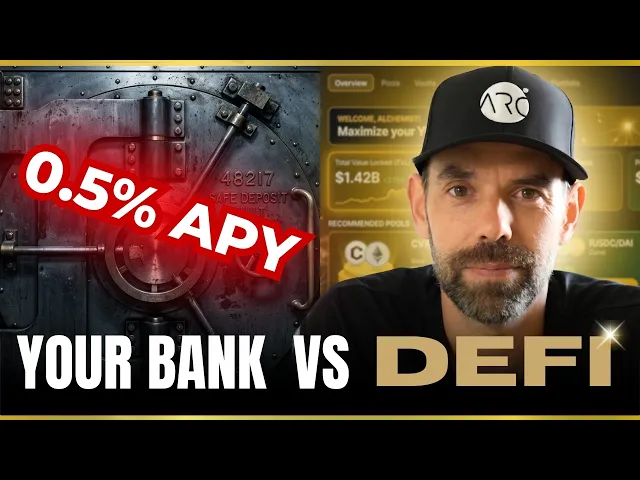
The walkthrough below provides a visual explanation of the experience.
A pre-deposit checklist
Before supplying funds manually or through an allocator, answer these questions:
What exactly produces the quoted yield?
Which protocol and chain hold the capital?
Which smart contracts and oracles can affect repayment?
What happens if the stablecoin depegs?
How quickly can you withdraw under high utilization?
Are rewards paid in the deposited asset or another token?
Does the strategy have exposure to bridges, restaking assets, or concentrated collateral?
Can you see current allocations and transaction history?
The right tool reduces tab-juggling, but it shouldn't reduce scrutiny. Automation is most useful when it makes the underlying assumptions visible rather than hiding them behind one attractive APY.
Your Framework for Earning at the Right Rate
Start by asking what the rate is paying you for. If utilization is high, the return may compensate you for supplying scarce liquidity. If incentives dominate, the yield may depend on a reward schedule and token market. If the market sits on a less liquid chain, the premium may reflect the difficulty of attracting capital there.
Next, test the rate against stress. Look for how it behaved during liquidity contractions, collateral concerns, sharp borrowing demand, and withdrawal waves. The April 2026 rsETH episode shows why this matters: a higher aggregate rate appeared after liquidity tightened, so the increase itself carried information about market pressure.
Then compare venues on equal terms. Don't place a DeFi supply APY beside an OTC quote without checking custody, access, liquidity, compounding, incentives, and counterparty exposure. A lower rate with transparent mechanics may fit your needs better than a higher rate that relies on a temporary subsidy or fragile collateral arrangement.
Match the method to your attention
A hands-on user might prefer direct deposits into established money markets, regular utilization checks, and deliberate rebalancing. That approach suits someone who understands smart contract interactions and is willing to respond when conditions change.
A time-constrained holder may prefer an allocator that consolidates monitoring and execution. The important test isn't whether automation promises the highest number. It's whether the strategy communicates where capital goes, how it handles risk, what fees apply, and how withdrawals work.
Choose the rate you can keep evaluating, not the rate that wins one screenshot.
A sensible decision process looks like this:
Identify the source of the yield.
Check the venue's liquidity and technical dependencies.
Compare the rate with similar markets and terms.
Consider how the position behaves during stress.
Select manual or automated management based on your available time.
Review the position whenever the reason for the yield changes.
Stablecoin lending rates become easier to judge once you stop treating them as a leaderboard. They are signals about borrowing demand, available supply, incentives, and perceived risk. Your job is to decide which signal fits your capital, time horizon, and tolerance for loss.
Yield Seeker helps stablecoin holders monitor and allocate USDC across DeFi opportunities through an AI-powered yield agent, so you can evaluate rates without juggling every dashboard yourself. Visit Yield Seeker to explore the platform and decide whether its automated approach fits the way you want to manage stablecoin yield.