
You probably know this feeling. You’ve got USDC sitting in a wallet, maybe on Base, maybe on an exchange, and it’s doing almost nothing. You keep seeing people talk about yield farming, vaults, LPs, lending markets, and APY screens that all seem promising until you look closer and realize every click opens three more tabs and five more risks.
That hesitation is reasonable. Early DeFi trained people to equate yield farming with noisy token emissions, sketchy dashboards, and rates that looked amazing right before they collapsed. In 2026, the useful version of yield farming looks different. It’s less about chasing the loudest number and more about understanding where yield comes from, what can break, and which parts are worth automating.
If you’re a stablecoin holder trying to earn more without turning your evenings into protocol research, that’s the right starting point.
The Search for Smarter Stablecoin Returns
A common setup looks like this. You hold USDC because you want stability, fast settlement, and optionality. You’re not trying to turn your savings into a meme coin trade. You just don’t want idle capital.
Then DeFi enters the picture.
You open a dashboard and see a range of opportunities. Some look conservative. Some look absurd. Most don’t explain the tradeoffs in plain English. You’re left wondering whether yield farming is a real tool for passive income or just a more complicated way to lose money.

For stablecoin holders, the appeal is straightforward. If your dollars are already onchain, why shouldn’t they earn something while they wait? That question is what pulls many people toward lending markets, liquidity pools, and automated strategies. It’s also why practical guides to USDC yield optimization resonate. Participants aren’t looking for adrenaline. They’re looking for a cleaner cash-management layer inside crypto.
You don’t need to become a full-time DeFi trader to use yield farming well. You do need to know what’s paying you.
That’s the part that often gets skipped. Yield farming isn’t a single product. It’s a set of ways to put crypto to work inside decentralized protocols. Some are simple. Some are fragile. Some are worth using only if a tool handles the monitoring for you.
The modern environment favors people who think like operators, not tourists. If you can separate durable yield from temporary incentives, and convenience from hidden cost, yield farming stops looking like a casino and starts looking like infrastructure.
What Is Yield Farming Really
The cleanest way to understand yield farming is to stop thinking of it as a magic return machine.
Think of a liquidity pool like a self-service currency booth at an airport. People show up wanting to swap one asset for another. The booth needs inventory on both sides to make that possible. In DeFi, regular users supply that inventory. When they do, they become liquidity providers, often shortened to LPs.
The airport booth analogy
At an airport booth, the operator earns money because travelers pay for the service of instant exchange. A decentralized exchange, or DEX, works in a similar way. Instead of a company stocking the booth, users deposit assets into a pool. Traders use that pool to swap. The protocol routes a portion of the trading fees back to the liquidity providers.
That’s one version of yield farming.
Another version happens in lending markets. You deposit USDC or another asset into a protocol. Borrowers take loans against collateral. They pay interest. Suppliers receive part of that interest. Same principle, different engine.
The key terms that matter
You don’t need a giant glossary. You need a small set of useful definitions:
Liquidity pool: A shared pot of assets inside a protocol that supports trading or other activity.
Liquidity provider: The person depositing assets into that pool.
DEX: A decentralized exchange that lets users swap assets through smart contracts instead of a traditional order-book exchange.
Protocol: The app and smart contracts handling the rules, accounting, and movement of funds onchain.
What matters is your role. You’re not just buying and waiting. You’re supplying working capital to a system that uses it.
Practical rule: If you can’t explain who is paying for the yield, you’re not ready to deposit.
That rule matters more now because yield farming has already gone through its first hype cycle. It became a major force in DeFi during 2020 and 2021, and total assets locked in DeFi peaked at $269 billion in November 2021. But the market has matured. Research summarized in this overview of yield farming’s rise and its transaction-cost reality notes that once transaction costs and price impact are included, the highest headline yields often end up with negative risk-adjusted returns.
That single point clears up a lot of beginner confusion. A high APY on the screen doesn’t automatically mean a good opportunity. Yield farming is participation in financial plumbing. Good plumbing can pay. Bad plumbing leaks.
What yield farming is not
It isn’t the same as holding a token and hoping for a price increase.
It also isn’t the same as staking for network security. Some people lump those together, but they’re different activities with different risks. Yield farming usually sits at the application layer. You’re helping a trading venue, lending market, or vault function.
Here’s the useful mental model:
Activity | What you’re doing | What usually pays you |
|---|---|---|
Holding | Owning an asset | Price appreciation, if any |
Staking | Supporting a blockchain network | Protocol staking rewards |
Yield farming | Supplying assets to DeFi apps | Fees, borrower interest, incentives |
Once you see that distinction, yield farming gets less mystical. It’s not free money. It’s compensation for supplying useful capital to onchain markets.
How Yield Farming Actually Generates a Return
There are only a few real sources of yield. Everything else is packaging.
In 2026, the old era of unsustainable 10,000% APYs is largely gone. Current yield farming returns are more grounded in actual protocol usage. Stablecoins like USDC typically offer 5–15% APY, while higher-risk strategies can reach 50–200% APY, according to Coinrule’s overview of yield farming conditions in 2025, cited here as a forward-looking snapshot for 2026-style market structure. That’s the right frame for modern yield farming. Lower fantasy. More real cash flow.
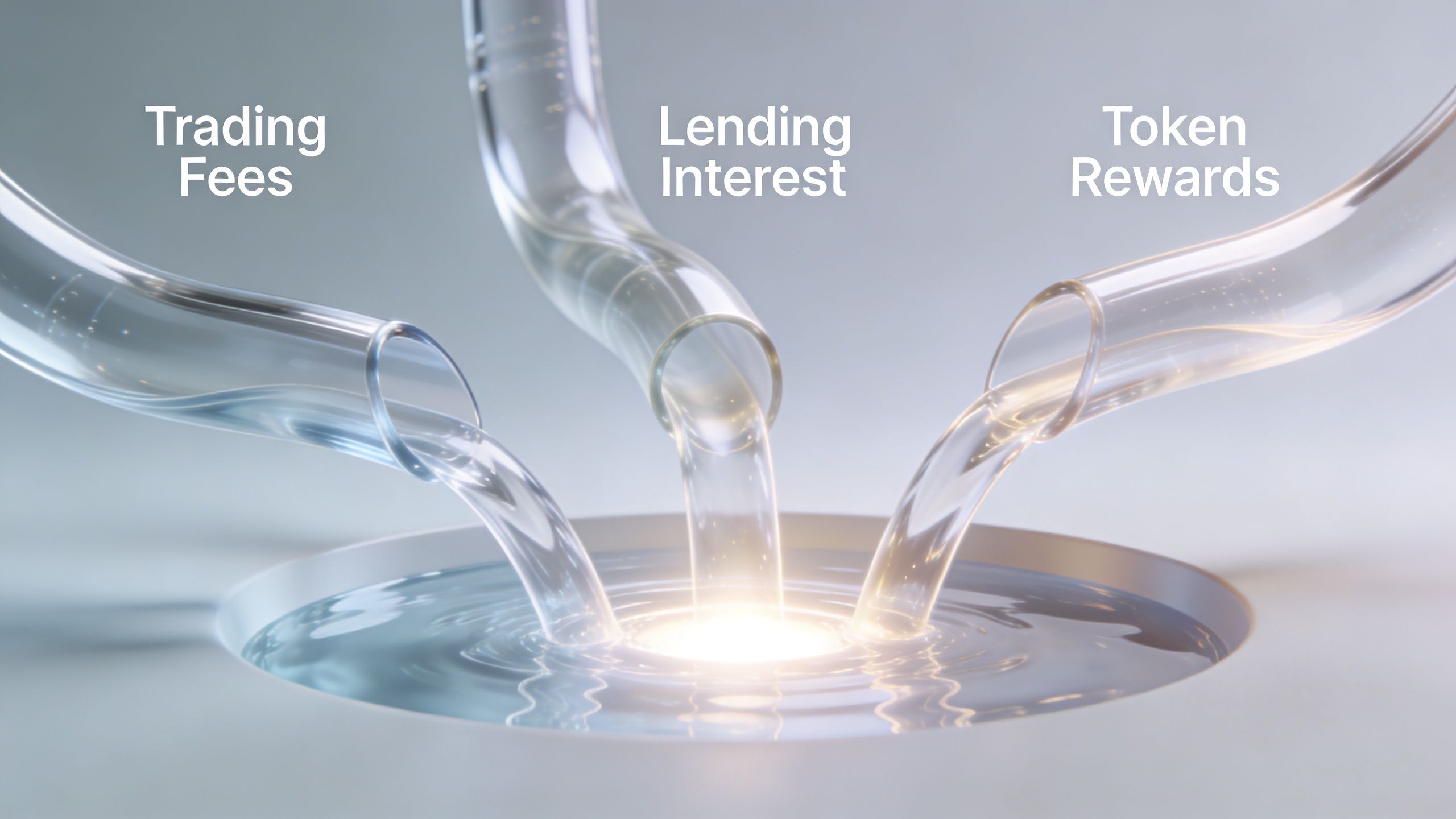
Trading fees
If you provide liquidity to a DEX pool, traders pay fees when they swap through that pool. You earn a share because your capital made those trades possible.
This is usually the easiest source of yield to understand. No trader activity, no fees. More activity, more fee revenue. The catch is that fee income can vary a lot, and in volatile pools you may take on price exposure that changes the value of your position.
A simple example: a USDC pair on a busy exchange can generate yield because people are constantly moving in and out of positions. Your capital acts like inventory for that market.
Lending interest
Lending protocols work more like onchain money markets. You deposit an asset. Borrowers post collateral and pay interest to use that asset. The protocol passes some of that interest back to suppliers.
For many stablecoin holders, this is the most intuitive entry point. You’re not making a market between two assets. You’re supplying a dollar-denominated asset into a lending venue.
That doesn’t make it risk-free. But it does make the source of return easier to evaluate. Ask one question: are borrowers paying for this capital?
Token incentives
The third source is protocol incentives. A protocol may distribute reward tokens to attract users or deepen liquidity in a specific pool.
Many people often misunderstand this aspect.
A pool can look attractive because the APY includes tokens emitted by the protocol itself. Sometimes that’s useful. Sometimes it’s just subsidy. If the token price falls, or the emissions get cut, the yield can evaporate quickly.
The best yield is usually the yield you can explain without mentioning “temporary incentives.”
That doesn’t mean incentives are always bad. It means they shouldn’t be the only reason a strategy works.
A quick way to judge yield quality
When you see an opportunity, sort it into this table:
Yield source | What funds it | Usually more sustainable |
|---|---|---|
Trading fees | Real swaps by users | Often, if volume stays healthy |
Lending interest | Real borrowing demand | Often, if the market is active |
Token incentives | Protocol subsidies | Less durable by default |
If you want a visual walk-through of how these moving parts fit together, this video does a good job of showing the mechanics at a beginner-friendly pace.
The practical lesson is simple. A headline APY is only the wrapper. The key question is whether the protocol is producing actual economic activity underneath it.
Understanding and Managing the Inevitable Risks
Nobody should talk about yield farming as passive income without talking about where it can fail.
The biggest beginner mistake isn’t taking risk. It’s taking risk they don’t recognize. Once you understand the main failure modes, yield farming becomes easier to evaluate because you stop treating every pool like the same product.
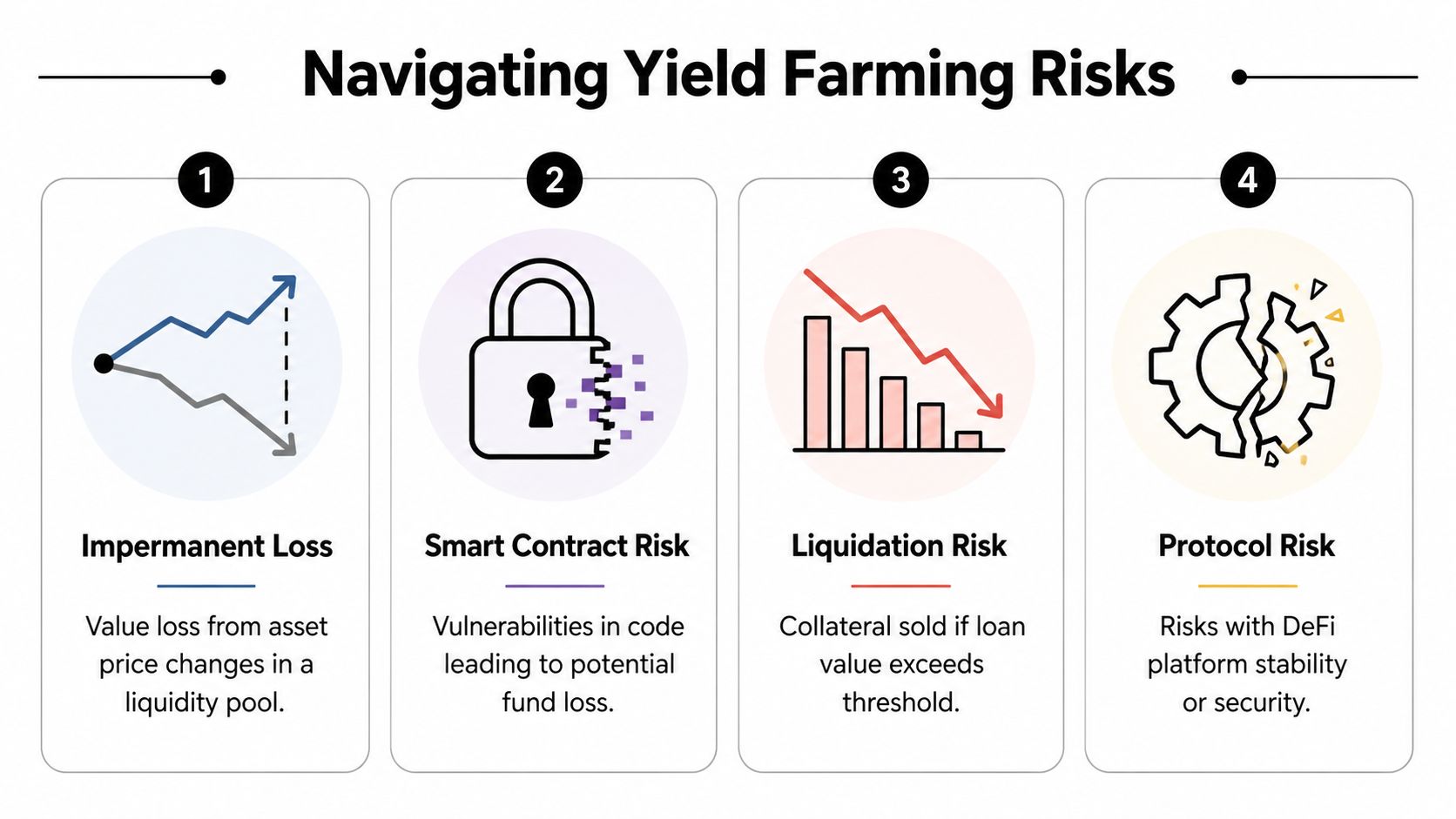
Impermanent loss
Impermanent loss confuses almost everyone at first, mostly because the name sounds technical.
The simplest analogy is a seesaw. You deposit two assets into a pool. If one asset moves a lot relative to the other, the pool automatically rebalances. You end up holding a different mix than when you started. In some cases, that mix is worth less than if you had just held the assets outside the pool.
This matters most in volatile pairs. It matters less in many stablecoin-focused strategies, where the assets are designed to stay close in value.
A practical takeaway is that “I earned fees” and “my position outperformed holding” are not the same statement.
Smart contract risk
DeFi protocols run on code. If the code has a flaw, attackers may exploit it.
That risk exists even when a protocol looks polished. Audits help, but they don’t remove risk. Upgradeable contracts, cross-chain bridges, and complex integrations often widen the surface area for something to go wrong.
When beginners ask whether yield farming is safe, this is usually what they mean. They want to know whether the software itself can fail. The honest answer is yes.
Protocol risk
Smart contract risk is about code. Protocol risk is broader.
A protocol can change incentives, lose liquidity, ship a bad governance decision, or prove unstable under stress. A founder can overpromise. A treasury can dry up. A strategy can depend on assumptions that stop holding.
This is why many experienced users prefer boring, established protocols for stablecoin strategies. Lower drama often beats a shinier dashboard.
For a more detailed breakdown, this guide on yield farming risks is a useful companion if you want to evaluate pools with a checklist in mind.
Liquidation risk
Liquidation enters the picture when you borrow against collateral or use leverage.
If the value of your collateral falls too far relative to your loan, the protocol can sell collateral to protect itself. That’s not a rare edge case. It’s a core mechanic.
If you’re new, the safest move is simple. Do not use borrowed funds in your first yield farming strategy. Plenty of people get hurt by trying to optimize too many variables at once.
Tax drag is real
One of the least discussed risks has nothing to do with market moves. It’s operational and financial.
In the US, each reward harvest is often a taxable event, and a 2023 report found that 40% of DeFi users underreport due to tracking difficulty. In the EU, MiCA adds another layer of reporting complexity, as discussed in Kraken’s explainer on yield farming and tax friction. That means your “passive” strategy can create a messy recordkeeping problem if rewards are frequent and capital moves often.
Small, frequent rewards can be good for compounding and bad for bookkeeping.
That’s why tax-aware strategy selection matters. Stablecoin-focused approaches are often easier to reason about than volatile LP positions, especially if you value clean reporting alongside yield.
A simple risk filter
Before depositing, ask these questions:
What can move against me: Is this a stablecoin strategy, a volatile LP, or a position using borrowed assets?
What code am I trusting: Is the protocol established, and is the strategy simple enough for you to understand?
What operational burden am I taking on: Will you need to harvest, rebalance, bridge, or track lots of transactions?
What happens if I want out: Can you exit cleanly, or does the strategy depend on timing and thin liquidity?
Good yield farming isn’t about pretending these risks disappear. It’s about choosing a setup where the risks match the return.
Automating Your Way to Smarter Stablecoin Yield
Manual yield farming still works. It’s just labor.
A basic stablecoin routine might involve checking a few lending markets, comparing vaults, watching for changes in supply and demand, claiming rewards, and moving funds when the spread is worth the gas and effort. That’s manageable when you’re curious and have spare time. It gets old fast when the opportunity set changes across chains and protocols.
The manual path and its friction
Doing it yourself has one clear advantage. You know exactly where funds are going.
It also has obvious drawbacks:
Monitoring burden: Rates move, incentives change, and a good pool can become mediocre without warning.
Execution drag: Every transfer, approval, and rebalance adds friction.
Fragmented context: You end up comparing dashboards that measure yield differently and update on different timelines.
For stablecoin users, that often leads to an awkward compromise. They either park funds in a familiar protocol and ignore better opportunities, or they overmanage small changes and burn time.
Why aggregators helped, then hit limits
Yield aggregators were the first real answer to that problem. They bundled strategy logic into vaults and tried to optimize on your behalf.
That model improved access, but it didn’t solve everything. A Q1 2025 analysis found that after fees and MEV drag, stablecoin aggregator returns on Base and Arbitrum averaged 5-12%, and in some cases underperformed manual staking in single audited protocols, according to this analysis of DeFi yield farming strategy tradeoffs.
That’s an important shift. “Automated” doesn’t automatically mean “more efficient.”
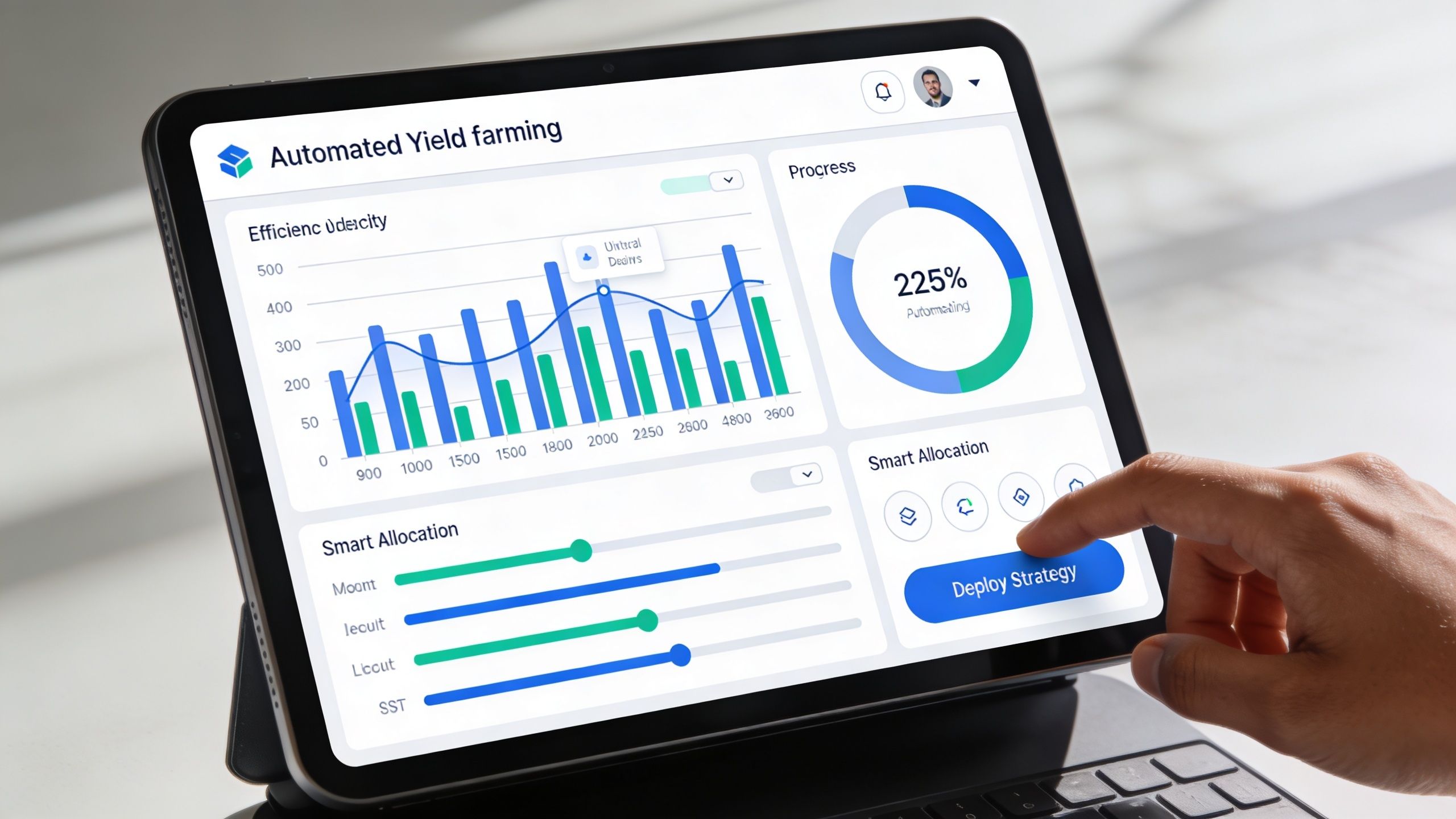
A generic vault can lag because it follows fixed rules, charges fees, or rebalances at the wrong time for current conditions. In low-volatility stablecoin environments, those details matter.
What better automation looks like
The more useful model is personalized automation. Instead of one vault for everyone, the system monitors opportunities and allocates based on your asset mix, risk tolerance, and current market conditions.
That’s why teams across industries keep investing in better automation services. The underlying logic applies here too. When a workflow depends on constant monitoring, repeated decisions, and fast execution, software can remove a lot of hidden inefficiency.
In DeFi, that means automation should do more than route funds once. It should help with monitoring, reallocating, and reducing the manual work that causes people to either miss opportunities or make rushed moves.
One example is yield farming automation. Another is Yield Seeker, which uses a personalized AI agent to monitor and allocate stablecoin capital across DeFi protocols in real time on Base. The useful part of that model isn’t hype. It’s that it treats yield farming as an ongoing operational problem instead of a one-time deposit decision.
Automation is most valuable when it helps you avoid bad decisions, not just when it helps you chase better APY.
That’s the 2026 shift. Modern yield farming rewards process. If you want stablecoin income that stays practical over time, automation is becoming less of a luxury and more of a sensible operating layer.
How to Start Yield Farming Safely Today
Start smaller than your ambition.
The safest first move is to treat yield farming like a new system you’re testing, not a shortcut to instant passive income. Use an amount you can monitor comfortably, choose a straightforward stablecoin strategy, and make sure you understand the exit path before you deposit.
A beginner checklist that holds up
Start with stablecoins: If your goal is cash-like yield, don’t begin with a volatile LP pair.
Choose established protocols: Simpler and more widely used venues are usually easier to evaluate than experimental farms.
Keep your first strategy boring: Lending and conservative stablecoin deployment are easier to track than setups involving borrowed capital or multi-token setups.
Watch the net result: Fees, timing, and taxes all affect what you ultimately keep.
Document everything: Wallet activity gets messy quickly. If you need help organizing records, this primer on how to navigate your crypto tax obligations is a practical starting point.
Prefer tools that reduce clicks: Fewer manual steps usually means fewer errors.
There’s no prize for doing everything by hand. If you’re busy, a guided and automated setup can be the more disciplined option because it reduces ad hoc decision-making.
The right mindset is simple. Look for understandable yield, limited moving parts, and a workflow you can stick with for months, not days. That’s how yield farming turns from a curiosity into a useful part of your onchain cash strategy.
If you want a lower-friction way to put stablecoins to work, Yield Seeker offers an AI-guided approach that helps automate yield farming on Base while keeping funds accessible and strategy decisions easier to follow.