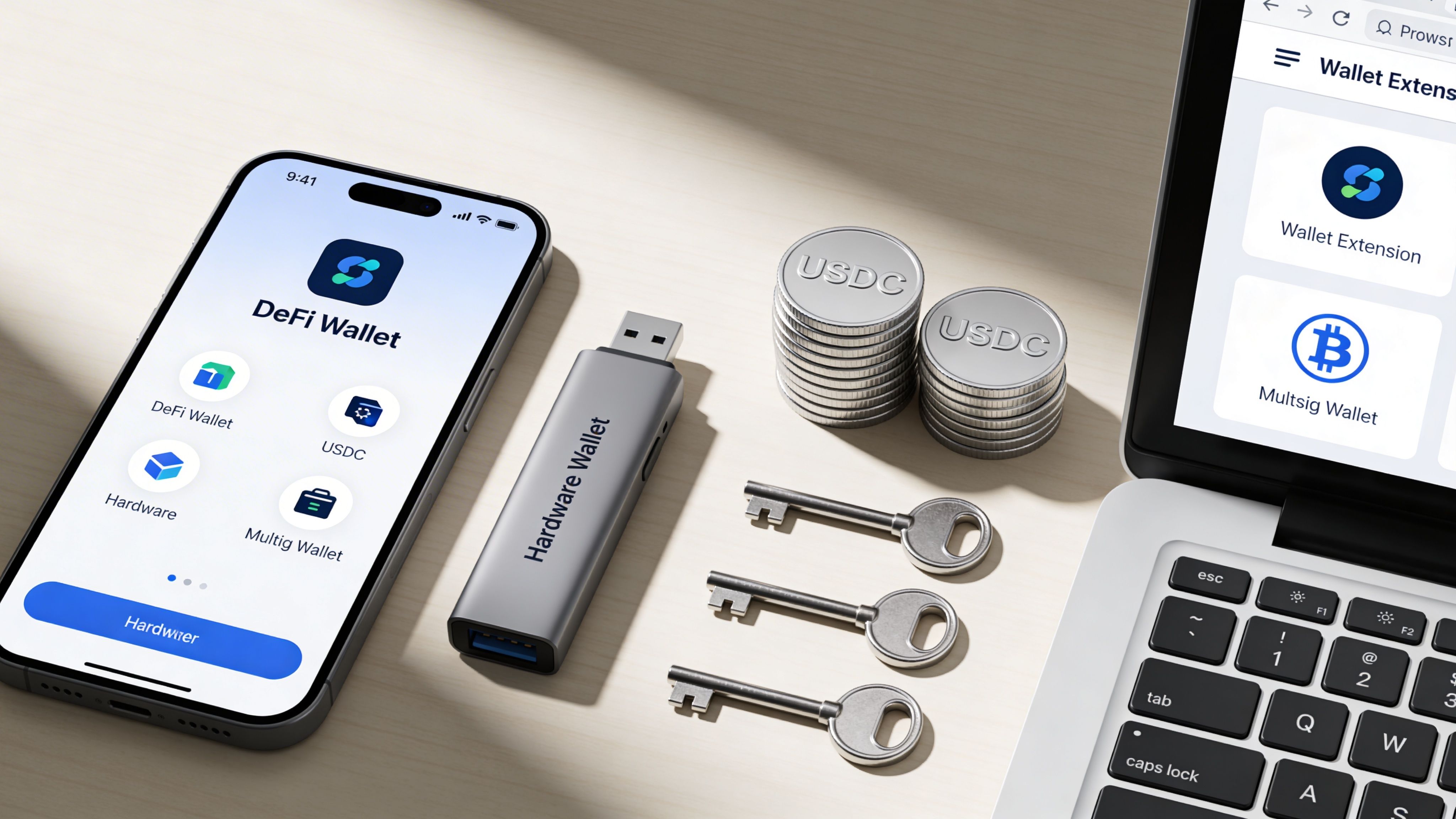
You bridge funds to Base, find a yield opportunity worth taking, hit deposit, and then your wallet gives you a vague signing prompt you cannot confidently verify. That is where good DeFi flows break down. On-chain yield is not only about finding the right vault or rate. It starts with using a wallet that lets you fund, bridge, inspect approvals, and sign transactions without second-guessing every click.
On Base, that matters fast. Good opportunities in stablecoins and market-neutral strategies often reward users who are already set up with the right network, the right assets, and a wallet that handles contract interactions clearly. A weak wallet setup turns ordinary actions like approving a token, switching networks, or reviewing calldata into avoidable risk.
Wallet choice has become a mainstream product decision, not a niche preference. Industry reporting from CryptoWallet.com’s wallet statistics research shows how quickly wallet adoption has grown across the broader crypto market. DeFi users feel that growth directly, because more capital on-chain means more interfaces competing for your signature and more need to verify what you are authorizing.
I look at the best defi wallets through a builder’s lens. Can the wallet get a user from fiat or a CEX onto Base quickly? Does it make approvals and contract calls readable enough to catch mistakes? Does it pair well with hardware when balances grow? If you need a quick refresher on custody and signing, this guide on what a DeFi wallet does covers the basics.
The answer is rarely one universal winner. MetaMask still wins on raw compatibility. Rabby is often better for transaction review. Coinbase Wallet has an obvious advantage for users entering through the Base ecosystem. Safe belongs in a different category entirely if you are managing team funds. Work on wallet interoperability with MetaMask also matters here, because smoother cross-wallet standards reduce friction between the tools people use.
If the goal is putting capital to work on platforms like Yield Seeker, the right wallet is the one that reduces avoidable errors before they happen. That is the standard behind this list.
1. MetaMask
Open a new Base app, connect your wallet, and there is a good chance MetaMask is the first option that works without extra setup. That matters if your goal is to move capital into live opportunities quickly, not spend twenty minutes troubleshooting wallet support before you even reach a deposit screen.
MetaMask stays near the top of any best defi wallets list because it is the default EVM wallet for a large share of users and protocol teams. I still treat it as the baseline wallet for Ethereum, Base, Arbitrum, and other EVM networks because compatibility is rarely the problem. If a user asks me which wallet is most likely to connect cleanly to a new vault, bridge, or yield app, MetaMask is usually the safest first answer.
Why it still works
Its main advantage is broad support. Extension, mobile app, WalletConnect, hardware wallet pairing, custom RPCs, and manual token imports are all mature enough that you can get from a centralized exchange withdrawal to a Base deposit flow without much friction.
That makes MetaMask useful for newer DeFi users and for builders testing production flows.
It is also a good wallet for learning the mechanics that matter on-chain. Network selection, gas settings, token approvals, and signature prompts are visible enough that users can see what they are doing instead of abstracting everything away. For anyone storing meaningful balances, pair that convenience with a hardware device and follow basic crypto wallet security best practices.
Trade-offs that matter
MetaMask is not the wallet I trust most for explaining complex transactions before signature. It can handle the transaction, but the preview is often thinner than what power users want, especially if you are approving a router, interacting with a vault, or signing into a newer contract on Base.
There are a few practical trade-offs to keep in mind:
Best fit: Users who want the highest chance a DeFi app will support their wallet on day one.
Where it helps: Fast setup, broad EVM coverage, and familiar flows for moving funds into platforms like Yield Seeker.
Where it falls short: In-wallet swaps may include a MetaMask service fee on top of gas and route pricing, so I usually compare quotes before swapping inside the wallet.
Longer-term upside: Snaps and recent standards work are expanding what the wallet can do. The progress around wallet interoperability with MetaMask is worth watching if you use multiple wallets across the same DeFi stack.
MetaMask is the wallet I expect to connect successfully when I test a new Base app for the first time.
Website: https://metamask.io
2. Rabby Wallet
Rabby is the wallet I recommend when someone says, “I use DeFi often and I’m tired of guessing what I’m signing.”
It’s built for people who move across EVM chains regularly and want more context before approving a transaction. That matters on Base, where quick farming or vault rotations can create more room for signing mistakes than people expect.
Where Rabby stands out
The best feature is transaction simulation. Before you sign, Rabby tries to show balance changes, approvals, and common risk flags in a way that’s much more readable than most wallet popups.
Auto chain detection also removes one of the most annoying parts of multichain DeFi. Instead of manually flipping networks every time a dApp expects a different chain, Rabby handles much of that for you.
That sounds small until you spend a week moving between Ethereum, Base, and another EVM network. Then it becomes hard to give up.
Practical rule: If you sign into unfamiliar contracts often, use the wallet that shows you the most before signature, not the wallet with the prettiest home screen.
Who should use it
Rabby is strongest for active users, not total beginners. It’s great for:
Frequent depositors: People interacting with vaults, lending markets, and bridges.
Hardware-wallet users: People who want better signing UX while keeping keys on a device.
Approval cleaners: People who periodically review and revoke stale permissions.
Its weaker point is mobile-first convenience. If your entire DeFi life happens on a phone, other wallets feel more polished.
Security habits still matter more than any wallet UI. This guide on how to keep my crypto safe is worth following before you start connecting to newer Base apps.
Website: https://rabby.io
3. Coinbase Wallet (Base app)
You buy USDC on Coinbase, want it on Base, and do not want your first hour in DeFi to disappear into network setup, bridge choices, and wallet friction. Coinbase Wallet is strong in that exact scenario.
For Base users, that matters more than many wallet reviews admit. A lot of yield activity starts with simple steps. Fund the wallet, move assets onto Base, connect to an app, approve a token, deposit. Coinbase Wallet handles that path cleanly, especially for people already inside the Coinbase ecosystem.
Where it works well
Coinbase Wallet is one of the easier onramps from exchange balance to self-custody. Base support feels native rather than bolted on later, which lowers setup mistakes for newer users and makes it faster to reach apps where capital starts working.
That ease is the product.
Coinbase also puts real emphasis on self-custody security and hardware wallet support, including Ledger integration through its wallet stack and documentation from Coinbase and Ledger. See the Coinbase Wallet help documentation on hardware wallet support if that setup matters to you.
Real trade-offs
The trade-off is visibility. Coinbase Wallet is good at getting users connected quickly, but it gives less pre-sign detail than wallets built for heavier DeFi use. If you regularly inspect approvals, compare transaction effects before signing, or interact with unfamiliar contracts on new Base apps, that difference shows up fast.
I usually put Coinbase Wallet in the "good default, not my power-user pick" category.
Best fit: Users starting on Base who want the shortest path from funded account to first deposit.
Strongest moment: Sending assets from Coinbase, connecting to a DeFi app, and getting into a position without much setup overhead.
Less ideal for: Users who want deeper transaction simulation, more explicit contract warnings, or finer control over every interaction.
For someone making a first USDC deposit on Base and trying a yield tool like Yield Seeker, Coinbase Wallet is a sensible choice. For someone signing into new protocols every week, I would usually want more transaction context before approving anything.
Website: https://www.coinbase.com/WALLET
4. Wallet Showdown Hot Wallet Features Compared
A Base yield run usually breaks in one of three places. The wallet fails to surface a risky approval, the transaction gets messy under load, or the path from funded account to first deposit takes too many steps. Therefore, the choice here is less about branding and more about how each wallet behaves once you are moving capital into DeFi apps.
For users parking funds in something simple, all three can work. For users rotating between vaults, restaking, points programs, and newer Base protocols, the differences show up fast.
MetaMask is still the compatibility default. Rabby gives the clearest signing flow of the three. Coinbase Wallet keeps the path into Base shortest, especially if funds already sit inside Coinbase.
The more useful comparison is what happens when conditions are not clean. Failed routes, changing gas, dense approval prompts, and unfamiliar contracts are common in active yield hunting. Wallet reviews often miss that part. One commentary on best DeFi wallets points to transaction failure pressure on Base during busy yield periods and uses that to argue for better retry handling and pre-sign visibility in wallet design, as discussed in best DeFi wallets commentary. I would not treat any single benchmark as universal, but the underlying point is right. Good wallet UX matters most when a deposit does not go through on the first try.
How I’d choose between them
Choose MetaMask if broad app support is the main requirement and you do not want to wonder whether a new EVM protocol will connect cleanly.
Choose Rabby if you sign often, test newer contracts, or want stronger transaction context before approving anything.
Choose Coinbase Wallet if your main goal is getting from exchange balance to Base and into a product like Yield Seeker with the least setup friction.
My short version is simple. Calm markets flatter every wallet. Busy markets expose the one you picked.
5. Phantom
A common Base workflow looks simple until it stops being simple. You bridge in, chase yield on one tab, then need to move funds or manage positions from another ecosystem without switching mental models every five minutes. Phantom earns its place on this list because it handles that cross-ecosystem reality better than many wallets that are only built around EVM use.
Phantom still feels like Phantom. That matters. The product started with Solana users, and the team kept the speed and clarity that made it popular there while adding EVM support in a way that does not feel bolted on.
What it does well
The strongest reason to pick Phantom is practical. It works well for users who split time between Solana and EVM chains such as Base, and want one wallet that stays readable across both. Portfolio views, NFT handling, and everyday sends are straightforward. Its phishing warnings and transaction previews also help reduce bad clicks, which is useful if you connect to newer apps while hunting yield.
That design quality is not just cosmetic. On active DeFi weeks, small UX mistakes turn into real losses. A wallet that shows assets clearly, flags suspicious prompts, and keeps chain context obvious makes it easier to avoid signing the wrong approval or sending funds on the wrong network.
Phantom is also relevant if you care about where wallet UX is heading. The Ethereum Foundation’s documentation on ERC-4337 account abstraction is the right reference point here. The short version is that smarter wallet behavior, such as gas abstraction, batching, and better recovery models, is becoming part of the wallet discussion rather than a niche feature set. Phantom is worth watching through that lens, even if I would not choose it over more specialized setups for advanced automation today.
Where I’d use it
Best fit: Users who actively use both Solana and Base
Why it’s appealing: One polished wallet for cross-ecosystem activity
Watch out for: In-app swaps are convenient, but direct DEX execution is often better for larger trades or tighter pricing
Website: https://phantom.app
6. Rainbow
Rainbow is one of the easiest wallets to recommend to someone who values interface quality and mostly lives on EVM chains.
It doesn’t try to be the most technical wallet in the room. It tries to make balances, NFTs, activity, and signing flows more legible. For many users, that’s exactly the right trade.
Why people like using it
Rainbow makes common actions feel less intimidating. Base support is straightforward, ENS handling is polished, and the visual presentation is better than many competitors.
That matters more than people admit. A readable wallet reduces friction when you’re trying to confirm the right token, the right chain, and the right destination under time pressure.
For new DeFi users, Rainbow often feels friendlier than power-user wallets. For experienced users, it can still work well as a daily driver if they’re not relying on advanced simulation or team controls.
Where it’s weaker
Rainbow is not the wallet I’d pick for maximum policy control or the deepest transaction analysis. If your workflow includes constant contract interactions, permission management, or shared operational processes, Rabby or Safe are stronger.
Still, Rainbow has a sweet spot:
Best fit: Users who want clean EVM UX and easier navigation.
Good pairing: Hardware wallets for safer signing.
Less ideal for: Heavy-duty DeFi operators who want more control before signature.
Good wallet design isn’t about looking premium. It’s about reducing the chance that you approve the wrong thing when you’re moving fast.
Website: https://rainbow.me
7. Zerion Wallet
Zerion is the wallet I point to when someone says, “I can use DeFi fine, but I hate not knowing where everything is.”
That sounds trivial until you’ve got LP positions, reward tokens, bridged assets, and a few experiments spread across chains. At that point, portfolio visibility becomes part of risk management.
What makes Zerion useful
Zerion’s strength is position awareness. It’s good at surfacing assets, NFTs, and DeFi holdings in a way that feels portfolio-first instead of wallet-first.
For Base users, that matters because yield workflows often don’t stop at a single deposit. You bridge, park stablecoins, try a vault, claim something, rotate, maybe add another protocol later. A wallet that helps you see the full picture saves time and cuts confusion.
It’s especially handy for LPs and users who want a clearer sense of onchain activity without juggling multiple dashboards.
Best use case
I wouldn’t rank Zerion as the strongest pure signing wallet. I’d rank it highly as a wallet plus portfolio lens.
A simple breakdown:
Best fit: Users who care about visibility across DeFi positions.
Strongest feature: Clear discovery of assets and activity across supported chains.
Less ideal for: Users who want deep policy controls or best-in-class simulation before signing.
If your DeFi activity is becoming messy enough that you’re losing track of where capital sits, Zerion earns a place on the shortlist.
Website: https://zerion.io
8. Trust Wallet
You bridge USDC to Base from your phone, approve a deposit into a vault, then realize you still need access to a few assets on other chains later that day. That is the kind of routine where Trust Wallet makes sense.
Trust Wallet earns its place by covering a lot of ground in one app. If a Base user wants to farm yield but also keep BTC, a few long-tail tokens, and non-EVM assets in the same mobile wallet, Trust Wallet is one of the cleaner ways to do it without juggling three separate apps.
Where Trust Wallet fits
Its real advantage is breadth. Base users who are still building their workflow often start with one target, such as depositing into Yield Seeker or moving stablecoins into a new opportunity, then quickly end up touching other networks, bridges, and assets. Trust Wallet handles that sprawl better than wallets that are excellent on one stack but awkward outside it.
That matters for a practical reason. A lot of users are not running advanced desktop setups all day. They are checking positions, signing a claim, sending funds between wallets, or topping up a Base address from mobile. Trust Wallet is good at that style of use.
The trade-off is precision. For heavy DeFi usage on Base, I usually want clearer transaction context, better pre-signing detail, and a faster desktop loop for comparing routes or managing repeated approvals. Trust Wallet can do the job, but it feels better as a broad mobile control center than as the sharpest tool for power users pushing capital through multiple protocols every day.
My take
Best fit: Users who want one mobile wallet for Base plus a wide mix of other chains and assets.
Where it stands out: A practical choice if your Base yield activity is only one part of a broader multichain portfolio.
Main downside: Convenience features, especially in-app swaps, should not be confused with best pricing or best workflow visibility.
For larger balances, I would pair this kind of mobile convenience with a hardware setup. This guide to best cold storage wallets for securing DeFi funds is a useful next read.
Website: https://trustwallet.com
9. Ledger Live (with Ledger hardware)
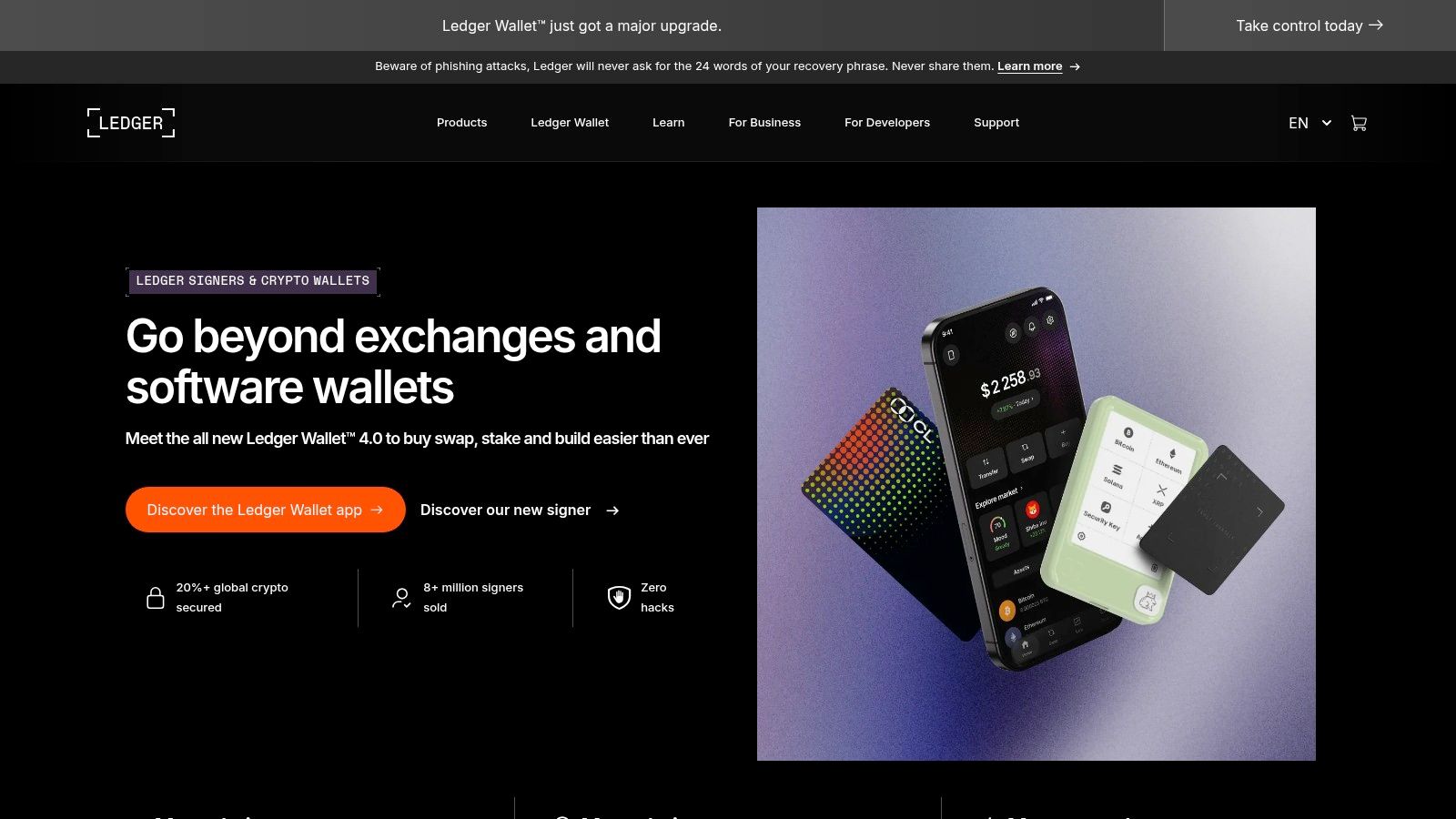
If security is the first priority, not the second, Ledger belongs on the list.
For serious balances, I rarely think in terms of hot wallet versus hardware wallet. I think in layers. A hot wallet handles interface convenience. A Ledger handles key protection.
Why it still matters
Hardware signing changes the risk profile. Even if your browser session gets messy, your private keys don’t sit exposed in the same way as they do in a pure software wallet setup.
That’s why a lot of experienced users pair Ledger with MetaMask or Rabby instead of relying on Ledger Live alone for every DeFi interaction. You keep the familiar dApp connectivity while pushing approval authority onto hardware.
If you’re weighing devices, this overview of best cold storage wallets is a useful next step.
The trade-off for Base yield users
Security comes with friction. Every additional confirmation step slows you down a bit. For long-term holding, that’s perfect. For fast-moving DeFi actions, it can feel heavy.
One market commentary on wallet reviews argued that hardware wallets can lag in real-time AI yield workflows because air-gapped or hardware signing adds delay compared with smarter wallet models on volatile chains. I think that’s directionally fair. Hardware is excellent for custody. It’s less elegant for rapid-fire strategy execution.
Use Ledger when:
Your balance is meaningful enough that extra signing friction is worth it.
You want hot-wallet convenience without hot-wallet-only key exposure.
You’re willing to split duties between storage and interface.
Website: https://www.ledger.com
10. Safe (formerly Gnosis Safe)
Safe is not the wallet I’d give a solo beginner. It is the wallet I’d use when more than one person should have a say over the funds.
That distinction matters. Safe is closer to account infrastructure than a casual wallet app. For teams, treasuries, and DAOs, that’s exactly why it’s so useful.
Where Safe wins
Multi-sig is the core feature. No single signer can move funds alone unless the policy says so. That creates operational discipline around treasury actions, protocol deposits, and permissions.
On Base and other EVM chains, Safe is especially strong when an organization wants auditability and internal controls. Shared address books, spending policies, modules, and admin workflows make it much more than a place to store tokens.
For teams allocating stablecoin balances into DeFi, those controls matter more than raw convenience.
Where it doesn’t
For a solo user making small deposits into yield opportunities, Safe usually feels like overkill. Setup is heavier. Smart-account interactions can also be less intuitive than plain externally owned account flows.
Still, for shared capital, I wouldn’t get cute with simpler tools.
“If multiple people depend on the funds, don’t use a wallet designed for one person’s habits.”
Website: https://safe.global
11. Frame
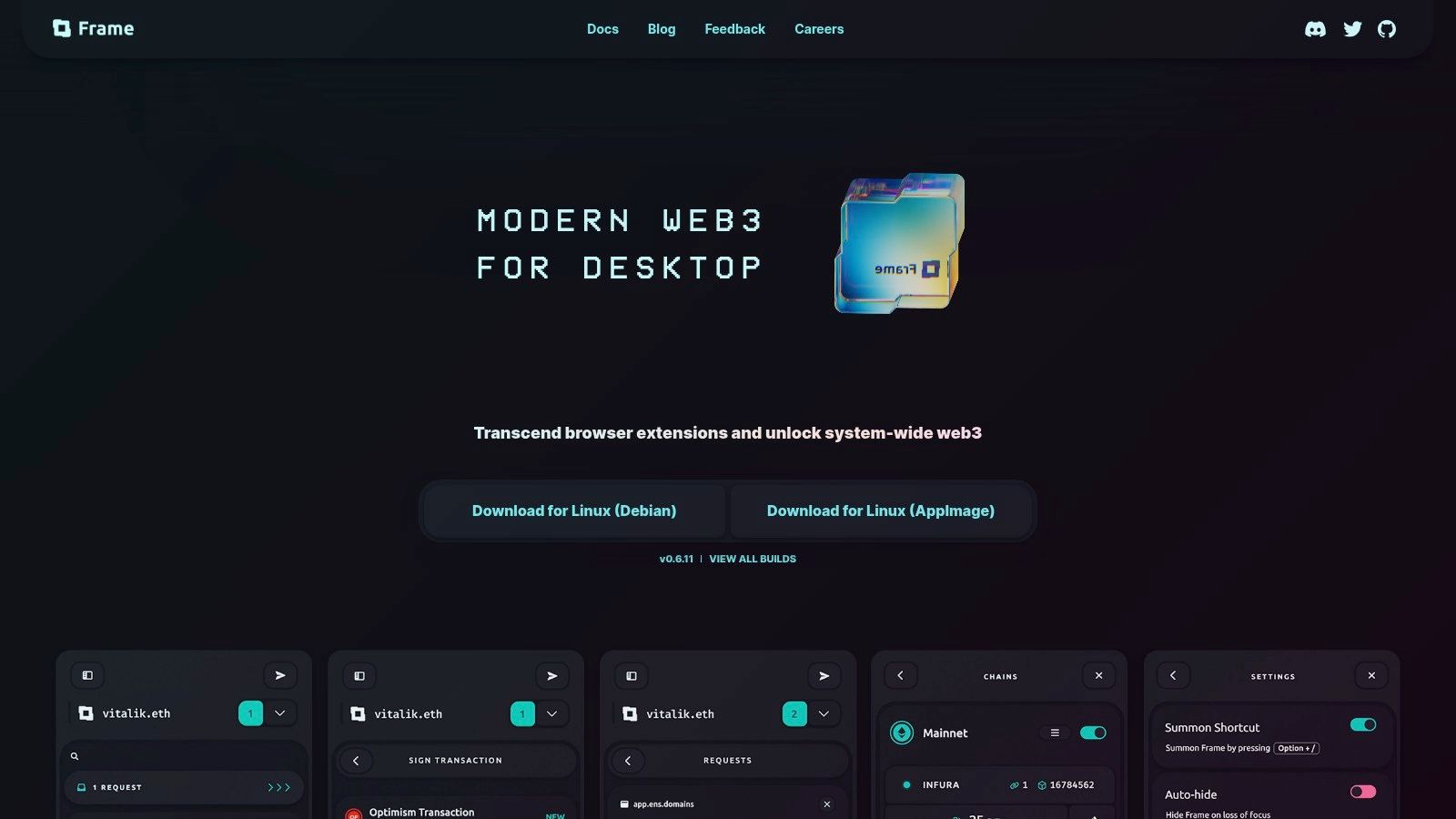
Frame doesn’t get mentioned in mainstream wallet roundups as often as it should, but power users know why it has a loyal following.
It runs as a desktop-native wallet outside the browser, and that changes the feel of the whole setup. If you worry about browser extension risk, Frame is one of the cleanest alternatives.
Why advanced users like it
The isolated desktop environment is the main appeal. You’re reducing reliance on an extension that lives inside the same browser where you’re opening apps, tabs, docs, and random links.
Frame also plays well with hardware wallets and supports the kind of multi-chain EVM workflow that developers and advanced users tend to prefer. It feels more deliberate than consumer-polished, which is either a feature or a drawback depending on the user.
My honest view
Frame is excellent for the right person and easy to ignore for everyone else.
Best fit: Developers, power users, and security-conscious desktop operators.
Big advantage: Smaller browser attack surface.
Main limitation: It isn’t as beginner-friendly or widely recognized as MetaMask or Coinbase Wallet.
If your wallet setup is becoming part of a serious operating environment rather than just a mobile app you tap occasionally, Frame deserves a look.
Website: https://frame.sh
Top 10 DeFi Wallets: Feature Comparison
If you’re trying to put capital to work on Base, wallet choice changes the quality of your DeFi flow. The right wallet makes bridging, approvals, transaction review, and ongoing position management faster and safer. The wrong one adds friction at every step, or worse, hides risk at the exact moment you need clarity.
I usually group these wallets by job, not by brand. Some are better for active yield hunting, some for mobile access, some for treasury control, and some for keeping keys away from a browser while still signing often. That matters more than marketing.
Wallet | Best use case | Core strengths | Main trade-offs | Best fit |
|---|---|---|---|---|
MetaMask | Broad EVM dapp access | Huge dapp support, mobile plus extension, hardware support, Snaps ecosystem | Transaction review is less clear than newer wallets, swap convenience can cost more | Users who want maximum compatibility |
Rabby Wallet | Active DeFi on EVM chains | Auto chain detection, transaction simulation, better warning prompts, hardware wallet friendly | Less familiar to beginners, narrower mainstream recognition | Frequent DeFi users who sign often |
Coinbase Wallet (Base app) | Starting on Base with low setup friction | Strong Base support, easy funding path, familiar Coinbase connection | Power-user controls are lighter, in-app convenience can be pricier | Beginners and Coinbase users moving into Base DeFi |
Phantom | Solana plus EVM usage | Polished interface, good phishing protection, solid multi-chain experience | Best known for Solana, less central to pure EVM DeFi workflows | Users splitting time between Solana and EVM |
Rainbow | Mobile-first EVM use | Clean design, strong portfolio view, good NFT handling, hardware support | Better for everyday use than advanced transaction review | Users who want a friendly EVM wallet on mobile |
Zerion Wallet | Tracking DeFi positions across chains | Portfolio visibility, position monitoring, built-in swap routing | Wallet depth is strongest for monitoring, not for advanced signing controls | Investors and LPs managing multiple positions |
Trust Wallet | Broad mobile chain coverage | Supports many assets and networks, easy mobile setup | DeFi power features and transaction context are not as strong as Rabby | Mobile-first users who want wide chain support |
Ledger Live (with Ledger hardware) | Security-first signing | Hardware key isolation, clear device confirmation, good long-term storage setup | Requires hardware purchase, daily DeFi use can feel slower | Users who prioritize key security over speed |
Safe (formerly Gnosis Safe) | Shared treasury and team operations | Multi-sig control, approval policies, strong operational setup for teams | Overkill for a single user, more setup and gas overhead | DAOs, teams, and shared capital pools |
Frame | Desktop-native EVM workflow | Runs outside the browser, hardware friendly, preferred by many advanced desktop users | Smaller user base, less beginner-friendly than mainstream wallets | Developers and security-conscious power users |
For Base users specifically, three patterns show up fast.
Rabby is usually the best hot wallet for active DeFi work because it gives clearer transaction context before you sign. Coinbase Wallet is the easiest starting point if you need a simple route from fiat to Base and want fewer setup steps. Ledger plus either Rabby or Frame is the setup I’d trust more for larger balances that still need regular access to yield apps.
That split is why there isn’t one universal winner. There’s a best wallet for frequent approvals, a best wallet for first-time Base users, and a best wallet for serious capital protection.
Your Next Move Choosing and Connecting Your Wallet
You bridge USDC to Base, open a yield app, click deposit, and get hit with the part that matters. Which wallet is signing the approval, how clearly it shows what you are approving, and how fast you can recover if something looks wrong.
That is the practical filter I use for wallet choice. The right wallet should fit the way you use DeFi on Base, not just look good in an app store.
Coinbase Wallet is a sensible starting point for someone funding from fiat, moving stablecoins onto Base, and using a guided product for the first time. Setup is easy, Base support is built in, and the learning curve is lighter than what you get with more technical wallets. If the goal is to get capital deployed without spending an hour configuring networks and RPCs, it does the job well.
Rabby paired with Ledger is the setup I trust for active DeFi use with meaningful balances. Rabby gives better transaction previews than most browser wallets, which matters when you are approving routers, vaults, and permit signatures across multiple apps. Ledger slows you down a bit, but that friction is often useful. It forces a second look before a high-impact signature.
Safe still stands apart for shared capital. A treasury, syndicate, or DAO needs signer separation, approval policies, and an audit trail for operational decisions. A single-user hot wallet is not built for that.
As noted earlier, wallet usage across dApps has grown fast. The practical consequence is simple. More DeFi activity means more approvals, more bridging, more chain switching, and more chances to sign something you did not fully inspect. On Base especially, where low fees make frequent repositioning realistic, wallet UX is part of risk management.
Connecting to a platform like Yield Seeker should only take a minute once the wallet is funded. Send USDC on Base to the wallet you plan to use. Open the app, click Connect Wallet, choose the wallet provider directly or use WalletConnect, then review the connection request inside the wallet before approving it.
After that, the wallet becomes your operating layer. It signs deposits, token approvals, strategy changes, and withdrawals. If a platform monitors opportunities or reallocates based on preset logic, your wallet still controls the permissions that allow those actions. Monitoring and allocation can be automated. Custody and signature hygiene still depend on the wallet setup.
For Base users chasing yield, this decision is less about brand and more about fit. Choose Coinbase Wallet if you want the fastest route from cash to onchain action. Choose Rabby if you care about transaction clarity during active DeFi use. Add Ledger if the amount is large enough that an extra confirmation step is worth the delay. Use Safe if more than one person controls the funds.
Start with the setup that matches your current habits. Upgrade it as your balance size, signing frequency, and risk tolerance change.