Your DeFi Security Blueprint
You’ve found a stablecoin yield that looks worth your time. Maybe it’s a vault, maybe it’s a lending market, maybe it’s an AI-powered platform that routes USDC for you. The interface is clean, the deposit button is obvious, and the APY is tempting. That’s usually the moment people stop thinking clearly about security.
Most losses don’t come from one dramatic Hollywood-style hack. They come from ordinary mistakes. A bad approval. A fake domain. A seed phrase stored in the wrong place. A signer with too much power. An outdated browser wallet. In crypto, especially when you’re deploying USDC into automated strategies, small mistakes can turn into permanent losses fast.
That matters even more for stablecoin holders because the whole point is usually capital preservation first, yield second. If you’re using a dashboard to automate allocation across protocols, you’re stacking wallet risk, contract risk, account risk, and operational risk in one workflow. You need a system, not just good intentions.
This list gives you 10 practical crypto security best practices that hold up in real use. They're designed for people deploying stablecoins into DeFi strategies, including tools like Yield Seeker. Use them before you deposit, while funds are live, and after you’ve started earning. You can also pair this with a Crypto Portfolio Tracker so you’re not managing balances blindly across wallets and protocols.
1. Use Hardware Wallets for Large USDC Holdings
You connect your wallet to a new yield vault, sign what looks like a routine approval, and realize too late that the wallet holding your full USDC stack was the one you used. That mistake is common, and it is expensive.
For stablecoin users, hardware wallets solve a specific problem. They keep the private key off the internet while still letting you approve deposits, withdrawals, and allowance changes. That matters even more if you use automated yield tools like Yield Seeker, where one wallet can touch multiple protocols over time. More connections mean more chances to sign the wrong thing.
Chainalysis found that compromised private keys were the main cause of stolen crypto funds in 2024. A hardware wallet does not remove smart contract risk or phishing risk, but it does cut one of the biggest failure points. Malware on your laptop cannot copy the key and empty the wallet.
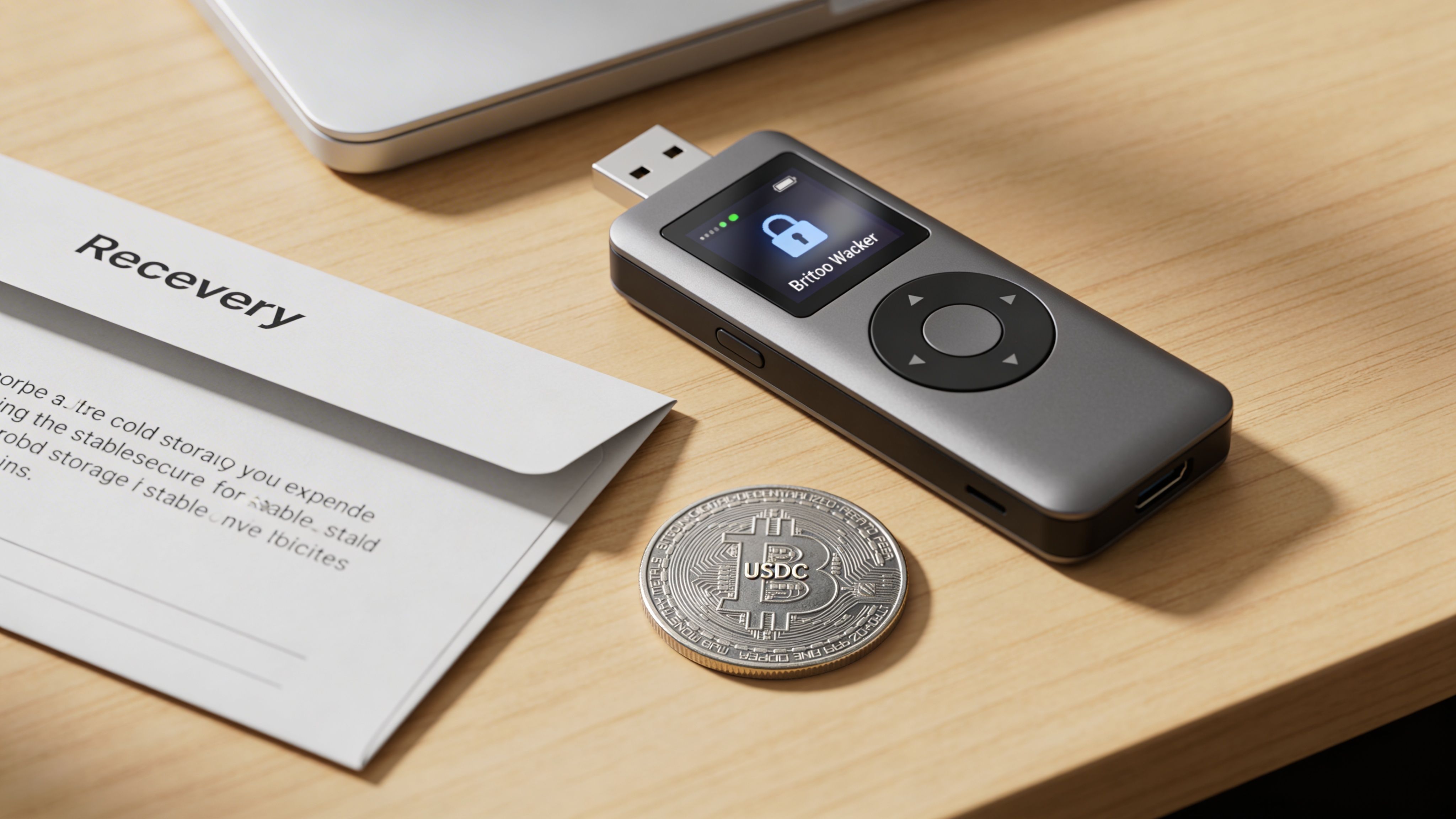
The setup that works best is simple:
Cold vault wallet: Holds the majority of your USDC. Use it for storage and occasional transfers only.
Active DeFi wallet: Holds the amount you plan to deploy now into lending markets, vaults, or Yield Seeker strategies.
Burner wallet: Use it for new protocols, airdrops, NFT claims, and anything you have not vetted.
This split matters because every wallet has a different job. If your active wallet gets drained through a bad signature or malicious approval, your reserve capital stays isolated.
I treat hardware wallets as storage first, transaction tools second. The wallet that holds long-term USDC should not be the same one clicking through every farm, bridge, and token claim. That extra step feels annoying right up until it saves your balance.
Ledger Nano S Plus, Ledger Nano X, and Trezor Model T are all common choices. The right pick depends on your routine. If you mainly store USDC and sign occasional transactions, a basic device is enough. If you move funds often across desktop and mobile, convenience starts to matter more. If you are still comparing options, this guide to best cold storage wallets for DeFi users is a useful place to start.
A few rules hold up in practice. Buy directly from the manufacturer or an authorized seller. Set a strong PIN. Add a passphrase only if you understand the recovery trade-off and have tested it. Before sending serious capital, recover the wallet from backup on a spare device or test setup and confirm you can get back in.
2. Implement Multi-Signature Wallets for Treasury Management
A single signer is fine for personal spending money. It’s bad treasury design.
If you’re managing a creator treasury, DAO reserves, startup runway, or even family capital in stablecoins, move control into a multisig. Safe on Base is the standard choice for many teams because it forces approvals from multiple people before funds move.
The biggest advantage isn’t technical sophistication. It’s governance discipline. One person can’t wake up, panic, click the wrong link, and drain the treasury into a fake vault. One compromised laptop doesn’t become a full-loss event.
Good multisig design
For meaningful holdings, these setups tend to work well:
2-of-3 for small teams: Fast enough to operate, but not dependent on one person.
3-of-5 for larger treasuries: Better fault tolerance if one signer loses access or is unavailable.
Hardware wallet for every signer: Don’t combine multisig with weak key handling.
A lot of teams overcomplicate this. They design a fortress, then can’t execute routine transfers when one signer is traveling and another forgot their backup device. Security has to survive ordinary operations.
Use signers in different locations. Document who holds which signer role. Define what needs immediate approval and what should wait. If your treasury deploys USDC into automated yield tools, require extra review for changing payout addresses or increasing approval scopes.
The best multisig policy is the one your team will still follow during a stressful week.
I’ve seen teams protect the treasury wallet itself but leave off-chain access sloppy. That defeats the point. Your signers should also protect the email accounts, devices, and password managers tied to treasury operations.
Run a test transaction first. Then test a full workflow, including approval, execution, and recovery if one signer is unavailable.
3. Enable Two-Factor Authentication on All Accounts
You deposit USDC into a yield strategy, check the dashboard a few hours later, and find your account email has been changed. Your wallet may still be secure, but your off-chain access was not. For stablecoin users, especially anyone managing positions through Yield Seeker or similar platforms, that gap gets exploited all the time.
Turn on two-factor authentication for every account connected to your funds. Start with your email, exchange accounts, password manager, cloud storage, and any DeFi dashboard or automation platform you use to track, rebalance, or withdraw USDC. If an attacker gets into the account that approves resets or receives alerts, they often do not need your wallet to cause damage.
The method matters.
Use an authenticator app before SMS: App-based codes are harder to intercept than text messages.
Use a hardware security key for your highest-value accounts: Email and password manager access deserve the strongest protection you can set up.
Store backup codes offline: Keep them somewhere separate from the phone or laptop you use every day.
SMS still beats a password alone, but it is the weakest acceptable option for crypto-related access. SIM swaps happen. So do bad support escalations, weak recovery flows, and email takeovers that start with one reused password.
This matters even more if you use automated yield platforms. A USDC position on Yield Seeker can be safe at the wallet level and still become a problem if someone gets into your account, changes notification settings, resets credentials, or tricks support into helping them. Security for stablecoin deployment is not just about signing transactions. It is also about protecting the accounts that sit around those transactions.
I also treat recovery as part of setup. If you lose your phone today, can you still get back into your email, your exchange, and your Yield Seeker account without improvising? If the answer is unclear, fix that before increasing your deposit size.
Review login history. Enable withdrawal address whitelists where available. Use a unique password stored in a password manager. If you want a better sense of how platform security claims compare with actual review standards, read this guide to smart contract auditing companies.
4. Verify Smart Contract Addresses and Audit Reports Before Depositing
You open Yield Seeker, see a stable USDC vault with an attractive rate, and the deposit flow looks clean. That is the exact moment to slow down. Clean UI does not reduce contract risk.
A USDC deposit into DeFi depends on the contract you approve, the strategy contract that receives funds, any upgrade permissions behind it, and the team’s behavior if something breaks. For stablecoin users, that matters more than many realize. USDC is often treated like cash, but once it is deployed into an automated yield strategy, it inherits the risks of every contract in that route.
Start with the address. Get the deposit contract from official docs or the platform’s verified documentation, then compare it carefully before sending funds. If Yield Seeker routes deposits into third-party protocols, check which protocol contracts are involved and whether those addresses are publicly documented. If you cannot tell where your USDC is going, you do not have enough information to deposit size with confidence.
Then read the audit report like a user, not like a marketer reading sponsor logos. The useful parts are the scope, severity of findings, what was fixed, and what was left unresolved or marked as accepted risk. A protocol with an audit can still be dangerous if the audited code is outdated, the review excluded core modules, or admin permissions remain too broad. This overview of smart contract auditing companies and review standards helps separate real review work from checkbox security.
What to verify before depositing USDC
Official contract address: Pull it from the protocol docs or verified announcements, then compare every character.
Audit scope: Confirm the exact contracts you will use were included in the review.
Upgrade and admin controls: Check whether a multisig or admin can change logic, pause withdrawals, or move funds.
Incident history: If the protocol had an exploit or outage, see how fast it disclosed the issue and what changed after.
Strategy path: For automated yield products, identify whether funds stay in one protocol or move across several.
Established protocols such as Aave, Compound, Curve, and Lido usually make this work easier because their contracts, governance, and security history are visible. That does not make them safe by default. It means you can inspect the risk instead of guessing.
One rule has saved me from bad deposits more than once. If the yield is easy to understand but the contract setup is not, I wait. For USDC holders, missing one farm matters less than sending stablecoins into a contract you never properly checked.
Audit badges do not protect funds. Clear contract ownership, limited permissions, and a visible security process do.
If you use Yield Seeker, trust should be specific. Ask which protocols are approved, how contract changes are monitored, whether strategy allocations can change without user action, and what happens if a downstream protocol is paused or exploited. Those answers tell you far more than the APY banner.
5. Use Etherscan and Block Explorer Verification for Contract Interactions
The wallet popup is often the last line of defense, and it’s not enough on its own.
Before you approve or confirm anything, open the contract in a block explorer and inspect what you’re interacting with. On Ethereum that’s Etherscan. On Base, use the relevant explorer there. The habit matters more than the brand.
Most expensive user mistakes happen during ordinary interactions. A token approval to the wrong address. A contract call that requests broader permissions than expected. A destination that looks familiar but isn’t.
What to inspect before signing
Check these three things every time:
Destination address: Does it match the protocol’s official address?
Function intent: Are you approving, depositing, claiming, or granting operator rights?
Approval scope: Is it for the exact amount or effectively unlimited?
Unlimited approvals are convenient. They’re also a gift to any malicious contract or compromised frontend. For stablecoin deposits, exact-amount approvals are slower but much safer.
Real-world example: someone goes to swap or deposit USDC, sees the usual “approve token” prompt, and clicks through because it looks familiar. Later, a malicious contract uses that standing approval to pull funds. The transaction was valid. The decision was not.
Block explorers also help with post-deposit confidence. You can verify that your USDC reached the intended contract, inspect recent transactions, and track how a strategy behaves over time. If you’re using an automated yield platform, that extra visibility helps you confirm that what the dashboard says matches what’s happening on-chain.
Bookmark official explorers. Don’t search them from random links. And keep your own list of known-good protocol addresses so you’re not redoing trust from scratch every time.
6. Practice Secure Seed Phrase Management and Storage
Your seed phrase is the account. Everything else is interface.
If someone gets that phrase, they don’t need your password, your phone, or your explanation. They can restore the wallet and move assets. For a stablecoin holder using DeFi, that includes idle balances, active deposits, and future withdrawals tied to that wallet.
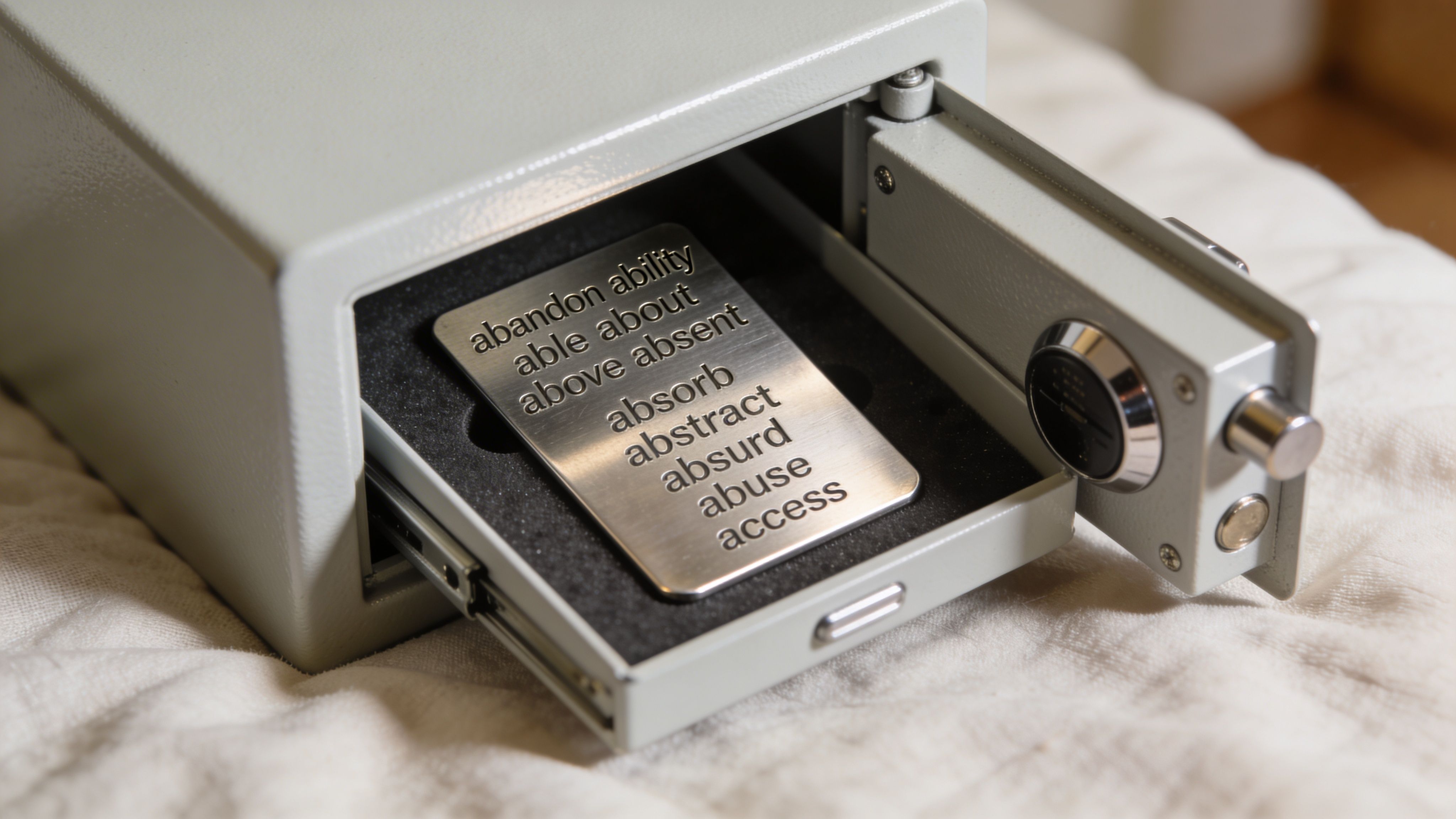
A surprising number of people still store seed phrases in screenshots, notes apps, cloud drives, or draft emails. That’s not backup. That’s delayed compromise.
What proper storage looks like
Use physical storage, not digital convenience.
Write it clearly by hand: Use durable paper or, better, a metal backup plate.
Store copies separately: A home safe and a secure secondary location is common.
Keep it away from daily devices: Never save it in your password manager or photo roll.
If you’re using a hardware wallet, keep the device and recovery phrase in different places. A thief shouldn’t get both in one grab.
There’s another side to this. Backup has to be usable. I’ve met people who “secured” their seed phrase so aggressively that nobody, including them, could recover it under stress. A backup that can’t be found, read, and restored is just as dangerous as a leaked one.
This short video gives a practical visual overview of how recovery handling works:
Test recovery on a low-value wallet before you trust the backup with serious funds. And never type your seed phrase into any website, support chat, browser prompt, or “verification tool.” No legitimate protocol needs it.
7. Monitor for Phishing Attempts and Malicious Links
You go to top up a Yield Seeker position with USDC, search the platform name, click the first result, connect your wallet, and sign what looks like a routine prompt. That mistake can drain funds faster than any failed strategy.
Phishing works because it targets habits. Stablecoin users are especially exposed because USDC is liquid, widely accepted, and often kept ready for fast deployment into vaults, lending markets, and automated yield strategies. Attackers know that if they can catch you before deposit, during a rebalance, or while you are claiming rewards, they do not need to break a protocol. They just need you to trust the wrong screen.
A good anti-phishing routine is boring on purpose.
Type important URLs yourself or use your own bookmarks. Check the full domain every time, especially before connecting a wallet or signing a message. Yield Seeker’s official site is yieldseeker.xyz. Do not trust search rankings, sponsored results, Telegram replies, Discord DMs, or “support” accounts that contact you first.
Watch for timing pressure. Fake liquidation warnings, reward deadlines, and account freeze alerts are built to rush you past basic checks. If a message pushes urgency, stop and verify through the official site, not through the link in the message.
The highest-risk moment is often the signature request itself. Read what your wallet is asking you to approve. A legitimate deposit flow should match the action you intended. If you came to supply USDC and the prompt looks like an unlimited approval to an unfamiliar address, cancel and inspect it first.
Two rules prevent a lot of losses:
Never enter your seed phrase online: No protocol, wallet provider, or support agent needs it.
Treat every unsigned message and approval as a transaction decision: If you do not understand it, reject it.
Scammers also target routine behavior. They buy lookalike domains, clone familiar interfaces, and impersonate portfolio trackers or yield dashboards you already use. If you want a quick refresher on attacker tactics, these common types of phishing are worth reviewing. For more platform-specific guidance, see how to secure your cryptocurrency.
For teams and shared treasuries, this risk gets worse. One signer clicking a fake link can expose a multisig workflow or approve a malicious contract that touches treasury USDC. Set a simple rule. No one acts on security alerts, migration notices, or urgent requests until the domain, contract, and communication channel are verified independently.
8. Regularly Audit and Review Your Account Activity and Approvals
Set-and-forget is fine for index funds. It’s bad security hygiene in DeFi.
Wallets accumulate junk over time. Old approvals. Forgotten app connections. Random token interactions from a chain you barely use anymore. Every leftover permission is another path an attacker might exploit later.
This is especially important on automated yield platforms because your capital can move through a series of protocol interactions. You want to know what can spend your USDC, what can’t, and whether those permissions still make sense.
What to review on a schedule
Once a month is a good baseline. Review:
Token approvals: Look for unlimited USDC allowances you no longer need.
Connected apps: Remove anything you don’t recognize or no longer use.
Transaction history: Watch for approvals or signatures you don’t remember.
Address labels: Name important protocol addresses so anomalies stand out.
Tools like Revoke.cash and Approve.zone make this easier. Block explorers can also show approval history and token permissions.
A practical example: you tested a DEX months ago and gave it broad USDC approval. You forgot about it. Later, the frontend is compromised or the contract risk changes. That stale approval becomes your problem, not just the protocol’s.
This habit also improves your situational awareness. If a strategy on Yield Seeker shifts, or a wallet behaves in a way you didn’t expect, you’ll notice faster because you already know what normal looks like.
One warning. Revoking everything constantly can become expensive and annoying. Focus on high-value tokens, broad approvals, and protocols you no longer trust or use. Precision beats paranoia.
9. Use Testnet Deployments and Small Test Amounts Before Full Deposits
The cheapest mistake is the one you make with test funds.
Before sending a serious USDC amount into any new workflow, run the path with a small amount first. That applies to a new wallet, a new bridge, a new strategy, a new multisig, or a new automated yield platform.
This matters even if the platform itself is solid. User errors happen in address selection, network choice, approvals, slippage settings, and withdrawal assumptions. Small tests reveal operational mistakes before they become expensive ones.
A better way to test
Use two layers:
Testnet first when available: Good for wallet setup and interaction flow.
Small mainnet deposit second: Confirms the exact real-world path with live contracts.
For example, if you’re new to Yield Seeker, start with the minimum practical amount and walk the whole cycle. Connect wallet. Approve USDC. Deposit. Watch allocation. Then test a withdrawal. Don’t assume the exit path works just because the deposit path did.
The same logic applies to multisigs. Test signer coordination with trivial amounts before routing treasury capital. It’s better to discover a signer’s device issue now than during an urgent transfer.
This is also where you catch user-experience traps. Maybe the transaction prompt looks different than expected. Maybe the wallet requests a broader approval than you planned. Maybe the receiving chain balance updates slower than you thought. A small test gives you time to inspect instead of react.
People think this step is overcautious. It isn’t. It’s professional. In DeFi, a tiny rehearsal often saves a very expensive lesson.
10. Keep Software, Wallets, and Browser Extensions Updated
You open your wallet to move USDC out of a yield strategy, and the transaction prompt looks slightly different from last week. Maybe the browser updated and the extension did not. Maybe the wallet is current but the hardware firmware is not. Small mismatches like that create the kind of confusion that leads to bad signatures.
Outdated software gives attackers an easier target, but the more common problem is simpler. Old wallet apps, stale browser extensions, and neglected firmware make normal DeFi actions harder to verify. For stablecoin users on platforms like Yield Seeker, that matters because deposits, rebalances, and withdrawals often depend on reading transaction prompts correctly under time pressure.
I treat updates as part of wallet hygiene, not occasional maintenance. If a device signs transactions, it needs a predictable update routine.
A practical update routine
Turn on automatic updates for your browser and operating system. Those are the layers your wallet depends on most.
Update wallet apps and extensions from official sources only. Never install a wallet update from an ad, pop-up, or random search result.
Check hardware wallet firmware before you need it. Do it during a quiet period, not when you are trying to approve a withdrawal or move treasury funds.
Remove extensions you do not actively use. Extra extensions increase attack surface and can interfere with wallet behavior.
Restart and verify after updates. Confirm the wallet opens normally, the right accounts appear, and transaction details render as expected.
I also separate environments. My main USDC wallet stays clean. Minimal extensions, minimal experimentation, no casual browsing. If I want to try a new tool, strategy dashboard, or wallet feature, I use a different wallet first.
That trade-off is worth it. A cleaner setup is less convenient for experimentation, but it reduces the chance that an extension conflict, fake update prompt, or broken UI shows up when you are approving a real stablecoin transaction.
One more rule matters here. Do not update blindly in the middle of an urgent move. If you need to exit a Yield Seeker position or shift USDC quickly, a same-minute software change can create new uncertainty. In practice, the safer approach is routine maintenance on your schedule, then a quick functional check, then normal use.
Good security habits are boring on purpose. Updated software, current firmware, and a stripped-down browser profile will not make you feel smarter. They do make it much harder for a preventable setup issue to turn into a loss.
Top 10 Crypto Security Practices Comparison
Security Measure | 🔄 Implementation Complexity | ⚡ Resource & Speed | ⭐ Expected Effectiveness | 📊 Outcomes / Impact | 💡 Ideal Use Cases & Tips |
|---|---|---|---|---|---|
Use Hardware Wallets for Large USDC Holdings | Moderate–High: device setup & backup | Moderate cost ($50–150); slower signing | Very high (⭐⭐⭐⭐⭐) | Strongly reduces online compromise; secure cold storage | Best for large holdings; store recovery offline; connect via WalletConnect |
Implement Multi-Signature Wallets for Treasury Management | High: setup, governance & coordination | Higher gas & coordination overhead; slower txs | High (⭐⭐⭐⭐) | Distributes control, reduces single-point failure, auditable | Ideal for DAOs/treasuries; use 3-of-5, hardware signers, time-locks |
Enable Two-Factor Authentication (2FA) on All Accounts | Low: easy to enable | Low cost; minimal friction (TOTP) | High (⭐⭐⭐⭐) | Prevents unauthorized logins; reduces account compromise risk | Use TOTP or hardware keys; store backup codes offline |
Verify Smart Contract Addresses and Audit Reports Before Depositing | Moderate: time-consuming review | Low monetary cost; time & expertise required | High (⭐⭐⭐⭐) | Identifies risky protocols; reduces deposit risk (not foolproof) | Copy addresses from official sources; check auditors & bug bounties |
Use Etherscan and Block Explorer Verification for Contract Interactions | Moderate: needs ABI/contract understanding | Free; immediate but requires user skill | Medium–High (⭐⭐⭐) | Transparent tx inspection; prevents accidental approvals | Bookmark official explorer; verify function calls & approval amounts |
Practice Secure Seed Phrase Management and Storage | Moderate: physical security measures | Low monetary cost; high stakes if mishandled | Very high (⭐⭐⭐⭐⭐) | Master recovery; single point of control (risky if exposed) | Never store digitally; use metal plates; keep multiple secure copies |
Monitor for Phishing Attempts and Malicious Links | Low–Moderate: ongoing vigilance | Low cost; continuous user attention | Medium (⭐⭐⭐) | Reduces credential theft; early warning via community intel | Type URLs manually; verify domain ownership; report scams quickly |
Regularly Audit and Review Your Account Activity and Approvals | Low–Moderate: periodic effort | Low cost; revokes incur gas fees | High (⭐⭐⭐⭐) | Early detection of malicious approvals; prevents token drains | Review monthly; use Approve.zone or Revoke.cash; set exact approvals |
Use Testnet Deployments and Small Test Amounts Before Full Deposits | Low: simple process but time-consuming | Very low cost; takes extra time | Medium (⭐⭐⭐) | Catches workflow/config errors; reduces costly mistakes | Start with $10–50 or testnet tokens; document and repeat tests |
Keep Software, Wallets, and Browser Extensions Updated | Low: enable/perform updates | Low cost; occasional restarts | High (⭐⭐⭐⭐) | Patches vulnerabilities; reduces attack surface | Enable auto-updates; update firmware; review changelogs before upgrade |
Security is a Process, Not a Product
You deposit USDC into a yield strategy, check back a week later, and the balance looks fine. Then you notice an old unlimited approval, a browser extension you forgot to update, or a seed backup you have never tested. That is how stablecoin users get hurt. Not only through dramatic hacks, but through small gaps that sit unnoticed until capital is already deployed.
For USDC holders using automated yield tools such as Yield Seeker, security has to cover the full operating cycle. Funds at rest need one set of controls. Funds moving through vaults, bridges, and strategy contracts need another. Withdrawals and rebalancing create their own risks, especially when users trust a familiar interface and stop checking what their wallet is being asked to sign.
The strongest setups are boring on purpose. Hardware wallets protect larger balances. Offline seed storage protects recovery. Multisig protects shared treasuries. Exact approvals, contract verification, and small test transactions protect day-to-day execution. None of these steps is complicated on its own. The edge comes from doing them consistently, especially after the first deposit, when attention usually drops.
That matters because recovery is limited once funds leave your wallet under a valid signature. A bad approval can sit dormant for months. A fake frontend can route you to a malicious contract that looks almost identical to the legitimate one. A compromised laptop can expose an otherwise careful user if the wallet, email, and exchange account all depend on the same device.
Automation changes the workload, not the responsibility. Yield platforms can help surface opportunities, route capital, and monitor positions. You still control the keys, the approvals, the account security, and the final transaction review. I treat automation as a force multiplier for process, not a replacement for it.
Start with two checks. Review every active USDC approval and revoke anything you do not recognize or no longer use. Then verify that your seed phrase backup is offline, readable, and stored somewhere you can still access if your phone, laptop, or hardware wallet fails.
Good DeFi security is repeatable. You know where your USDC sits, which contracts can touch it, which accounts can initiate movement, and what your recovery path looks like before something breaks.
If you want a simpler way to put these habits into practice while still earning on idle stablecoins, Yield Seeker is built for that middle ground. You keep a clear view of your balances, start with as little as $10 USDC on Base, and let an AI Agent monitor and allocate capital across DeFi opportunities in real time. It’s a practical option for people who want guided, risk-aware yield without juggling dashboards all day.