You’re probably in a familiar spot. You’ve got cash sitting in USDC, you don’t want to gamble on volatile tokens, and every DeFi tutorial seems to assume you already know how wallets, bridges, and LP tokens work.
That’s why the cleanest way to approach getting started with defi is simple: start with stablecoins, use a low-fee chain, and make your first move small enough that mistakes are educational instead of expensive. For most beginners today, Base is the easiest place to do that.
The point isn’t to become a full-time on-chain trader. The point is to learn how to put idle stablecoins to work, keep custody of your funds, and understand the trade-offs before you automate anything.
Why DeFi Might Be Your Portfolio's Missing Piece
If you hold stablecoins and do nothing with them, you get price stability but no productive use from the capital. That’s fine for short-term parking. It’s not great if the money is meant to stay on the sidelines for weeks or months.
DeFi gives you another option. Instead of handing funds to a bank or broker, you interact with smart contracts that let you lend assets, provide liquidity, or route capital into on-chain markets. For a cautious beginner, the most sensible entry point is usually earning yield on stablecoins, not chasing memecoins and not pretending you can outtrade the market.

That practical use case is a big reason DeFi caught fire in the first place. DeFi exploded into prominence during DeFi Summer in June 2020, and its share of the total cryptocurrency market cap rose from 0.9% to 4.6% between June and August 2020, according to Global X’s overview of DeFi basics.
Why stablecoins make the best first move
Stablecoins remove one major source of chaos. If you deposit USDC, you’re not also managing ETH price swings at the same time. That lets you focus on the mechanics that matter:
Wallet security
Protocol selection
Understanding approvals
Watching actual yield sources
Knowing how to exit
That’s a much better learning curve.
Why Base makes sense for beginners
Base is useful because it lowers the cost of experimentation. Cheap transactions make it easier to test with a small amount, move in and out, and correct mistakes without feeling like every click has to be perfect.
Start where errors are cheap. That one choice makes DeFi much easier to learn.
This is also where many people get DeFi wrong. They think the hard part is “finding the highest APY.” It isn’t. The hard part is building a repeatable process that keeps you out of bad contracts and bad habits.
If you can fund a wallet, bridge USDC to Base, deposit a small amount into a reputable protocol, and withdraw it successfully, you’ve already crossed the biggest beginner hurdle.
Your DeFi Starter Kit for the Base Ecosystem
The first milestone is boring on purpose. You need a wallet, some USDC, and the right network. Nothing else matters until that setup is clean.
Pick a wallet you can actually use safely
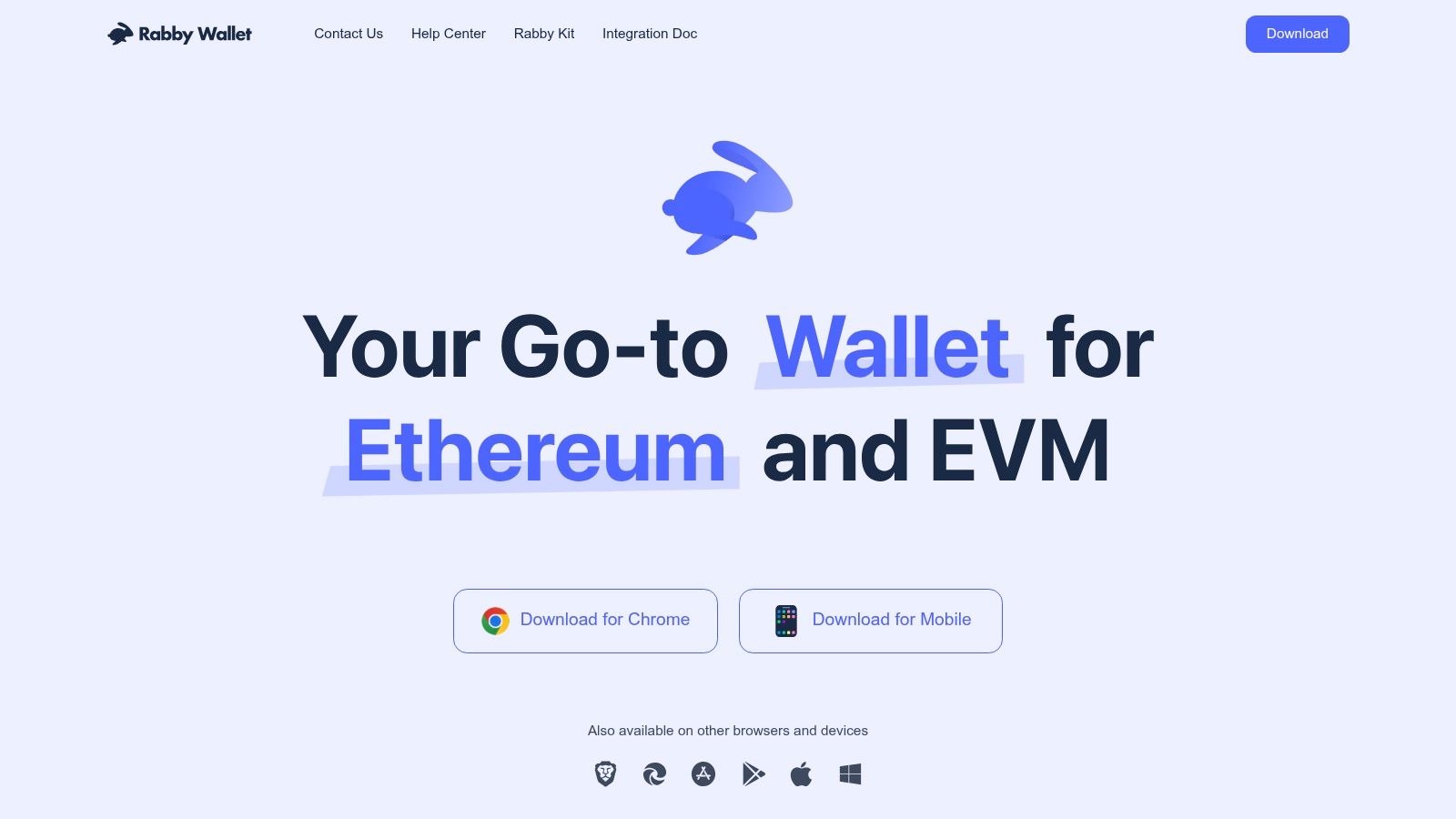
Use a non-custodial wallet. Rabby and MetaMask are common choices. For a beginner, I usually prefer Rabby because the interface is clearer about what you’re signing.
When you create the wallet, the seed phrase is the entire account. If someone gets it, they get the funds. If you lose it, you may lose access permanently.
Keep the rules basic and strict:
Write the seed phrase down offline. Don’t save it in email, notes apps, or cloud storage.
Use hardware wallet support if you can. That adds another layer between you and signing risk.
Separate daily use from storage. If you keep larger balances later, don’t use the same wallet for random testing.
According to CoW Protocol’s DeFi onboarding guide, getting started safely means using a non-custodial wallet, acquiring stablecoins, bridging to a low-fee chain like Base with Chain ID 8453, and starting with $10 to $100. The same guide notes that 73% of 2022 exploits targeted unaudited contracts.
Get USDC and move it to Base
Buy USDC from a reputable on-ramp or exchange you already trust. Then move it to your own wallet.
From there, bridge it to Base using the official route you’re comfortable verifying. Double check that you’re landing on Base, not another network with a similar interface. A lot of beginner mistakes are just wrong-network mistakes.
A few practical checks help:
Confirm the destination chain is Base
Check the token is USDC
Send a small amount first
Wait for confirmation before moving more
If you want a broader view of how Base fits into today’s ecosystem, this piece on exploring the broader multi-chain DeFi landscape gives helpful context on why users increasingly move across chains instead of staying on one.
Verify before you click
Most early losses don’t come from “bad luck.” They come from rushed approvals, fake front ends, and signing things without reading them.
Practical rule: if a transaction prompt doesn’t make sense, reject it and start over.
The safest beginner rhythm looks like this:
Bookmark the protocol site instead of searching every time
Check contract addresses when a protocol publishes them
Use small first deposits so the first interaction is a test, not a commitment
If you want a simple primer focused on the asset itself, this guide to USDC on Base is useful before you make the first transfer.
A quick visual walkthrough helps if this is your first wallet setup:
Once your wallet holds USDC on Base, you’re ready for the part that matters: choosing where to deploy it.
How to Find and Interact With Your First Yield Protocol
Having funds on Base doesn’t mean you should click the first protocol homepage you see. The discipline is in filtering.
As of February 2025, DeFi reached $100.3 billion in total value locked and 17.49 million unique users worldwide, according to Statista’s DeFi market overview. That scale is useful for beginners because it means you’re not limited to obscure apps with thin liquidity. You can choose from mature venues and still stay conservative.
What to check before depositing
Use discovery tools like DeFiLlama to see which protocols are active on Base. You’re not looking for the most exciting app. You’re looking for one that’s understandable.
Focus on these questions:
Is the product simple enough to explain in one sentence?
“Deposit USDC to lend it” is a better first move than a complicated looping strategy.Does the protocol have visible documentation and audits?
If basic documentation is weak, move on.Can you see where the yield comes from?
Lending demand, swap fees, and incentives are different sources. If the yield source isn’t clear, that’s a warning.Is the interface readable?
If the dashboard looks like a cockpit and you’re guessing what each button does, pick a simpler protocol.
If you want a stronger foundation before connecting your wallet to any dApp, this explainer on what is a DeFi wallet covers the basics clearly.
Your first interaction
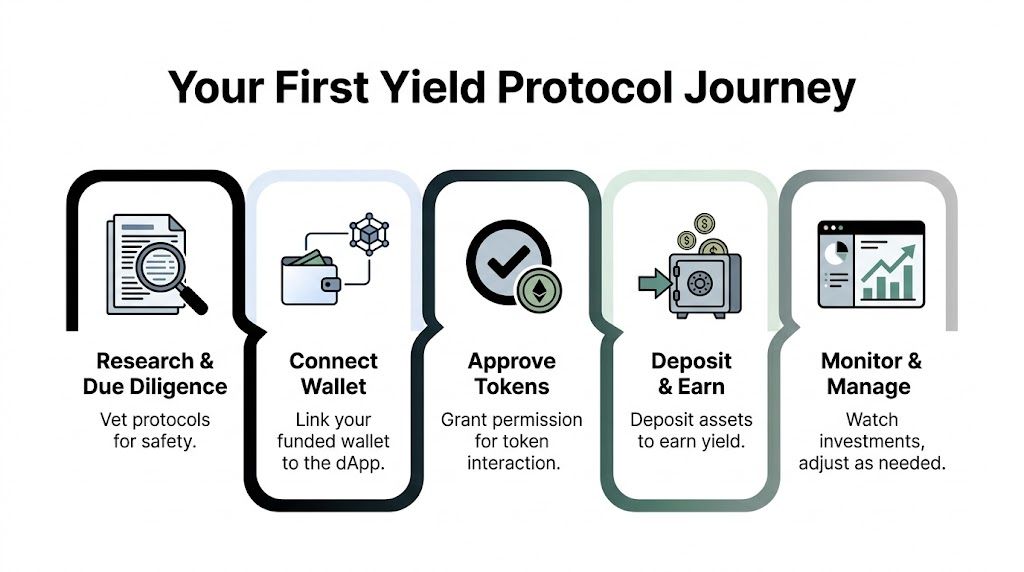
A first deposit usually follows the same pattern:
Connect wallet
You connect Rabby or MetaMask to the protocol front end.Approve token
This gives the protocol permission to interact with your USDC.Deposit
You choose an amount and submit the transaction.Confirm position
The dashboard updates to show supplied balance, earned yield, or LP position.Test the exit path
After the deposit succeeds, know where the withdraw button is. This matters more than people think.
That “approve” step deserves extra respect. Token approvals are a real part of DeFi risk. Read the prompt. Understand whether you’re granting access for a limited amount or a broader allowance.
Two beginner-friendly protocol types
For stablecoin users, the cleanest first choices are usually:
Lending protocols
You supply USDC and borrowers pay to access that liquidity. This is easier to understand and usually easier to monitor.Stablecoin liquidity pools
You deposit stablecoins into a pool used for swaps. The return often comes from trading fees, and sometimes incentives.
If you’ve never looked under the hood of trading venues, reading about what is market making helps make sense of why liquidity pools can generate yield at all.
Don’t optimize your first deposit. Use it to learn the full cycle: connect, approve, deposit, track, withdraw.
A good first session ends with confidence, not adrenaline. Deposit a small amount, watch the interface for a day or two, then withdraw part of it. Once you know the round trip works, everything gets less abstract.
Understanding Basic Strategies and Managing Risk
The safest DeFi users aren’t the ones who know the most jargon. They’re the ones who know what can go wrong before they deposit.
For stablecoin holders on Base, most beginner activity falls into two buckets: lending and liquidity provision. Both can work. Both also come with different failure modes.
Lending is simpler, but not risk-free
With lending, you supply USDC to a protocol. Borrowers post collateral and pay to borrow from that pool. Your return comes from borrower demand and protocol mechanics.
The good part is simplicity. You’re usually holding one asset, the interface is clearer, and accounting is easier.
The trade-offs are less obvious:
Smart contract risk still exists
Stablecoin risk still exists
Protocol design risk still exists if liquidations or collateral assumptions break under stress
Liquidity pools can pay well, but they add moving parts
Stablecoin pools are common for people who want fee income from swaps. If traders use the pool, liquidity providers earn part of those fees.
That sounds straightforward, but the risk profile changes. You now care about pool composition, route volume, token quality, and how incentives affect behavior. Even in stable-stable pools, you still need to think about de-pegging and pool imbalance.
A stablecoin pair is calmer than a volatile pair. It isn’t riskless.
The risks worth respecting
According to Scand’s DeFi strategy guide, 51% of DeFi losses stem from oracle manipulations or private key compromises, and platforms with 3+ audits retain 2.5x more users. That doesn’t guarantee safety, but it tells you where serious users place trust.
Here’s a practical checklist I’d use before any deposit.
Risk Type | What to Check |
|---|---|
Smart contract risk | Look for audits, active docs, a clear product scope, and a history of careful updates |
Wallet security risk | Use a trusted wallet, protect the seed phrase, and avoid signing transactions you don’t understand |
Stablecoin risk | Know which stablecoin you hold and whether you’re comfortable with its issuer and peg model |
Interface risk | Bookmark the real site and avoid clicking through random links on social platforms |
Liquidity risk | Check whether entering and exiting looks smooth, especially for the strategy you’re using |
Strategy complexity risk | If you can’t explain where the yield comes from, don’t deposit |
Monitoring risk | Make sure you know how to track the position and how to withdraw without guessing |
What actually works for beginners
A boring process tends to yield better results:
Start tiny and learn the transaction flow
Stay with one strategy at a time
Prefer understandable yield over flashy yield
Keep spare cash outside the protocol so you’re never forced to react under pressure
What doesn’t work is hopping into a new farm because the number on the homepage looks exciting. That behavior creates blind spots fast.
If you want a deeper framework for evaluating protocols and operational risk, this guide on DeFi risk management is worth reading before you scale up.
Good DeFi habits look conservative from the outside. That’s usually a sign you’re doing it right.
The Smart Cut: Automating Your Yield Strategy with Yield Seeker
Manual DeFi is educational. It’s also work.
You need to check protocols, track changing rates, review dashboards, watch for risk changes, and decide when moving funds is worth it. If you enjoy that, great. A lot of people don’t. They want stablecoin exposure without turning yield farming into a part-time job.
That’s where automation starts to make sense.
Where manual management breaks down
The friction points are predictable:
Research fatigue from comparing multiple protocols
Execution overhead from moving funds manually
Monitoring burden when yields shift
Decision fatigue when every change looks urgent
A lot of beginners assume they need more complexity to improve results. Usually they need less complexity and better process.
What automation changes
Yield Seeker is an AI-powered platform where users can deposit as little as $10 USDC on Base and let a personalized AI agent monitor and allocate capital across DeFi protocols in real time. The platform is designed around a simple interface, accessible funds, and no lockups or withdrawal fees.
That doesn’t remove the need to understand risk. It removes a chunk of the repetitive work.
For a busy professional, that matters. The hard part of DeFi usually isn’t pressing the deposit button. It’s consistently making good allocation decisions after the first deposit, especially when there are too many tabs open and too little time to compare them.
Automation is useful when it reduces routine decisions without hiding the underlying strategy.
The healthy way to think about it is this: learn the manual path once so you understand what’s happening, then use tooling that reduces the maintenance burden if that fits how you manage money.
Embarking on Your DeFi Journey
Getting started with DeFi doesn't need to begin with using borrowed capital, volatile tokens, or complicated vaults. The lower-stress path remains a sound starting point for many: hold stablecoins, move onto Base, test a reputable protocol with a small amount, and build confidence from direct experience.
That approach does two important things. It limits the cost of mistakes, and it forces you to learn the mechanics that matter before you scale.
If you remember only a handful of rules, make them these:
Control your wallet
Protect your seed phrase
Verify every site and contract
Start small
Choose understandable yield
Know how to withdraw before you deposit
That’s enough to avoid many beginner errors.
You don’t need to become a DeFi power user in a weekend. You just need one clean first cycle. Fund the wallet. Bridge the USDC. Deposit a small amount. Monitor it. Withdraw it. Repeat only when the process feels ordinary.
That’s how DeFi becomes useful instead of intimidating.
Frequently Asked Questions About DeFi
How much money do I need to start?
You can start small. A small first deposit is often better because it turns setup and transaction mistakes into cheap lessons. Yield Seeker supports deposits from $10 USDC on Base, which makes experimentation more approachable.
Is DeFi safe for beginners?
It can be used carefully by beginners, but it isn’t automatically safe. The safest path is using stablecoins, reputable protocols, a non-custodial wallet you understand, and small initial deposits. Most avoidable losses come from poor wallet hygiene, fake sites, careless approvals, or jumping into products that are too complex.
Why use Base instead of Ethereum mainnet for a first try?
For beginners, lower transaction costs make learning easier. Cheap transactions mean you can test deposits, approvals, and withdrawals without making every mistake expensive. That’s especially helpful when you’re still getting comfortable with wallets and bridging.
Should I choose lending or liquidity pools first?
Usually, lending is easier to understand. You supply USDC and monitor the position. Stablecoin liquidity pools are still reasonable, but they add more moving parts, including pool composition and fee behavior. If you want the smoothest learning curve, start with lending.
Do I need to watch DeFi positions every day?
Not always, but you do need some monitoring plan. Manual DeFi works best for people willing to check dashboards, review positions, and stay aware of protocol changes. If you don’t want that ongoing workload, automation can be a better fit.
What about taxes?
Tax treatment depends on where you live. Yield, rewards, swaps, and withdrawals can all create reporting obligations. The practical move is to keep clean records from day one and check local guidance or talk to a qualified tax professional.
If you want a simpler way to put idle stablecoins to work on Base without manually hunting protocols and monitoring every rate change yourself, take a look at Yield Seeker. It gives you a low-friction way to start with USDC, keep funds accessible, and use an AI agent to handle the repetitive parts of DeFi yield management.