
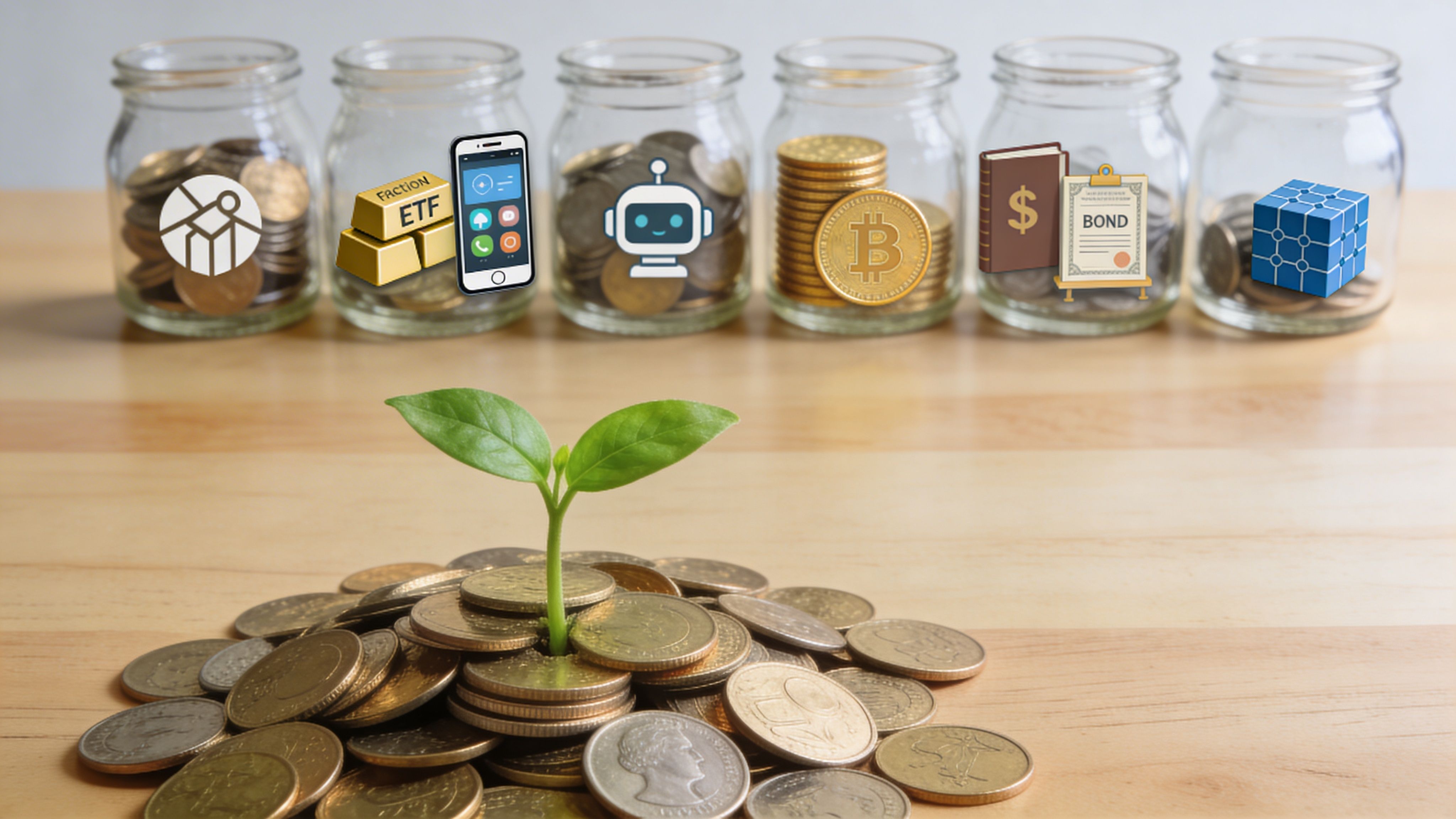
You have $50 or $100 sitting idle after bills clear. The practical question is not whether that amount is enough to matter. It is where to put it so it starts earning, stays liquid enough for life, and does not turn into another account you forget to manage.
Small-balance investing used to push people into two weak options: wait until you have more cash, or accept near-zero yield. That gap has narrowed. Fractional investing, automated contributions, stablecoins, and simple DeFi tools now let small deposits compound without requiring a large starting balance or constant micromanagement.
The true edge is not chasing the single highest return. It is building a repeatable system. For small amounts, good investing usually looks boring in the right ways: automatic deposits, clear risk limits, low fees, and products you can understand in one sitting. We have found that this matters even more in crypto, where a decent yield can be wiped out fast by bad custody habits, gas costs, or jumping between protocols for an extra point or two.
That is also why this guide does not stop at traditional advice. The useful playbook today blends old rules with newer rails. You still want diversification, dollar-cost averaging, and cash management. You can also use stablecoins, DeFi savings products, and tools such as AI agents that automate stablecoin yield strategies when the setup is simple enough to justify the added risk and complexity.
If you want a practical starting point, these eight options cover the range from familiar apps to onchain yield systems. The goal is simple: turn small savings into productive capital without making the process harder than the return is worth.
1. Automated Yield Farming with AI Agents
Many small investors fail in DeFi for one reason. The yields are scattered, the workflows are annoying, and the mental overhead is too high.
That is why automated yield farming with AI agents is one of the most practical options for small balances. Instead of moving stablecoins manually between protocols, an automated system monitors opportunities and adjusts allocation for you. For someone holding USDC and trying to earn yield without turning it into a part-time job, that solves the core problem.
Why this works for small balances
Small investors do not need more dashboards. They need less friction.
This underserved behavioral gap shows up in mainstream small-investing content too. The problem is often not access to products. It is decision paralysis, platform fatigue, and the burden of managing scattered positions, a gap highlighted in Hustle Fund’s discussion of starting small.
In practice, AI agents help by doing the monitoring work that many people will not do consistently. That makes them especially useful for stablecoin holders who want passive income but do not want to evaluate every vault, pool, and lending market by hand.
Yield Seeker is one example. Users can deposit USDC on Base and let an AI agent allocate across DeFi protocols while keeping funds accessible. If you want the mechanics, their walkthrough on how to use AI agents explains the operating model.
Later in this section, watch this quick overview for context:
What to check before depositing
Automation is useful. Blind trust is not.
Look for a few things before you commit even a small amount:
Read the strategy docs: You should understand what protocols the system uses, what assets it touches, and how it handles risk.
Check liquidity terms: If you need access to cash, avoid setups that trap a small balance in slow or restrictive exits.
Review fees with care: Small accounts are more sensitive to friction than large ones.
Start with a test deposit: Use a minimum-sized deposit first, then watch how the product behaves.
If a platform promises simplicity but hides where funds go, skip it. Good automation reduces work without reducing transparency.
This is not a magic solution. Smart contract risk still exists. Stablecoins have their own risks. But if your alternative is leaving capital idle because DeFi feels fragmented, an AI agent is often the cleanest on-ramp.
2. Dollar-Cost Averaging DCA into Stablecoins
Your paycheck lands. You have $25, maybe $100, and the usual question shows up again. Buy now, wait for a dip, or do nothing and let the cash sit idle.
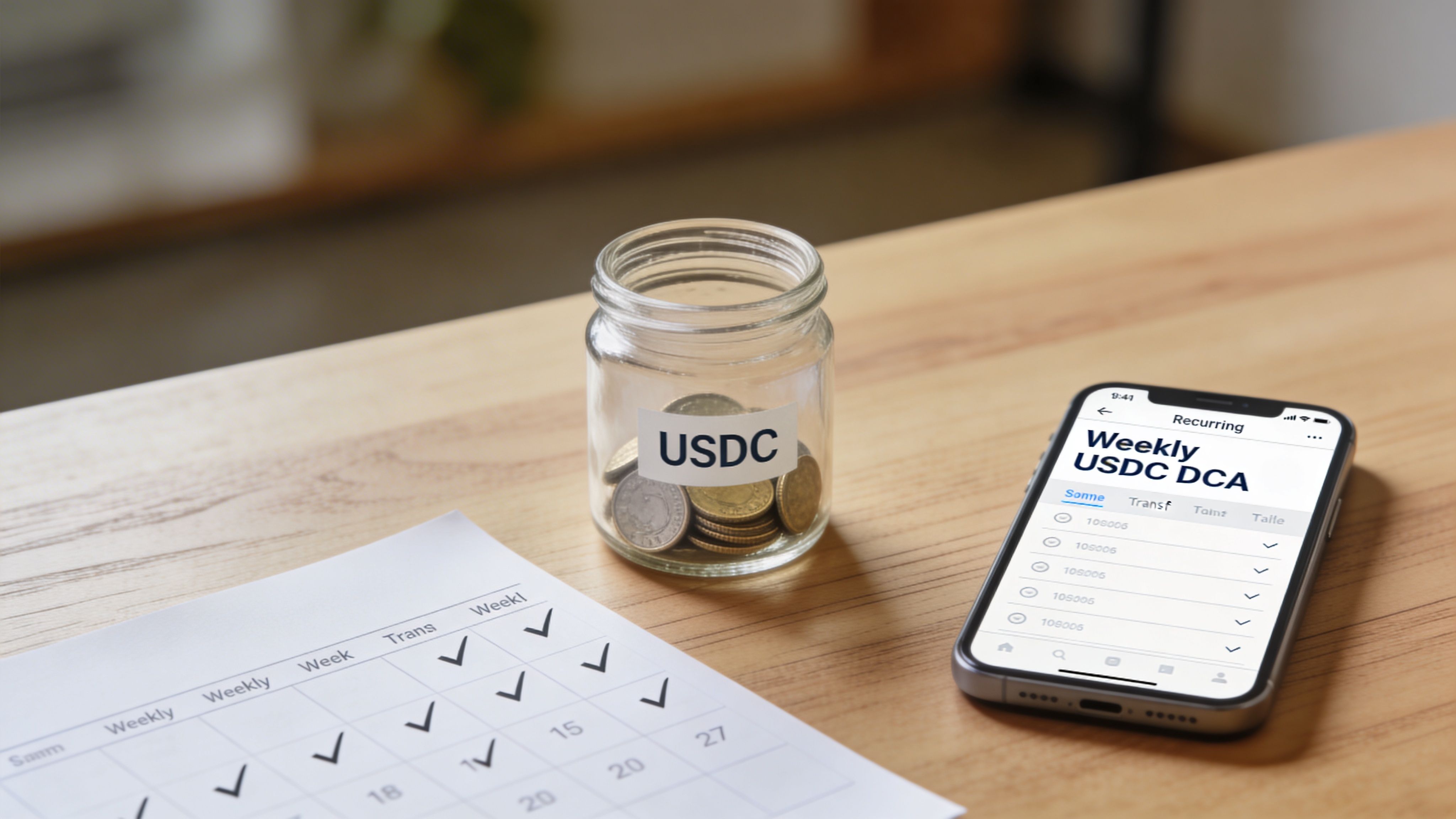
DCA solves that decision loop. You commit a fixed amount on a fixed schedule, then route it into stablecoins that can earn while they wait for the next move. For small balances, that matters. It turns inconsistent saving into a repeatable system, and it fits well with both traditional investing discipline and newer DeFi workflows.
Why this works for small amounts
DCA is mainly a behavior tool.
A fixed weekly or monthly buy reduces the damage caused by hesitation, headline chasing, and trying to call tops and bottoms with a tiny account. That is the key advantage for beginners. The habit survives bad weeks.
For stablecoin users, DCA also creates optionality. You can build a reserve in USDC or DAI, earn modest yield on it, and deploy from a stronger position later instead of scrambling for cash when an opportunity appears. If you need a practical setup before choosing a destination, this primer on how DeFi lending works for stablecoins and other assets gives the right foundation.
If you also invest outside crypto, the principle is familiar. Small recurring contributions beat waiting for a perfect entry that never comes.
How to set it up without overengineering it
Keep the system boring.
Match deposits to your cash flow: Weekly deposits fit hourly or freelance income. Monthly deposits fit salary schedules.
Automate the on-ramp: A standing transfer removes missed contributions and emotional timing calls.
Choose one or two stablecoins: Simplicity beats spreading small balances across too many assets.
Put idle balances somewhere productive: If the amount is too small for active strategy rotation, let it earn in a straightforward yield setup.
Track contributions separately from yield: That makes it easier to see whether the process is working.
There is a trade-off here. In a steady bull market, lump-sum investing often wins because capital gets deployed earlier. DCA gives up some upside in exchange for consistency, lower timing pressure, and a process that smaller investors can consistently maintain. In practice, that trade is often worth making.
The newer twist is automation. You can DCA into stablecoins first, then use rules or AI-assisted tools to move those balances into conservative yield strategies once they clear a threshold. That approach keeps the savings habit simple while still putting idle capital to work.
Done well, DCA into stablecoins is not passive in the lazy sense. It is disciplined cash management with a clear job. Build reserves, earn while you wait, and stay ready.
3. Stablecoin Lending Pools and Interest Accounts
A common small-balance problem looks like this. You have $50, then $120, then $200 sitting in stablecoins after a few deposits. It is not enough to justify active strategy hopping, but it is enough to earn something if you park it in the right place.
Stablecoin lending pools solve that well. You supply USDC, USDT, or DAI to a protocol. Borrowers pay for access to that liquidity, and lenders receive part of that demand as yield. For small investors, the appeal is practical. The setup is easier to understand than most token-based strategies, and the return comes from a real market function.
Start with the boring names
Boring is an advantage here.
Aave and Compound are the usual starting points because they have been stress-tested by real users and large amounts of capital. Maker’s DAI savings route and stablecoin-focused pools on Curve belong in the same general bucket, even though the mechanics differ. The shared idea is simple. Put a stable asset to work without adding unnecessary token exposure.
If you want a plain-language primer before using any of them, start with this explanation of DeFi lending mechanics and risks.
Where people get this wrong
The usual mistake is treating the displayed APY as the whole product.
It is not. A lending position has several moving parts. The headline rate can fall fast if borrow demand drops. A pool can be liquid but expensive to exit on the wrong chain. Incentive-heavy yields can disappear the moment token rewards change. Small balances are more sensitive to those details because fees and friction eat a bigger share of returns.
Use a simple screen before depositing:
Choose protocols with a long operating history: Brand alone means nothing, but battle-tested systems usually beat newer pools offering flashy rates.
Check whether yield comes from borrowing activity or token incentives: Borrow-driven yield is usually easier to underwrite.
Look at withdrawal conditions and network costs: A decent rate is useless if gas or bridging turns a small account into dead money.
Avoid spreading tiny balances too widely: Two solid venues can make sense. Six usually creates tracking overhead without improving results much.
Good stablecoin lending feels uneventful. If you cannot explain where the yield comes from, you should not deposit.
Small investors can still apply the same diversification logic used in traditional investing. FINRA’s overview of investing small amounts highlights the value of spreading risk instead of concentrating every dollar in one place. In DeFi, that can mean splitting stablecoins across a couple of established protocols, or using an automated layer that reallocates only after your balance reaches a useful threshold.
This is also one of the cleaner points where DeFi and AI fit together. An AI agent does not need to chase exotic farms to be useful. It can monitor base lending rates, cap exposure per protocol, and move stablecoins only when the yield difference is large enough to justify the transaction cost. That matters more on small sums than many people realize.
Stablecoin lending will never feel exciting. That is a feature. If your goal is to earn yield on small amounts without turning your savings process into a second job, this category deserves a place near the top of the list.
4. Micro-Investing Apps and Roundup Programs
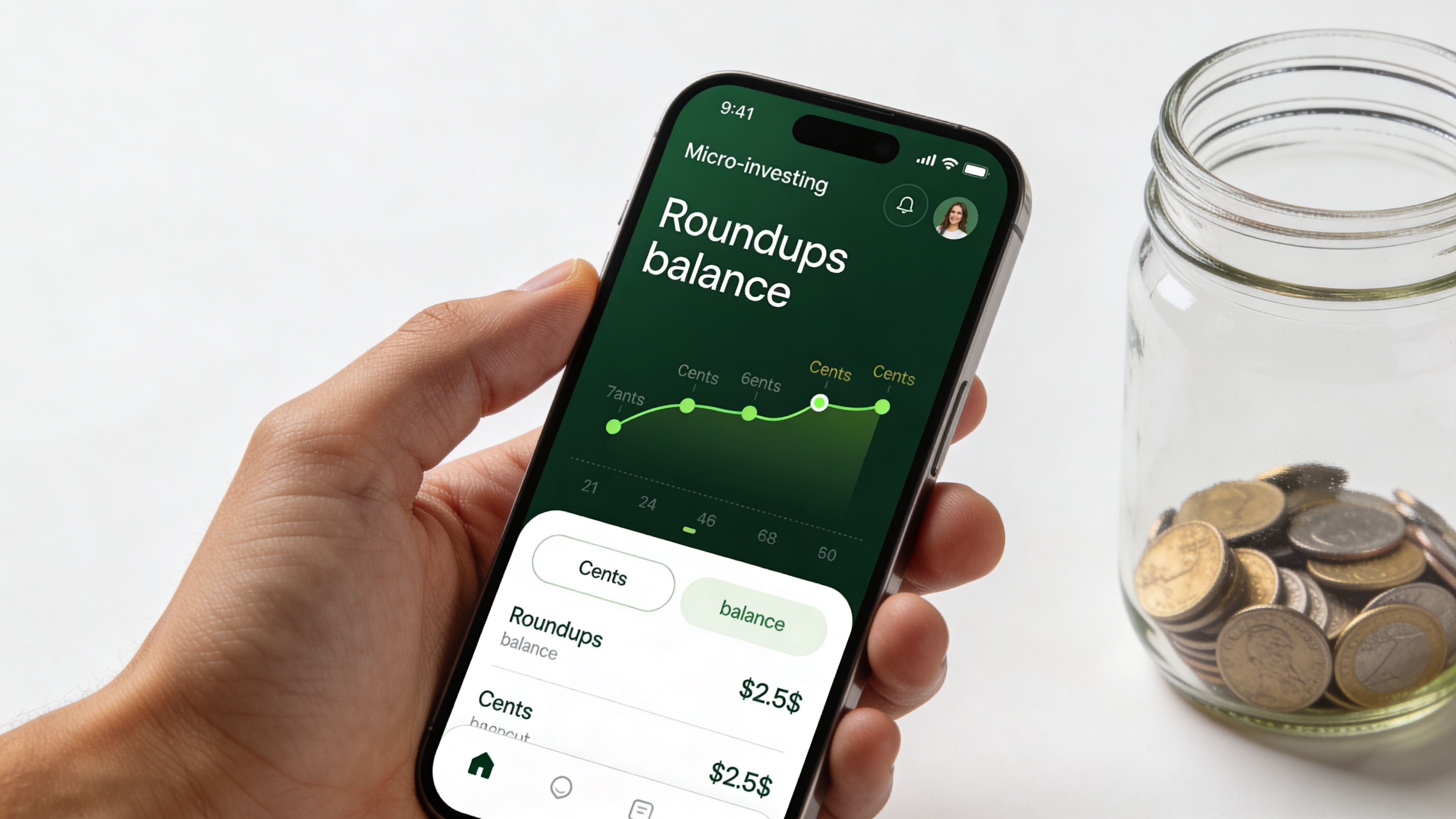
You swipe your card three or four times a day and barely notice the cents left over on each purchase. Those cents usually disappear into consumption. A roundup app turns them into an investing habit.
That matters because small-balance investing is mostly a behavior problem, not a product problem. People with $10 or $25 to spare do not need more theory. They need a setup that collects money before they spend it somewhere else.
Why roundups work for small balances
Roundups remove decision fatigue.
Traditional micro-investing apps proved the model years ago. Fractional investing lets beginners put a few dollars into diversified funds or higher-priced assets without waiting until they have a large lump sum. The same logic carries over to crypto. Small, automated contributions build the base. Then you can route that base into something that earns instead of leaving it idle.
This is one of the cleaner intersections between timeless investing and newer tools. The timeless part is simple. Automate contributions, stay diversified, and keep fees low. The newer part is what you do with the cash once it lands. Instead of stopping at a brokerage cash balance or exchange wallet, stablecoin users can send those small deposits into a yield strategy with clear rules and limited risk.
Where roundups fall short
Roundups are a starter system, not a full plan.
If your spending is low, the contribution rate will be low too. If the app charges a monthly fee, a tiny account can lose a meaningful share of its growth. If the money lands in a wallet or account that earns nothing, the automation helps behavior but not returns.
The practical fix is to stack automations. Use roundups for passive collection. Add a fixed weekly or monthly deposit for consistency. Then choose a destination that matches the account size. For very small sums, simple beats clever.
A workable setup looks like this:
Enable roundups on everyday spending: This captures money that would otherwise disappear.
Add a recurring deposit, even a small one: Progress should not depend on how often you buy coffee.
Check the fee model before you start: Flat monthly fees can punish small accounts more than percentage fees.
Set a transfer threshold: Move funds into your investment or stablecoin yield account only once the balance is large enough to avoid wasteful transaction costs.
Choose a productive destination: A cash wallet on an exchange is convenient, but convenience alone does not earn yield.
For DeFi users, the upgrade path is straightforward. Start with the same behavioral engine that made roundup apps useful in traditional finance. Once the balance reaches a sensible threshold, convert to stablecoins and deploy into a conservative yield venue or an AI-managed agent with explicit guardrails. That gives small investors something better than spare-change accumulation. It gives them a repeatable system for building cash reserves that functions effectively.
The key trade-off is speed versus simplicity. Roundups are easy to keep running, but they build slowly. Recurring deposits require more intent, but they compound faster. Used together, they solve different parts of the same problem. One captures forgotten money. The other builds momentum.
5. Stablecoin Treasury and Corporate Yield Management
A creator with $3,000 in USDC for next month’s contractor payments has the same treasury problem as a DAO with $3 million. Cash needs to stay available for operations, but leaving the full balance idle adds friction that shows up over time in lower runway and missed yield.
This section applies to small businesses, protocol teams, agencies, and solo operators who regularly hold stablecoins between revenue events and expenses. The account size changes. The operating discipline does not.
Small treasuries need rules early
Teams often delay treasury policy until the balance feels meaningful. That usually creates a messy handoff later, with funds scattered across wallets, no approval flow, and no clean record of why capital was placed in one protocol instead of another.
A better setup starts with two clear pools. Keep an operating bucket for payroll, vendor payments, and near-term obligations. Keep a reserve bucket for capital that can sit in lower-volatility strategies such as stablecoin lending, managed vaults, or AI-assisted allocation with defined risk limits.
The questions to settle in advance are simple:
Who can move funds
Which protocols and chains are approved
How much stays liquid at all times
What triggers a rebalance
How activity gets logged for accounting and taxes
That work sounds administrative. It is what keeps treasury management investable instead of improvised.
Automation matters once real operations depend on the funds
Manual treasury management breaks down fast. Someone has to compare rates, monitor protocol risk, move assets, track wallet activity, and explain the decisions later. Small teams rarely have a dedicated operator for that job.
Automation reduces that burden if the guardrails are clear. AI agents can monitor stablecoin venues, shift a reserve allocation within approved limits, and maintain a cleaner record than a treasury process run from chat messages and spreadsheets. The trade-off is obvious. More automation saves time, but it also raises the standard for permissions, reporting, and override controls.
That matters even more for businesses than for individual investors. A personal wallet can tolerate some mess. A company treasury cannot.
Traditional guidance on small-amount investing usually focuses on brokerage accounts, retirement plans, or savings products. DeFi treasury operations introduce a different problem set, especially around custody, reporting, and policy. The U.S. Chamber of Commerce notes in its small business investment guidance that businesses should tie investment decisions to cash flow needs and operational priorities. That principle carries over directly to stablecoin treasuries.
The practical rule is straightforward. Do not send operating cash into yield strategies just because the headline APY looks attractive. Match the tool to the cash horizon. Use immediate-liquidity balances for known expenses. Use reserve balances for controlled yield. If AI-managed stablecoin strategies are part of the stack, set the limits first and let the system operate inside them.
A treasury strategy does not need to appear complex. It needs to preserve liquidity, produce records your accountant can work with, and prevent one busy founder or team member from making allocation decisions by instinct.
6. High-Yield Savings Alternatives DeFi Savings Accounts
A common small-balance problem looks like this. You have a few hundred dollars in stablecoins after taking profits, getting paid on-chain, or setting aside dry powder for the next move. Leaving it idle earns nothing. Chasing volatile tokens for a few extra points of upside usually is not worth the risk.
DeFi savings-style accounts give those funds a job. The model is simple. Deposit stablecoins, earn yield, keep liquidity reasonably available, and avoid turning a cash-management decision into a trading decision.
Compare them to the right benchmark
The right comparison is not meme coins or active trading. It is the return on cash and cash-like balances.
Bank savings accounts, money market funds, and short-term CDs still set the baseline for low-risk cash. They offer insurance or established legal protections that DeFi does not. That trade-off matters. A DeFi savings account can pay more, settle faster, and fit better if your money already lives on-chain. It also adds smart contract risk, stablecoin risk, and platform risk.
That is the practical filter. If funds need government-backed protection or must cover near-term bills, keep them in fiat accounts. If funds are already in stablecoins for payments, trading, or on-chain spending, earning conservative yield can be more rational than leaving them idle.
How to use this category without treating it like a bet
The mistake I see most often is simple. People call something “savings,” then deposit into a product they do not understand.
Use a tighter checklist instead:
Separate cash roles: Emergency savings belongs in insured bank products. On-chain reserves can sit in DeFi.
Start with one tested protocol: Make a small deposit first, then test withdrawal speed, wallet flow, and transaction costs.
Read the yield source: Lending demand, Treasury-backed assets, and token incentives are not the same thing.
Watch the terms, not just the APY: Caps, lockups, changing rates, and withdrawal queues matter more on small balances than headline yield.
Use automation carefully: AI agents can help sweep idle stablecoins into approved yield venues, but only with preset limits and clear permissions.
That last point is becoming more relevant. Small investors now have access to tools that used to be reserved for funds and treasury teams. The useful version of AI in personal finance is not flashy prediction. It is simple automation: route idle stablecoins, monitor risk thresholds, and reduce the number of manual decisions that lead to mistakes.
This category works best as a cash-management layer for digital dollars you already intend to keep on crypto rails. For anyone trying to find the best way to invest small amounts without taking equity-style volatility, that is a meaningful option. The yield may be modest, but the setup can be clean, repeatable, and useful.
7. Robo-Advisor Platforms for Automated Crypto Portfolio Management
You deposit $50 in stablecoins, plan to manage it later, and a week passes. Rates changed, gas spiked on one chain, and the balance is still idle. That is the practical application for a crypto robo-advisor. It turns small balances into a rules-based portfolio instead of another unfinished wallet task.
Robo-advisor-style crypto platforms sit between manual DeFi and a basic savings product. You set a risk profile, approve the strategy, and let the platform handle allocation, rebalancing, and in some cases yield rotation. For small investors, the value is not more product choice. It is fewer low-quality decisions.
That matters more on-chain than it does in traditional brokerage accounts. Every extra token, bridge, vault, or staking option adds execution risk. A useful robo-advisor reduces that surface area. You give up some control, but you also cut down on mistakes such as chasing a temporary APY, forgetting to rebalance, or leaving funds stranded in cash.
The stronger version of this model now includes light automation and policy controls, not just static allocation. That is the practical edge behind the recent wave of AI in personal finance. The useful tools do not predict the market. They automate repetitive decisions around stablecoin placement, portfolio drift, and risk limits.
What to check before using one
A crypto robo-advisor earns its keep when it explains the system in plain language.
Check four things:
Portfolio inputs: Which assets, protocols, or yield venues does it use?
Rebalancing logic: Is it calendar-based, threshold-based, or discretionary?
Fee stack: Management fees, performance fees, trading spreads, and gas pass-through can eat a small balance fast.
Custody model: Do you keep assets in your wallet, or do you hand control to the platform?
Those details matter more than a polished dashboard. I trust a simple product with clear rules over a slick interface that hides where funds go.
A conservative version of this category usually centers on stablecoins, short-duration yield strategies, and tight allocation bands. That can work well for someone building from a small base and trying to earn yield without taking full crypto beta. A more aggressive robo-advisor may rotate into volatile assets, trend strategies, or sector baskets. That can improve upside, but it also changes the job from cash management to active speculation.
For small amounts, the best setup is usually narrow. One clear objective. One understandable risk budget. One fee structure you can explain in a sentence. If the platform cannot pass that test, the automation is probably not worth paying for.
8. Peer-to-Peer P2P Stablecoin Lending and Credit Platforms
A small stablecoin deposit can earn more in a credit market than in a standard lending pool, but the extra yield comes from taking borrower risk, lockup risk, or both.
That changes the job. You are not only choosing a protocol. You are choosing an underwriting model.
Peer-to-peer and on-chain credit platforms sit closer to the actual borrower than pooled lending markets do. Capital may go to trading firms, fintech lenders, real-world businesses, or curated borrower groups. If repayment stays on track, yields can be attractive even on modest balances. If underwriting is weak, a single credit event can wipe out a long stretch of income.
For small amounts, I treat this as a controlled higher-risk sleeve, not the foundation of a yield plan. Keep the core in simpler stablecoin products with clearer liquidity, then allocate a smaller portion to credit strategies once you can explain where the yield comes from in one sentence.
Platforms such as Goldfinch, Maple, Clearpool, and TrueFi reflect different credit philosophies. Some target institutional borrowers. Some fund real-world lending. Some depend more on collateral. Others depend more on borrower screening and loan servicing. Those differences matter more than the headline APY.
A practical screen helps:
Borrower exposure: Is capital going to one borrower, a small pool, or a diversified book?
Loss process: Who absorbs defaults first, and is there junior capital or any reserve buffer?
Exit terms: Are funds locked to maturity, subject to withdrawal queues, or liquid on secondary markets?
On-chain transparency: Can you see loan status, collateral terms, and repayment history without relying on marketing copy?
Minimum size: Does the position stay small enough that a delayed repayment will not force you to sell something else?
This category is also where DeFi and AI can assist a small investor, if used correctly. An AI agent will not fix bad credit, but it can monitor pool utilization, maturity dates, wallet concentration, and changes in borrower behavior faster than most individuals will do by hand. That is useful for stablecoin lenders running a small, diversified book across a few venues instead of chasing one high number.
The fundamental trade-off is simple. Standard stablecoin lending pays less because the risk is more generalized and liquidity is often better. P2P credit can pay more because the risk is more specific. Specific risk needs position limits, patience, and a willingness to say no when the structure is hard to understand.
Used that way, P2P stablecoin lending can earn a place in a small portfolio. It works best after the basics are already in place.
8-Option Comparison: Small-Amount Crypto Investments
Strategy | 🔄 Implementation Complexity | ⚡ Resource Requirements | 📊 Expected Outcomes | 💡 Ideal Use Cases | ⭐ Key Advantages |
|---|---|---|---|---|---|
Automated Yield Farming with AI Agents | High: multi‑protocol integrations and ML models | Low capital ($10+), depends on trusted platform and fees | Optimized, variable yields via continuous reallocation; medium protocol risk | Small retail investors wanting hands‑off yield optimization | Continuous real‑time optimization; accessible to novices |
Dollar‑Cost Averaging (DCA) into Stablecoins | Low: simple recurring transfers | Very low capital per interval ($10–$50 typical), automated transfers | Steady compounding, reduced timing risk; lower short‑term upside | Long‑term savers and users with regular income | Discipline and simplicity; reduces emotional timing errors |
Stablecoin Lending Pools & Interest Accounts | Low to Medium: deposit to existing protocols | Wallet and stablecoins, minimal onboarding, no/minimum balances | Variable APY (≈3–12%), liquid deposits, protocol risk | Passive income seekers who want liquidity and simple yields | Transparent rates, instant liquidity, easy to understand |
Micro‑Investing Apps & Roundups | Low: app setup and automation | Extremely low minimums ($1–$10), mobile‑first UX | Slow but consistent accumulation; habit formation | Beginners and users wanting frictionless saving | Zero effort, builds habit, very accessible |
Stablecoin Treasury & Corporate Yield Management | High: governance, compliance, multi‑protocol automation | Institutional controls, larger capital, reporting and audit needs | Risk‑adjusted returns on idle treasuries; scalable | DAOs, Web3 teams, creators and institutions managing reserves | Scalable, governance controls, transparent reporting |
High‑Yield Savings Alternatives (DeFi Savings) | Low: deposit into savings‑style product | Stablecoins and wallet, choose audited provider | Higher APY (≈4–15%), liquid, rate variability and protocol risk | Conservative investors seeking bank‑alternative yields | Familiar account model, high yields with full liquidity |
Robo‑Advisor Platforms for Crypto | Medium: algorithmic allocation & rebalancing | Moderate capital ($10–$500+), trust in algorithm, platform fees | Diversified portfolios with automated rebalancing; moderate returns | Investors wanting automated portfolio + yield management | Automated diversification and rebalancing; easy setup |
Peer‑to‑Peer (P2P) Stablecoin Lending | Medium to High: borrower assessment and pool management | Capital to lend, active selection/diversification, possible lockups | Higher APY (≈8–15%) with elevated default/liquidity risk | Risk‑tolerant investors seeking premium yield | Potentially higher returns; selective lending and clear borrower risk profiles |
Your Next Step From Small Savings to Smart Yield
You set aside $25, open three apps, bridge funds to two chains, test a farm, forget one wallet, and stop checking the whole setup a week later. That is how small balances get wasted. The problem is rarely the amount. It is friction.
Small investing starts to work once the process is simple enough to repeat. A good setup does three things well. It accepts small deposits, keeps the money visible, and removes as many decisions as possible after day one. That principle holds across traditional accounts, stablecoin lending, roundup tools, and AI-based yield automation.
I have seen small portfolios fail for one reason more than any other. People add complexity before they have consistency. They spread modest sums across too many protocols, chase a slightly higher rate on a new chain, and end up with poor records, higher gas costs, and money sitting idle between moves. For a $50 or $100 starting balance, operational mistakes matter more than squeezing out an extra point of yield.
Start with one clear job for each dollar.
Emergency cash should stay liquid and conservative. Long-term investments can sit in broad market funds or a recurring crypto allocation. Stablecoin reserves can earn yield, but only in products you understand well enough to monitor. Experimental DeFi positions belong in a separate bucket with a defined loss limit.
That separation matters because yield is not a single category. Off-chain cash management, passive index investing, and on-chain stablecoin strategies solve different problems. If you already use traditional brokerage rails, low-cost index funds and ETFs still do their job well for long-term exposure. If you already hold USDC and want it productive without constant protocol research, the more relevant tools are DeFi savings products, lending pools, and automated allocators.
A practical starting setup looks like this:
Open one account or wallet setup you trust.
Fund it with an amount small enough that mistakes will not hurt.
Turn on one recurring contribution.
Pick one yield or investment method.
Review monthly, not hourly.
That is enough.
For investors who want crypto exposure without manual farm rotation, automated stablecoin yield tools can be a better fit than self-directed hopping between protocols. Yield Seeker is one example already mentioned above. Users can deposit small amounts of USDC on Base, let an AI agent handle allocation, and keep funds accessible without fixed lockups, based on the product details provided earlier.
The bigger point is simple. Small balances grow when the system is boring, repeatable, and hard to mess up. Timeless habits still matter. Save regularly, protect liquidity you may need soon, and avoid taking credit or smart-contract risk you do not understand. DeFi and AI expand what small investors can do with idle stablecoins, but they only help if the setup is disciplined.
Pick one lane this week. Fund it, automate it, and give it time. If you want a low-friction way to put stablecoins to work, Yield Seeker offers an AI-powered approach that helps automate yield decisions without requiring constant protocol research. It is built for people who want to start small, stay liquid, and earn on idle USDC with less manual effort.