
Stablecoins offer a haven from crypto volatility, but finding consistent, high-yield opportunities can feel like a full-time job. Traditional savings accounts offer little, and the DeFi landscape is a fragmented maze of protocols, variable rates, and complex risks. If you're tired of manually chasing single-digit APYs or feeling overwhelmed by protocol research, you're in the right place.
This guide explores seven practical stablecoin interest alternatives designed for modern investors, from passive, set-and-forget solutions to automated strategies. We’ll cut through the noise to deliver a clear, comparative roundup of today's most effective platforms and protocols.
Instead of generic advice, you'll find a direct breakdown for each option, covering:
How it Works: A simple explanation of the underlying mechanism.
Typical Returns: Realistic APY expectations.
Risk Profile: A transparent look at potential smart contract and market risks.
Who It's Best For: Matching strategies to specific investor types.
We provide direct links and screenshots for every platform, including Coinbase USDC Rewards, Aave, Compound, MakerDAO's DSR, Morpho Vaults, and Ondo Finance's tokenized treasuries. We'll also explore where an automated solution like Yield Seeker fits into this picture. Forget the endless hunt; this is your actionable roadmap to building a smarter, more sustainable yield strategy for your digital dollars. Let's find the right fit for your goals.
1. Yield Seeker: AI-Automated Yield Generation
Yield Seeker presents a compelling, automated solution for individuals and teams seeking hands-off stablecoin interest alternatives. The platform is built on the Base chain and uses an AI-driven approach to manage and optimize stablecoin yield generation. After a simple onboarding process, users deploy a personalized AI Agent that actively manages their USDC, removing the need for constant monitoring and manual transactions that characterize much of DeFi.
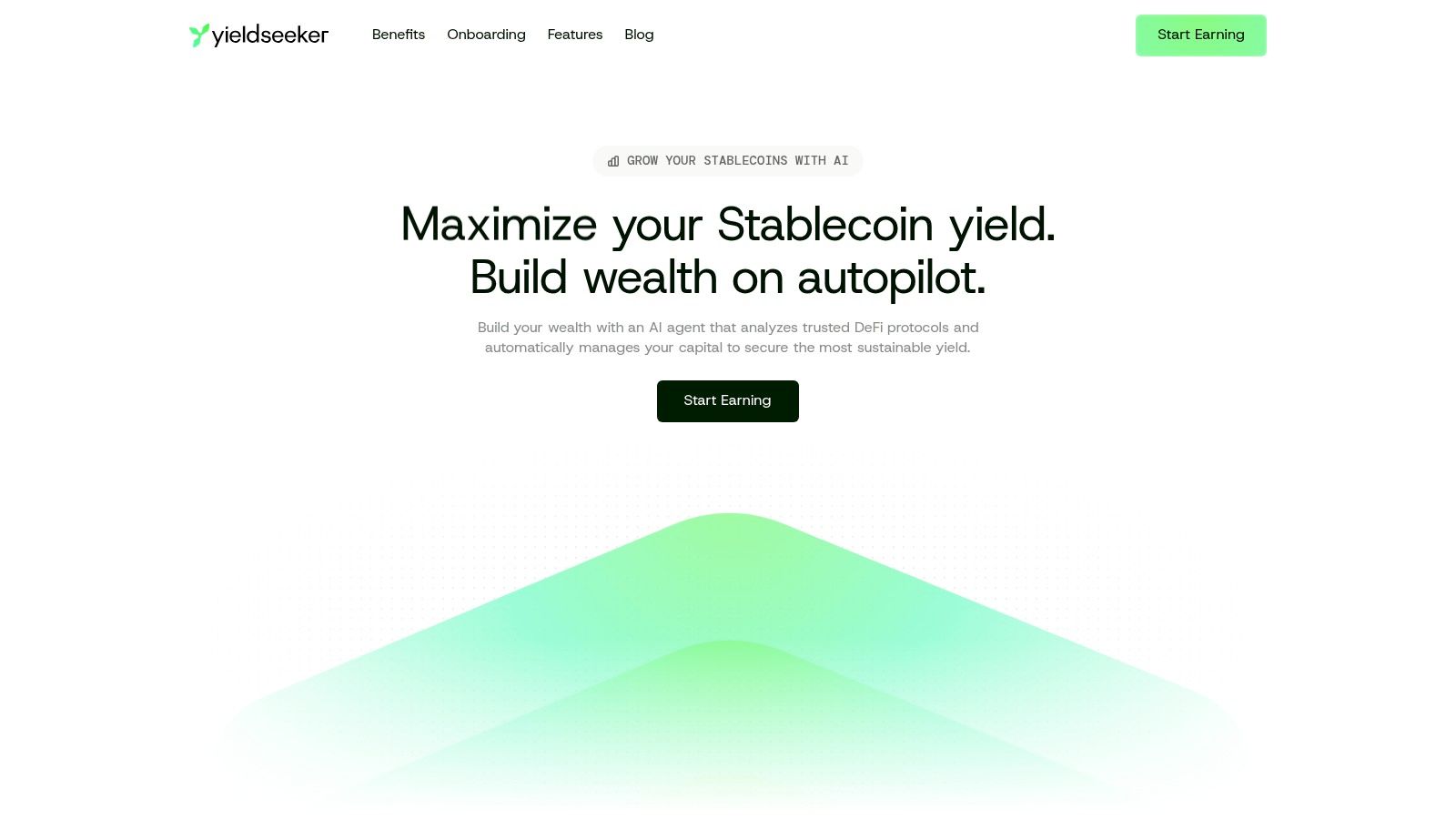
This AI Agent is the core of the service. It continuously scans a curated list of audited, low-risk DeFi vaults and protocols on Base. When it identifies a better risk-adjusted return, it automatically reallocates the user's capital to capture the opportunity. All earnings are auto-compounded, allowing for continuous growth without manual intervention. This system is designed to provide competitive, risk-aware returns in a completely automated fashion, making it an excellent fit for those who lack the time or expertise to navigate DeFi's complexities.
Key Features and Strengths
Yield Seeker's design philosophy centers on security, transparency, and accessibility. The platform operates on a non-custodial model, meaning users always retain ownership of their funds. Each user account is isolated and secured within a Coinbase Trusted Execution Environment (TEE), providing a hardware-level guarantee that even the platform's operators cannot access user assets.
The user experience is clean and direct. The dashboard provides a clear overview of your agent's activity, including a verified on-chain activity log that details every decision and transaction. This transparency builds confidence and allows users to monitor performance without getting lost in technical details. For more advanced users, a built-in terminal offers direct interaction and control. To better understand the mechanisms behind automated yield solutions, exploring broader concepts like algorithmic trading strategies can be insightful.
Expert Insight: The combination of a low $10 minimum deposit, a non-custodial architecture, and an AI agent that handles all the complex rebalancing is a powerful proposition. It effectively lowers the barrier to entry for secure, on-chain yield generation, catering to both beginners and seasoned DeFi participants looking for efficiency.
Who Is It Best For?
Yield Seeker is particularly well-suited for:
Time-Constrained Investors: The "set and forget" nature of the AI Agent is ideal for busy professionals who want their stablecoins to work for them.
DeFi Beginners: The guided experience, low minimum deposit, and focus on vetted, low-risk vaults provide a safe entry point into DeFi yield.
Web3 Teams: It offers a practical solution for managing treasury funds, allowing teams to earn yield on their stablecoin reserves without dedicating significant operational resources.
Experienced Users Seeking Automation: Crypto natives who understand yield farming but prefer to automate the process can benefit from the agent's continuous optimization.
Platform Access and Costs
How to Access: Sign up at yieldseeker.xyz, connect your wallet, and deposit as little as $10 USDC on the Base chain to deploy your agent.
Fees: The platform is designed for transparency. There are no lockup periods or withdrawal fees, ensuring funds remain liquid and accessible at all times.
Feature | Details |
|---|---|
Minimum Deposit | $10 USDC |
Supported Chain | Base |
Core Technology | Personalized AI Agent for automated vault scanning and capital reallocation |
Security | Non-custodial, isolated accounts, Coinbase TEE, curated and audited vaults |
Control & Liquidity | No lockups, no withdrawal fees, full fund accessibility |
Transparency | Clean dashboard with a verified, on-chain activity log |
2. Coinbase USDC Rewards
For those looking for a simple entry point into earning yield on stablecoins without venturing into the complexities of decentralized finance, Coinbase USDC Rewards presents a compelling option. This feature allows users to earn a variable yield on USDC held directly within their Coinbase account. It’s one of the most straightforward stablecoin interest alternatives because it requires no knowledge of DeFi protocols, private wallets, or transaction signing.

The primary appeal is its incredibly low friction. Once you've purchased or deposited USDC into your Coinbase account and met the eligibility criteria, the rewards begin accruing automatically. There are no lockup periods, so your USDC remains liquid and available for trading or withdrawal at any time. This set-and-forget nature makes it an excellent choice for beginners or anyone prioritizing convenience over maximizing returns.
How It Works and What to Expect
The process is managed entirely within the Coinbase app or website. Your rewards are calculated based on the amount of USDC you hold and the current annual percentage yield (APY), which Coinbase adjusts periodically based on market conditions.
Access Requirements: In the United States, earning these rewards now requires a paid Coinbase One subscription ($29.99/month). Eligibility can also vary by jurisdiction, so it's important to check the terms for your region.
User Experience: The interface is clean and integrated directly into the familiar Coinbase dashboard. Rewards are tracked transparently, and Coinbase provides consolidated tax documentation, simplifying reporting.
Yield vs. Risk: The APY is typically more modest compared to on-chain DeFi opportunities. The trade-off is a simplified risk profile. While you avoid smart contract risks, you accept custodial risk, as your funds are held by Coinbase and are not protected by FDIC or SIPC insurance. For an in-depth analysis of how these rates compare, you can explore guides on the best stablecoin interest rates available across different platforms.
Key Insight: Coinbase structures this offering as "rewards" rather than "interest." This specific terminology is a deliberate choice to align with the regulatory environment in the U.S., distinguishing it from traditional banking products.
Who Is It Best For?
This solution is ideal for beginners who want to earn a return on their stablecoins without leaving the security and simplicity of a major centralized exchange. It's also a great fit for passive investors who value convenience and are willing to accept a lower yield in exchange for a hands-off experience.
Visit Coinbase USDC Rewards
3. Aave v3 (lend USDC on Base or Ethereum)
For those ready to step into decentralized finance, Aave is one of the original and most respected money markets. Supplying USDC to Aave v3 allows you to earn a variable yield directly from borrowers in a permissionless, on-chain environment. As one of the more battle-tested stablecoin interest alternatives in DeFi, it provides a transparent and market-driven way to generate returns without relying on a centralized intermediary.
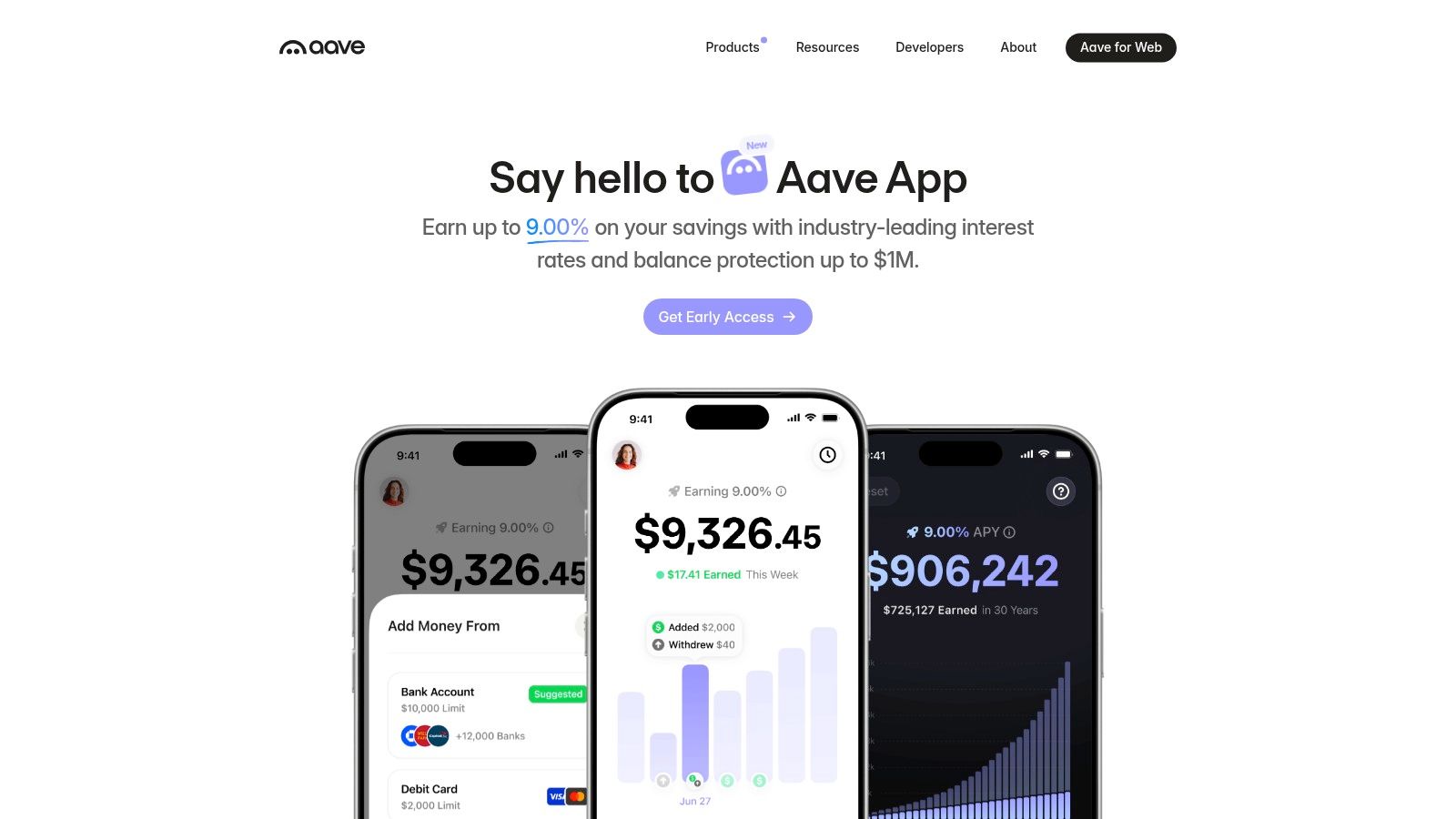
The core appeal of Aave is its high liquidity and deep integration across the DeFi ecosystem. Users supply their USDC to a liquidity pool, and the interest rate they earn is determined algorithmically based on supply and demand. When borrowing demand is high, the APY for suppliers increases, and vice versa. Your supplied assets are not locked, giving you the flexibility to withdraw them at any time, provided there is enough liquidity in the pool.
How It Works and What to Expect
Operating on various blockchains like Ethereum and Base, Aave requires a non-custodial wallet (like MetaMask or Rabby) to interact with its smart contracts. Once you connect your wallet, you can supply USDC with just a few transactions.
Access Requirements: You need a self-custody wallet and a small amount of the native network token (e.g., ETH on Ethereum or Base) to pay for transaction fees. The process involves two transactions: one to approve the Aave contract to use your USDC and another to deposit it.
User Experience: The Aave interface is clean and provides a detailed dashboard showing your supplied assets, current APY, and borrowing power. Tools like AaveScan offer even deeper, transparent insights into market statistics and historical rate data.
Yield vs. Risk: APYs on Aave are entirely variable and can fluctuate significantly. The primary risk is smart contract risk, which is the potential for vulnerabilities in the underlying code. While Aave is heavily audited, this risk is never zero. You also face market risks; if you choose to borrow against your USDC, a sudden drop in your collateral's value could lead to liquidation. To better understand this model, you can review a complete DeFi yield farming guide that explains the mechanics.
Key Insight: The interest you earn on Aave is paid block-by-block directly from borrowers. This peer-to-protocol model is a foundational concept in DeFi and differs fundamentally from centralized reward programs.
Who Is It Best For?
Aave is an excellent choice for intermediate crypto users who are comfortable with self-custody wallets and want to engage directly with on-chain yield opportunities. It also suits yield-conscious investors looking for competitive, market-driven returns who are willing to accept the associated smart contract risks.
4. Compound v3 (Comet) for USDC
Compound is one of the original DeFi money markets, and its third iteration, Compound v3 (also known as Comet), represents a significant evolution in its design. Instead of a pooled-risk model, v3 creates isolated lending markets built around a single "base asset," such as USDC. This structure makes it a more straightforward and risk-averse choice for those looking to earn a return on their stablecoins through direct on-chain lending.
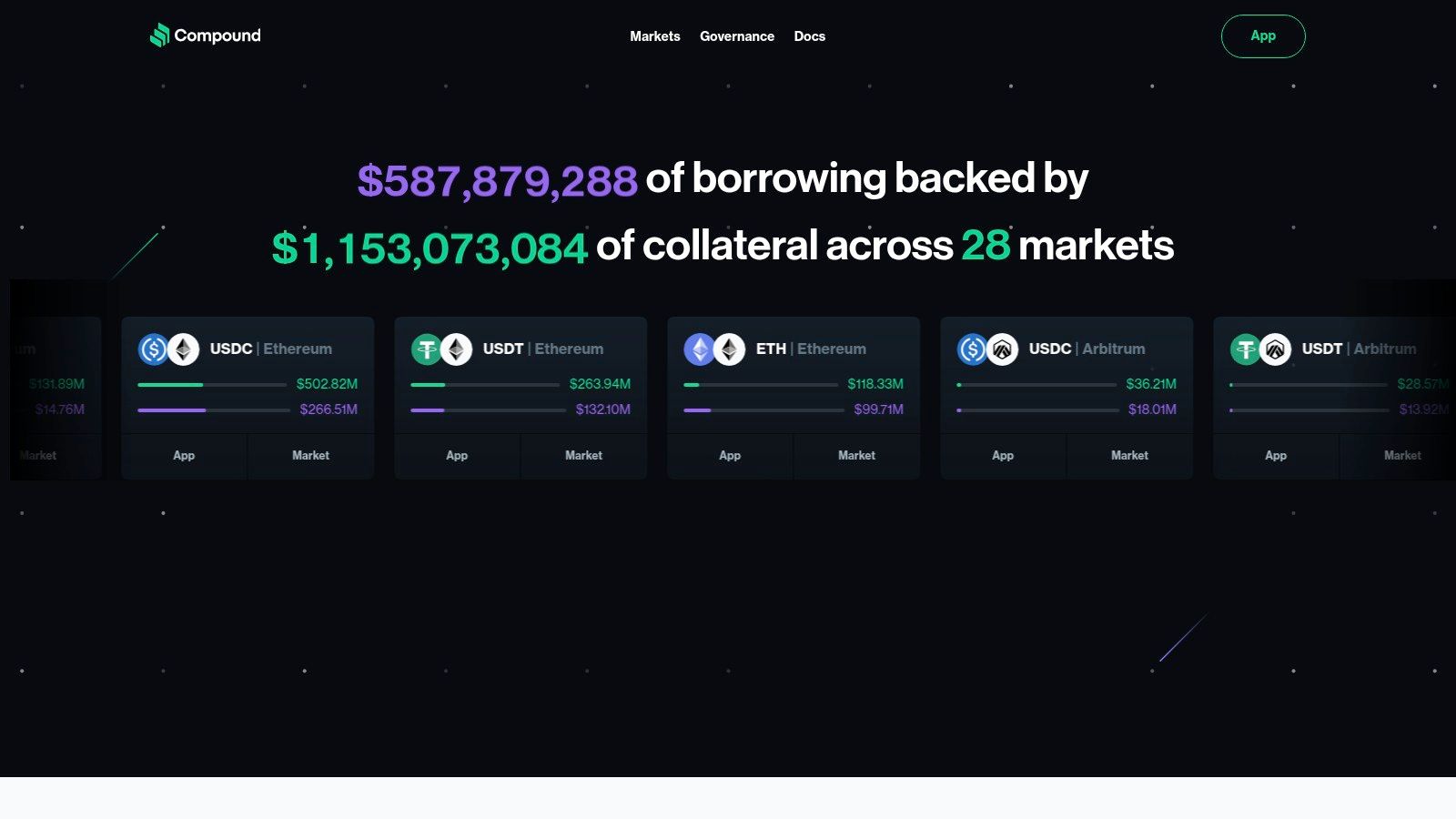
The primary advantage of this model is risk isolation. When you supply USDC to a Compound v3 market, its value is not exposed to price fluctuations of other, more volatile collateral assets within that same market. This focused approach provides a cleaner risk profile compared to multi-asset pools, making it one of the more conservative stablecoin interest alternatives in the DeFi space. It’s a popular choice on networks like Base and Ethereum for users who prioritize transparency and protocol security.
How It Works and What to Expect
To participate, you connect a self-custody wallet (like MetaMask) to the Compound app, navigate to the desired USDC market, and supply your funds. The protocol pays lenders a variable Annual Percentage Rate (APR) derived from the interest paid by borrowers.
Access Requirements: You need a Web3 wallet, the native network token (e.g., ETH on Base or Ethereum) for gas fees, and the USDC you intend to supply. There are no platform fees for lending.
User Experience: The interface is clean and data-driven, displaying key metrics like total supply, supply APR, and available collateral types clearly. The process of supplying and withdrawing is direct and requires just a few on-chain transactions.
Yield vs. Risk: The APR is variable and determined by market utilization (the ratio of borrowed to supplied assets). While generally competitive, these rates may sometimes be lower than what’s offered on Aave, especially during periods of low borrowing demand. The primary risk is smart contract vulnerability, though Compound has a long track record and a strong security reputation.
Key Insight: The v3 Comet architecture was designed to prevent the kind of cross-asset contagion risk seen in past DeFi crises. By limiting each market to a single borrowable base asset, a price collapse in one collateral type (e.g., WBTC) cannot drain the value for USDC suppliers in that same market.
Who Is It Best For?
Compound v3 is ideal for risk-conscious DeFi users who understand the basics of self-custody and want to earn a return from a battle-tested protocol with a simplified risk model. It's also well-suited for stablecoin holders looking for a transparent, on-chain lending opportunity without the complexity of multi-asset pools.
5. MakerDAO DSR via sDAI (access via Maker / Spark)
For DeFi users seeking a protocol-native yield directly from the issuer of a major stablecoin, the MakerDAO Dai Savings Rate (DSR) is a foundational option. Accessible through the wrapped, tokenized version called sDAI (Savings DAI), this mechanism allows DAI holders to earn a variable yield set by Maker governance. Platforms like Spark Protocol provide a clean user interface to mint sDAI, making this one of the most direct stablecoin interest alternatives available on-chain.
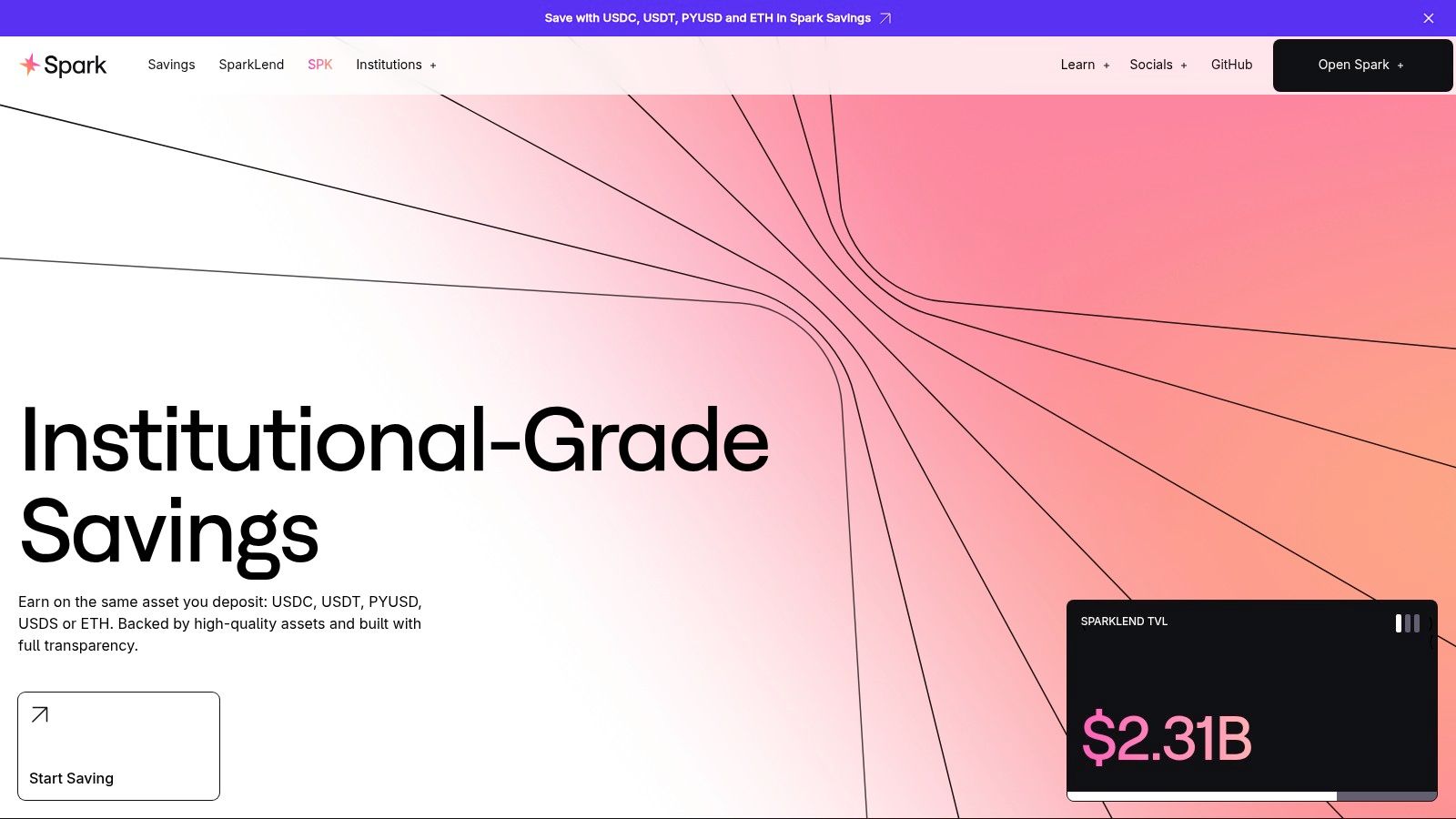
The primary appeal of the DSR is its source; the yield isn't paid by borrowers in a lending pool but is instead a system parameter managed by the Maker protocol itself. By depositing DAI and receiving sDAI, your balance automatically grows in value as the DSR accrues. The sDAI token remains liquid and composable, meaning it can be transferred, traded, or used as collateral elsewhere in DeFi, all while continuing to earn yield.
How It Works and What to Expect
The process involves a simple swap on a platform like Spark. You connect your wallet, deposit DAI, and mint sDAI in a single transaction. The DSR is a variable rate that MakerDAO's governance can adjust to influence DAI's supply and demand, acting as a monetary policy tool for the stablecoin.
Access Requirements: A self-custody wallet (like MetaMask or Rabby) and some ETH for gas fees are required. Users can then interact with DeFi front-ends like Spark to deposit their DAI.
User Experience: The Spark interface is modern and straightforward, displaying the current DSR clearly and simplifying the minting/redeeming process. The system is highly transparent, with all rates and protocol parameters viewable on-chain.
Yield vs. Risk: The DSR has historically offered a competitive rate, but it can fluctuate significantly based on governance decisions and broader market conditions. The main risks are smart contract vulnerabilities within the MakerDAO and Spark ecosystems. These protocol-native savings rates are powered by robust code; to understand the underlying technology, you might explore resources on building smart contracts.
Key Insight: Unlike lending protocols where yield comes from borrower demand, the DSR is a direct mechanism controlled by the protocol. This makes it a unique form of native yield that reflects the health and policy of the entire Maker ecosystem.
Who Is It Best For?
The DSR via sDAI is ideal for DeFi natives and stablecoin purists who prefer earning yield directly from a core, blue-chip protocol rather than a third-party application. It's also a strong choice for long-term DAI holders who want a simple, on-chain savings solution without actively managing lending positions.
6. Morpho Vaults (e.g., Steakhouse USDC vaults)
For DeFi users seeking optimized yield from on-chain lending, Morpho Vaults offer a sophisticated yet accessible solution. Morpho acts as a meta-layer, routing liquidity into established lending protocols like Aave and Compound to improve rates for both lenders and borrowers. Curated vaults, such as those managed by Steakhouse Financial, build on this by providing a single entry point to a professionally managed, strategy-driven yield sourced from multiple Morpho markets. This makes them a powerful stablecoin interest alternatives for those comfortable with on-chain interactions.
The core advantage is capital efficiency. Instead of manually choosing a single lending pool, users deposit into a vault that dynamically allocates their stablecoins across the most profitable Morpho markets. This approach aims to capture a superior blended APY derived from borrower interest and protocol incentives, all without requiring the user to constantly monitor and rebalance their positions.
How It Works and What to Expect
The process involves connecting a web3 wallet to the Morpho app and depositing stablecoins into a chosen vault. The vault’s smart contracts then handle the allocation across underlying lending markets.
Access Requirements: You need a self-custody wallet (like MetaMask or Rabby) and the corresponding stablecoin (e.g., USDC) plus some ETH for gas fees on the Ethereum mainnet or a Layer 2 network. Vaults may have deposit caps to manage risk and strategy effectiveness.
User Experience: The on-chain experience is straightforward for those familiar with DeFi. The dashboard provides clear metrics on vault performance, current APY, and underlying asset allocation. Withdrawals are flexible, with no fixed lockups, but are subject to the available liquidity within the vault.
Yield vs. Risk: Vaults can often generate a higher net APY than depositing into a single lending market due to Morpho's rate optimization and the vault's active strategy. The risk profile includes smart contract vulnerabilities of both Morpho and the underlying protocols, plus the vault's specific strategy risk. Performance or management fees are typically charged, which will reduce the headline APY. To better understand how these automated strategies work, you can explore the mechanics behind crypto vault finance and its role in DeFi.
Key Insight: Morpho is not a standalone lending protocol; it's an optimization layer. This means it enhances existing, battle-tested protocols rather than creating a new, isolated risk environment, which can be a reassuring factor for many users.
Who Is It Best For?
Morpho Vaults are best for intermediate DeFi users who understand self-custody and are looking to automate their yield-seeking strategies. It is also an excellent fit for time-constrained investors who want to benefit from multi-market lending optimization without performing the manual research and transactions themselves.
Visit Morpho
7. Ondo Finance — OUSG (tokenized U.S. Treasuries)
For investors seeking a yield source tied to traditional financial assets rather than crypto-native borrowing, Ondo Finance’s OUSG presents a unique on-chain solution. OUSG is a tokenized fund that primarily holds short-term U.S. Treasuries, effectively bringing the stability and yield of government-backed debt onto the blockchain. This makes it one of the most distinct stablecoin interest alternatives, as its returns are directly correlated with real-world interest rates set by the Federal Reserve, not the volatile supply and demand of DeFi lending markets.

The core appeal of OUSG is its institutional-grade structure and transparent risk profile. It’s designed to provide a low-volatility, bankruptcy-remote asset that offers a familiar yield profile for those accustomed to traditional finance. By tokenizing these assets, Ondo enables near-instant, 24/7 transfers and settlements, blending the security of U.S. government debt with the efficiency of blockchain technology.
How It Works and What to Expect
Ondo Finance works with qualified custodians and asset managers to hold the underlying U.S. Treasuries. Investors who pass the necessary compliance checks can mint OUSG tokens with USDC, which are then used to purchase the assets. The yield from the Treasuries accrues directly to the token’s value.
Access Requirements: OUSG is built with compliance at its core. In the United States, access is restricted to accredited investors and qualified purchasers who complete a thorough KYC/AML verification process. International availability may vary based on local regulations.
User Experience: The process is more involved than typical DeFi protocols, reflecting its institutional focus. Interaction occurs through the Ondo Finance platform, which guides users through onboarding and minting/redeeming. Once held, OUSG can be used within compatible DeFi ecosystems.
Yield vs. Risk: The yield closely tracks the performance of short-term U.S. Treasuries, minus a small management fee. This results in a highly predictable and lower-volatility return compared to most DeFi yields. The primary risks are custodial risk and smart contract risk, though the underlying assets (U.S. government debt) are considered among the safest in the world.
Key Insight: Unlike algorithmic or crypto-collateralized stablecoins, OUSG is fully backed by off-chain, real-world assets. This direct link to U.S. Treasuries makes it a powerful tool for diversifying on-chain portfolios away from crypto-native risks.
Who Is It Best For?
OUSG is best suited for accredited investors, DAOs, and crypto-native businesses looking to allocate treasury funds to a stable, low-risk, yield-bearing asset on-chain. It is an excellent option for sophisticated investors who prioritize the transparency and security of U.S. government debt over the higher, but more volatile, returns from DeFi lending protocols.
Stablecoin Interest Alternatives — 7-Option Comparison
Product | Implementation Complexity 🔄 | Resource & Setup Requirements ⚡ | Expected Outcomes ⭐📊 | Ideal Use Cases 💡 | Key Advantages ⭐ |
|---|---|---|---|---|---|
Yield Seeker | Low to moderate — AI agent setup; non-custodial flows | Small capital needed (from $10 USDC); Base chain; simple onboarding | ⭐⭐⭐ — steady, low-risk stablecoin yield; auto-compounding; no published guaranteed APY 📊 | Time‑constrained investors, DeFi beginners, treasury automation | Hands-off automation; real‑time reallocations; strong transparency/security |
Coinbase USDC Rewards | Very low — custodial, app-native | No wallet required; Coinbase account (Coinbase One in U.S.); fully custodial | ⭐⭐ — stable but typically lower variable rewards; fully liquid 📊 | Beginners wanting set‑and‑forget yield without DeFi complexity | Extremely low friction; exchange-grade security and tax/reporting |
Aave v3 (Base / Ethereum) | Moderate — on‑chain lending interactions, wallet & gas | Wallet, gas fees, cross‑chain access possible; on‑chain monitoring tools | ⭐⭐⭐ — market-driven variable yields; high liquidity; transparent metrics 📊 | Users seeking competitive on‑chain lending with deep liquidity | Mature market, multi‑chain, robust risk tooling and integrations |
Compound v3 (Comet) | Moderate — similar to Aave but simpler market model | Wallet and gas; per‑market exposure simplifies risk assessment | ⭐⭐–⭐⭐⭐ — variable APRs; conservative market isolation; transparent 📊 | Users preferring simple, single‑asset lending markets | Streamlined base‑asset design; clear parameters and history |
MakerDAO DSR via sDAI | Moderate — interact with Maker/Spark or wrappers | Wallet, gas; mint/redeem sDAI; composable in DeFi | ⭐⭐–⭐⭐⭐ — governance-set stable yield; protocol-native savings 📊 | Users wanting protocol-governed, low-complexity stable yields | Tokenized accrual (sDAI); composability and strong transparency |
Morpho Vaults (Steakhouse USDC) | Moderate — vault deposit; strategy abstraction | Wallet, gas; possible strategy/performance fees; variable liquidity | ⭐⭐⭐ — blended, optimized APY across markets; fee-adjusted returns 📊 | Yield seekers wanting single-entry diversified lending exposure | Optimized routing, higher net APY potential vs single markets |
Ondo Finance — OUSG | Low to moderate (institutional flow + compliance) | Accredited/qualified purchaser requirement (U.S.); KYC/Reg D; onchain mint/redeem | ⭐⭐ — low‑volatility, T‑bill like yields; predictable money‑market returns 📊 | Institutional treasuries and accredited investors seeking compliant onchain cash | Onchain Treasury exposure with institutional compliance; lower volatility |
Choosing Your Path: From Manual Lending to AI-Powered Automation
We've explored a diverse set of stablecoin interest alternatives, each offering a unique approach to generating returns on your digital dollars. The journey from simple centralized rewards to sophisticated, on-chain strategies reveals a clear trade-off: higher potential yields often demand more active management, deeper technical knowledge, and a greater comfort with smart contract risk. Your ideal path isn't about finding the single "best" APY, but about aligning a strategy with your personal goals, risk appetite, and the amount of time you are willing to invest.
For those just starting, the simplicity of Coinbase USDC Rewards provides a frictionless entry point, acting as a familiar bridge from traditional finance to crypto. It’s a set-and-forget option where ease of use is the primary benefit, though the returns reflect this convenience.
As you move deeper on-chain, DeFi mainstays like Aave and Compound offer a more direct, self-custodial experience. Supplying USDC to these battle-tested protocols gives you direct exposure to decentralized money markets. This path requires managing your own wallet and understanding concepts like gas fees and protocol governance, but it rewards you with greater control and transparency over your assets.
Matching Strategy to Your Goals
The evolution of DeFi has brought forth more specialized tools that cater to specific investor profiles. The MakerDAO DSR, accessed through sDAI, represents a move towards protocol-native, lower-risk yield directly tied to the health of the DAI stablecoin. This is an excellent choice for those who prioritize security and are comfortable with the mechanics of the Maker ecosystem.
For investors seeking to access real-world financial instruments on-chain, Ondo Finance’s OUSG token provides a direct link to the yield of U.S. Treasuries. This strategy is compelling for its stability and its connection to traditional financial markets, making it an attractive option for treasury management and for those looking to diversify their on-chain yield sources away from purely crypto-native risks.
At the more advanced end of the spectrum, platforms like Morpho introduce an efficiency layer on top of established protocols. By directly matching lenders and borrowers, Morpho Vaults can offer improved rates. This approach is best suited for experienced DeFi users who understand the added layers of smart contract interaction and are actively seeking to optimize their returns beyond what base lending protocols can offer.
The Role of Automation in Modern DeFi
This brings us to a critical consideration: time and effort. Manually researching protocols, comparing variable rates, managing positions across different platforms, and compounding returns is a full-time job. This is where automated solutions become so valuable. They address the core challenge of DeFi yield farming: capturing market opportunities without succumbing to the complexity and constant monitoring they require.
Among the various stablecoin interest alternatives, an AI-driven aggregator like Yield Seeker carves out a unique position. It's not just another place to park your funds; it’s an intelligent system designed to do the heavy lifting for you. By continuously analyzing vetted protocols like Aave and Compound, it automates the process of finding and allocating to the best available yields.
This approach offers a powerful middle ground. You retain the benefits of on-chain, self-custodial yield generation while offloading the tedious, time-consuming tasks of research and active management. It’s a solution built for the modern investor who values both efficiency and performance. By understanding this full spectrum of options, from the simplest CEX offering to fully automated DeFi strategies, you are now equipped to build a smarter, more resilient, and personalized approach to growing your stablecoin holdings.
Ready to put your stablecoin yield strategy on autopilot? Yield Seeker uses AI to automatically find and manage the best returns from trusted DeFi protocols, so you can earn more with less effort. Stop chasing APYs and start your journey to smarter, automated yield by visiting Yield Seeker today.