
The best yield farming platform usually isn't the one showing the flashiest APY. It's the one that matches the work you don't want to do yourself.
That's the part most roundups skip. Some yield farming platforms are basically onchain savings accounts. Some are stablecoin liquidity engines. Some are vault wrappers that automate the strategy for you. Some are multichain supermarkets with too many choices. And some are advanced rate markets where you're not just farming yield, you're trading it.
That difference matters more now because broad DeFi yields have compressed into tighter bands. Recent market coverage puts stablecoin lending often in the 4 to 8% range, liquid staking around 2.5 to 4%, DEX liquidity provision 5 to 30%, and restaking 4 to 6%, which makes net return and workflow more important than chasing the highest headline number (Yellow research on DeFi yield ranges). In practice, strategy, chain, fees, slippage, withdrawal flexibility, and monitoring burden decide what you keep.
The seven options below make more sense as a progression. Start with simple lending. Move into stablecoin liquidity. Step up to automated vaults, multichain convenience, or advanced yield positioning if you want those tools. APYs change, smart-contract risk never disappears, and net yield matters more than the front-page rate. If you want the monitoring and reallocation handled for you, Yield Seeker sits in a different lane: an automated, stablecoin-focused setup where a personalized AI Agent handles protocol watching and allocation.
1. Yield Seeker

Chasing yield by hand is overrated if your real goal is stablecoin income you can keep up with.
Yield Seeker is built for a different decision than Aave, Curve, Yearn, Beefy, or Pendle. Those platforms ask you to choose and manage the workflow yourself, whether that means lending manually, providing stablecoin liquidity, depositing into vaults, farming across chains, or positioning around future yield. Yield Seeker handles the monitoring and reallocation layer for you with an AI Agent, aimed at users who want stablecoin exposure on Base without checking five apps every day.
The setup is simple. You can start with $10 USDC, keep funds non-custodial, and withdraw at any time with no lockups or withdrawal fees. That matters in practice because flexibility is part of the return. If rates compress or market risk changes, you want the option to move without waiting through an exit window.
Where it fits best
Yield Seeker makes the most sense for users who already know what they do not want to manage.
Instead of picking vaults and rebalancing on your own, you set the risk preference and let the agent scan curated DeFi strategies, shift allocations, and compound automatically. The useful part is not just automation. It is that the platform also shows a verified activity log, so you can check what the agent did instead of trusting a black box.
That puts it in a separate lane from the rest of this list. If Aave is for manual lending, Curve is for stablecoin LPs, Yearn and Beefy are for vault users, and Pendle is for advanced yield positioning, Yield Seeker is for people who want the system to do the watching and switching.
Security is presented as part of the operating model. Yield Seeker says it uses Coinbase Trusted Execution Environment for fund isolation, Nethermind-audited contracts, and ongoing review through AuditAgent. The platform also advertises strategy yields in roughly the 3% to 14% APY range, but those rates move with market conditions and strategy mix, so they should be treated as variable rather than fixed promises.
Practical rule: If you will not monitor protocols, fee changes, and reallocation timing yourself, choose a workflow designed for less manual input.
The interface supports that pitch. You get the standard balance and earnings view, plus a terminal and chat layer that lets you interact with the agent directly. For newer users, that is more useful than another dashboard full of vault names because it makes the strategy logic easier to follow.
What works and what doesn't
What works is the packaging. Low minimum deposit, no lockups, automated stablecoin allocation, and visible activity records are a strong fit for busy users, smaller treasuries, and anyone who wants Base exposure without turning yield farming into a weekly task list.
What does not disappear is protocol risk. Yields change. Smart contract risk still exists, even with audits and monitoring. The product is also narrower than a full DeFi supermarket. If you want broad asset coverage, manual control across many chains, or highly custom positions, that trade-off matters. Paid features matter too if you want more agent capacity, more memory, faster execution, and priority support. The Pro tier is listed at $29 per month, while the Basic tier covers the core automated flow.
Best for automated stablecoin yield: The agent handles scanning, reallocating, and compounding.
Best for testing with small size: A $10 USDC minimum makes it easy to try without overcommitting.
Trade-off to watch: The focus on Base and stablecoin-oriented strategies will feel restrictive if your yield process depends on wider chain or asset selection.
"I love Yieldseeker ... A Fox is one of the smartest and hardest working people I've met in crypto"
That quote captures the appeal, but the decision is simpler than the endorsement. Pick Yield Seeker if the main bottleneck is not finding yield. It is having the time and discipline to manage it yourself.
2. Aave
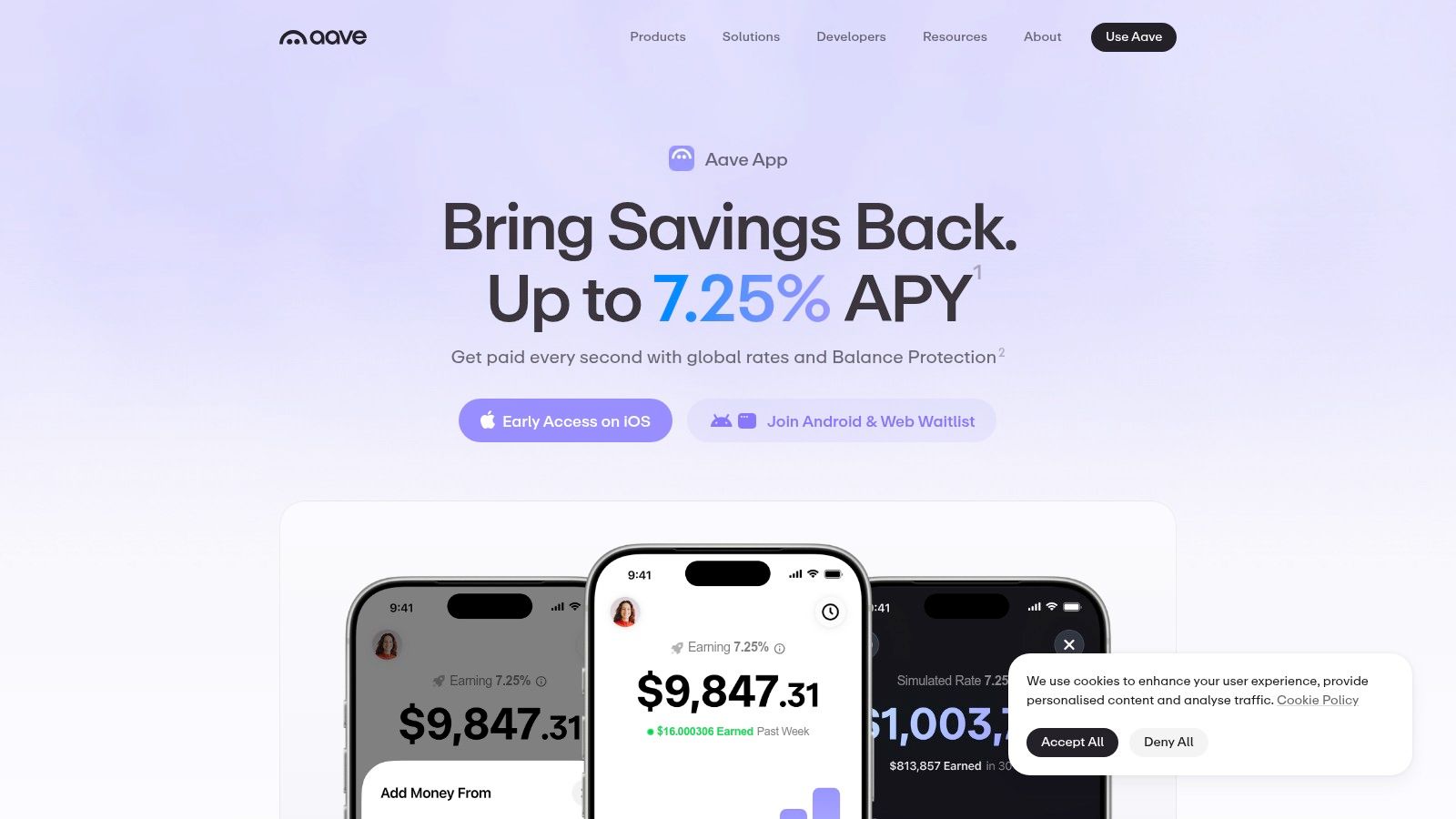
Aave fits the yield seeker who wants to make one clear decision: lend an asset and earn from borrower demand. No LP rebalancing. No vault stack to reverse engineer. You supply, watch utilization and rates, and pull funds when the setup no longer makes sense.
That workflow is why Aave stays near the top of the list. It is one of DeFi's core money markets, with deep liquidity across major assets and a supply flow that experienced users can evaluate quickly. If your goal is stablecoin yield with minimal strategy overhead, Aave is usually easier to manage than a farm built on incentives and extra token emissions.
The trade-off is straightforward. Simplicity on the surface does not remove risk under the hood. Supply APY moves with borrow demand, so returns can compress fast. If you switch from supplying to borrowing against collateral, you also take on liquidation risk, interest rate risk, and the operational burden of monitoring health factors. Aave is simple to enter. It is less forgiving once you take on more risk.
For users comparing workflows across this list, Aave represents the manual lending lane. You choose the asset, the chain, and whether the yield is good enough today. Yield Seeker targets a different job. It automates stablecoin allocation and reallocation, which matters more for users who do not want to keep checking rates and moving funds by hand. Aave gives you control. Yield Seeker reduces upkeep.
If you want a cleaner breakdown before using collateralized borrowing, this guide to DeFi lending mechanics and risk is a useful primer.
Aave is what I suggest when someone wants yield from borrower demand, not from juggling reward tokens.
Best use case: Manual lending for users who want direct exposure to money market yields.
Main upside: Deep liquidity, broad asset support, and a supply workflow that is easy to understand.
Main risk: Yield can fall quickly, and borrowing against deposits turns a passive position into one that needs active risk management.
Aave is rarely the highest-yield option on paper. It is often one of the clearest.
3. Compound
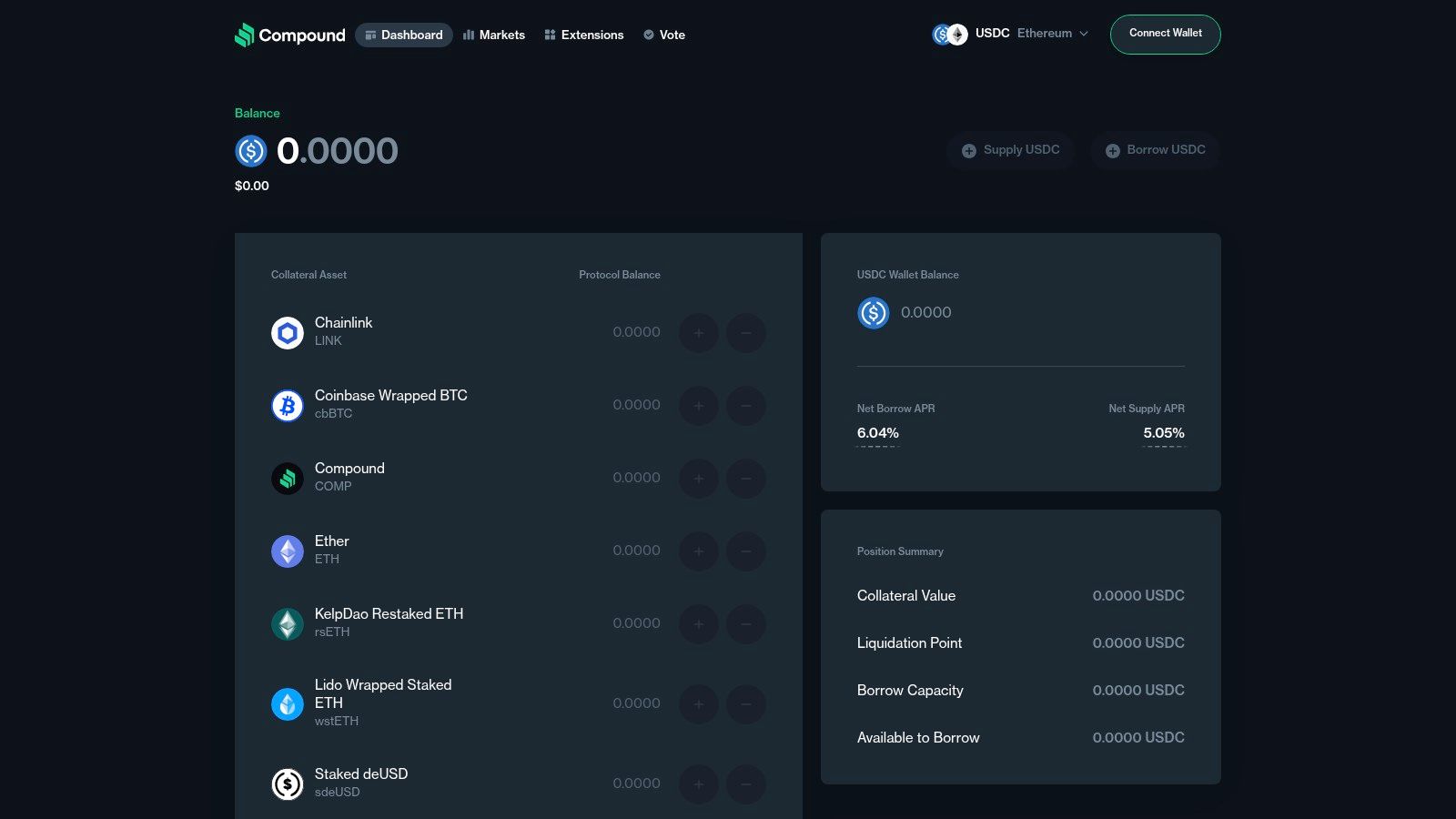
Compound is the money market I look at when the priority is straightforward lending, not strategy stacking.
The workflow is simple. Supply a supported asset, earn a variable rate, and keep custody in your wallet. For a yield seeker holding stablecoins, that simplicity is the whole point. You are not managing LP exposure, reward token emissions, or vault logic. You are deciding whether the current lending rate is worth parking capital there.
That makes Compound a useful contrast with Aave. Aave gives users a bigger lending toolkit and more room to turn deposits into collateralized positions. Compound is usually the cleaner version of the same core job. If your decision is manual lending versus automation, Compound sits firmly on the manual side. You still have to monitor rates, compare chains or alternatives, and move funds yourself when better opportunities show up. Yield Seeker addresses that upkeep by handling stablecoin allocation and reallocation automatically.
Where Compound fits in a yield workflow
Compound suits users who want money market exposure without extra moving parts. The interface and mechanism are easier to reason about than farms built from multiple tokens and incentive layers. That matters if your main goal is preserving capital discipline while still earning something on idle stablecoins.
The trade-off is obvious once rates compress. Supply APY depends on borrow demand, so returns can slide fast. If another venue is paying more, Compound will not adjust for you. You have to notice, evaluate the switch, and execute it.
There is also a practical line many users should not cross casually. Supplying is one workflow. Borrowing against that collateral is a different one with liquidation risk, changing borrow costs, and a position that needs active monitoring.
One reason simple lending still has a place is that DeFi has a long history of wrappers getting harder to evaluate as strategies pile up. An academic review of yield farming's early growth used Yearn and Harvest as examples of how quickly aggregators scaled, and how sharply outcomes could change after security problems or market stress (academic paper on yield farming history). Compound is not risk-free, but the yield engine is easier to inspect than a meta-strategy built on top of several protocols.
Best fit: Manual lending for users who want stablecoin yield from borrower demand.
Main upside: A clean supply-and-earn workflow with fewer strategy layers to track.
Main limitation: Rates are variable, and maintaining competitive yield still takes manual checking and fund movement.
Main risk: Borrowing against deposits adds liquidation and interest rate risk fast.
Compound works well for users who value clarity over chasing every extra basis point.
4. Curve Finance
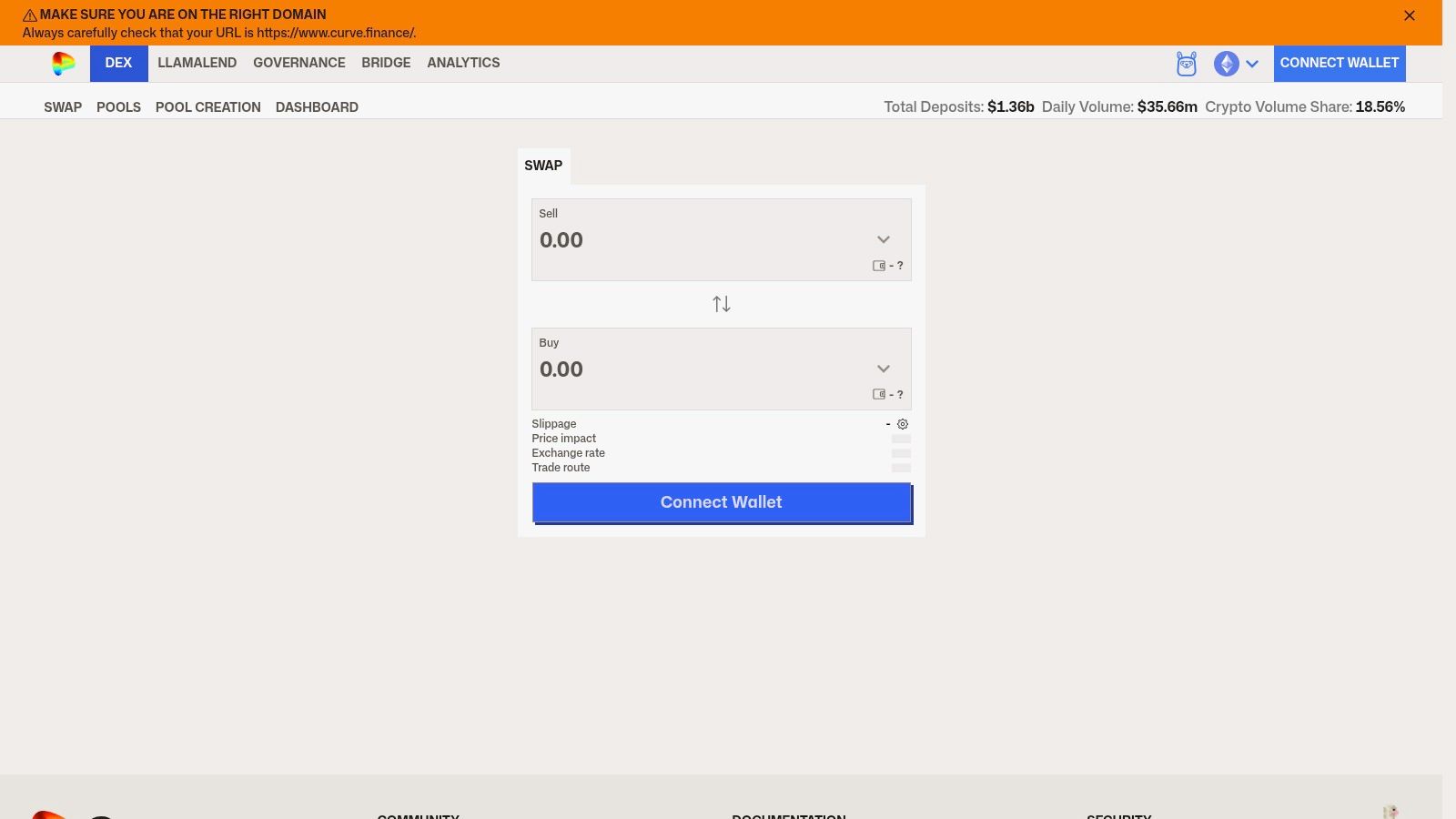
Curve is the platform to judge by one question: do you want to earn from stablecoin liquidity, or do you want to stay in a simpler lending flow?
That distinction matters. Aave and Compound pay you from borrower demand. Curve pays you from trading flow inside pools, plus whatever incentives a pool happens to offer. For a yield seeker, that changes the daily job. You stop asking, "which lending market has the best supply rate?" and start asking, "which pool composition can I hold through stress?"
Curve built its reputation on like-kind pools, especially stablecoins, where tighter pricing matters and slippage around the peg stays lower than in generic AMMs. If you want the mechanism in plain English, this explainer on the automated market maker model is the useful prerequisite.
The catch is simple. Stablecoin LPing looks calm right up until one asset in the pool stops behaving like cash.
That is why Curve tends to fit users who are comfortable reading pool details instead of only scanning headline APY. A pool with deep liquidity and plain assets is a very different position from a boosted pool with layered incentives, extra smart contract exposure, or a token you would not want to hold outside the farm. Messy reward design can turn a decent stablecoin strategy into a position that needs active babysitting.
Independent protocol documentation from Curve Finance is often the better starting point than aggregator rankings because the decision lives at the pool level. You need to know what assets sit in the pool, how rewards are paid, what chain you are using, and whether exit liquidity will still look good if market conditions get weird.
This also highlights where Curve differs from Yield Seeker's AI-assisted approach. On Curve, you still choose the pool, monitor peg risk, and decide when fee income no longer justifies the exposure. Yield Seeker shifts more of that monitoring and reallocation work into automation. Curve is the venue. Yield Seeker is closer to an operating layer for users who do not want to keep checking whether their stablecoin LP still deserves capital.
Use Curve if stablecoin liquidity is the workflow you want to run.
Best fit: Stablecoin liquidity providers earning from swap fees and incentives.
Main upside: Efficient pool design for like-kind assets and strong relevance in stablecoin routing.
Main limitation: Pool selection takes real judgment, not just APY chasing.
Main risk: Depegs, incentive complexity, and weaker exits in the wrong pool or chain environment.
Curve can pay well, but only if you understand what is inside the pool and why traders are using it.
5. Yearn Finance
Yearn fits the user whose main decision is automated vaults.
That sounds simple, but the trade-off is specific. You give up some control over exact routing in exchange for having strategists and vault logic handle the compounding, rebalancing, and opportunity selection for you. If Aave and Compound ask you to run a manual lending workflow, Yearn asks a different question. Do you want to manage the position yourself, or do you want a vault to do the repetitive work?
Yearn matters because it helped define the yield aggregator model in DeFi. You deposit into a vault, the strategy deploys capital into underlying venues, and the vault handles the operational grind that many users eventually get tired of doing by hand. For a useful framing of what these products abstract away, this overview of a yield aggregator in crypto is a good reference point.
The catch is that "automated" does not mean "risk-free" or even "set and forget." A Yearn vault still has a strategy, fee structure, withdrawal conditions, and asset-specific risk. The work moves up a level. Instead of deciding where to lend every week, you decide whether the vault's mandate still matches the kind of exposure you want.
That is also the cleanest contrast with Yield Seeker's AI-assisted automation. Yearn gives you a packaged vault. Yield Seeker is closer to an automated workflow layer that can help with monitoring and reallocating across opportunities rather than keeping you inside one vault structure. If your priority is prebuilt vault automation, Yearn is the more direct fit. If your priority is reducing the ongoing decision load across changing yield options, the AI-assisted model answers a different problem.
A practical way to use Yearn is to check four things before depositing:
Strategy scope: Know whether the vault is farming lending yield, LP incentives, or another source of return.
Fees: Vault and performance fees can change the net result more than headline APY suggests.
Liquidity terms: Review withdrawal limits, queue behavior, or any conditions that can slow exits.
Underlying exposure: Stablecoin vaults, volatile asset vaults, and more complex strategies do not carry the same risk.
Yearn works best for users who want automation without building a multichain routine around dozens of individual positions. It is less suitable for users who want full control over each protocol leg or who are unwilling to monitor strategy changes after deposit.
6. Beefy
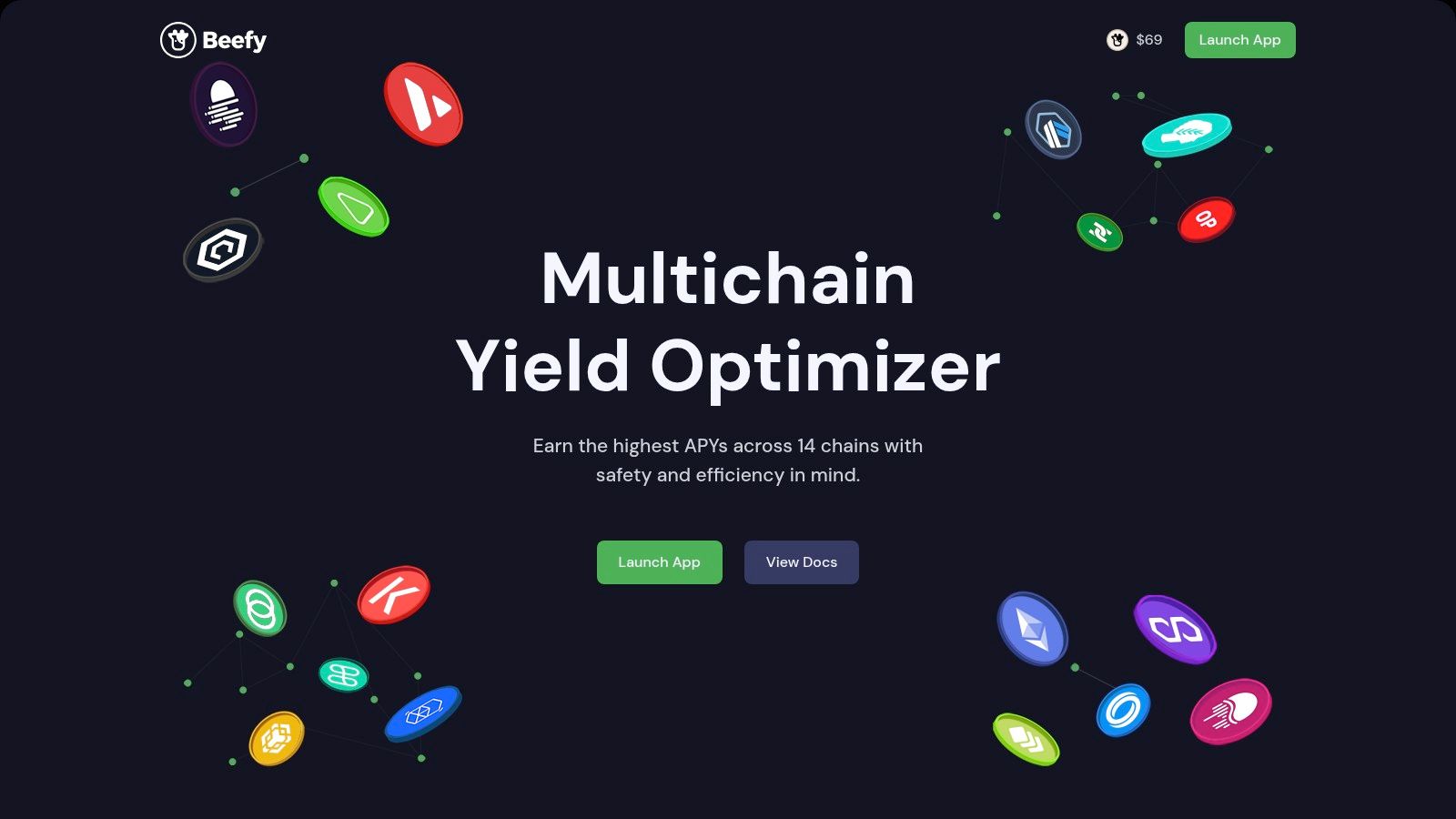
Beefy solves a specific yield problem. You already know the chain and asset class you want, but you do not want to harvest rewards, swap them, and redeploy them by hand every few days.
That makes Beefy less about picking a single lending market or stablecoin pool, and more about outsourcing the maintenance work around auto-compounding. The platform offers vaults across many chains and strategy types, including LP positions, single-asset farms, and more complex setups tied to partner protocols. For a yield seeker, the decision that matters most here is multichain convenience. If your workflow breaks down because your positions are scattered across ecosystems, Beefy can reduce that operational drag.
The trade-off is easy to miss. Beefy simplifies execution, but it does not simplify underlying risk. A vault can still depend on a thinly traded token pair, an incentive program that drops fast, a bridge path you may need for exits, or a partner protocol you have not reviewed closely enough. The interface saves clicks. It does not remove exposure.
My rule with Beefy: if I cannot explain where the yield comes from in one sentence, I skip the vault.
That filter matters more on Beefy than on narrower products because the menu is so large. The strongest use of the platform is not chasing every high APY vault. It is choosing a small set of chains you already use, then sticking to strategies you can monitor without building a spreadsheet around every deposit.
Compared with Yearn, Beefy usually gives you broader chain coverage and more strategy variety. Compared with Yield Seeker's AI-assisted automation, the difference is workflow. Beefy keeps you inside vault products that auto-compound for you. Yield Seeker is better suited to users who want help monitoring and reallocating across changing opportunities instead of staying inside one vault wrapper.
A practical Beefy checklist before deposit:
Vault source: Identify the underlying protocol and the actual reward stream.
Chain friction: Check how you will fund and exit the position on that network.
Strategy type: Separate simple single-asset vaults from LP or concentrated liquidity exposure.
Net yield: Look past headline APY and account for fees, token emissions, and slippage on exit.
Position size: Keep niche vaults smaller, especially on chains or protocols you do not follow closely.
Beefy works well for users who want automated compounding across multiple chains without managing every harvest cycle themselves. It is a weaker fit for anyone who wants the cleanest possible risk profile or who tends to treat a long vault list as a reason to overextend.
7. Pendle Finance
Pendle serves a different decision than Aave, Curve, or Beefy. It is for users deciding how they want to express a view on future yield.
The core mechanic is simple once you strip the jargon away. Pendle splits a yield-bearing asset into principal and yield. That gives you a few distinct workflows. Buy Principal Tokens if you want a known yield path into maturity. Buy Yield Tokens if you want a directional bet on future yield. Provide liquidity if you want to support that market and earn from trading activity plus incentives, with the usual LP trade-offs.
That flexibility is the appeal. It is also the reason Pendle is easier to misuse than a lending market or an auto-compounding vault.
A practical way to frame it is by user intent:
Aave and Compound fit manual lenders who mainly want passive lending yield.
Curve fits users focused on stablecoin liquidity and swap fee exposure.
Yearn and Beefy fit users who want vault automation.
Pendle fits advanced yield positioning.
If the question is, "Do I want to lock in a rate, speculate on changing rates, or trade around maturity?" Pendle is one of the few DeFi platforms built for that job.
The trade-off is operational, not just conceptual. Maturity dates matter. Entry price matters. Exit liquidity matters. A position can be right on the rate view and still disappoint if you buy at a poor price or need to exit before maturity. Jurisdictional access can also be a practical constraint depending on where you are and which interface you use.
Compared with Yield Seeker's AI-assisted automation, the difference is control versus delegation. Pendle gives you precision if you already know the position you want to put on. Yield Seeker is better suited to users who want the system to monitor changing yield conditions and handle reallocations without manually managing rate views, token splits, and maturity windows.
Pendle makes sense for experienced DeFi users, treasuries, and active yield traders who want more than "deposit and earn." It is a weaker fit for beginners, or for anyone who wants yield exposure they can leave alone without tracking pricing and expiry.
7-Platform Yield Farming Comparison
Product | Implementation Complexity 🔄 | Resource Requirements ⚡ | Expected Outcomes 📊⭐ | Ideal Use Cases 💡 | Key Advantages ⭐ |
|---|---|---|---|---|---|
Yield Seeker | Low–Medium, quick signup; AI handles continuous reallocations 🔄 | Low capital (from $10 USDC); optional Pro subscription for higher throughput ⚡ | Automated compounding; variable APY (~3–14%) recorded in activity logs 📊⭐ | Hands‑off stablecoin yield for time‑constrained investors and crypto natives 💡 | AI automation, non‑custodial Coinbase TEE, audited contracts, verifiable logs ⭐ |
Aave | Low, straightforward supply/borrow flows 🔄 | Standard wallet + stablecoins; no lockups; multi‑chain support ⚡ | Variable interest driven by borrower demand; high liquidity markets 📊⭐ | Money‑market style yields and transparent lending/borrowing 💡 | Large liquidity, battle‑tested protocol, broad wallet/chain support ⭐ |
Compound | Low, simple deposit/earn model 🔄 | Wallet + stablecoins; permissionless access; no lockups ⚡ | Algorithmic, variable APY with transparent on‑chain rate models 📊⭐ | Minimalist, well‑documented lending yields for stablecoin holders 💡 | Long history, wide integration, audited markets ⭐ |
Curve Finance | Medium, pool selection and LP mechanics require understanding 🔄 | Capital for LPs (stablecoins/multi‑asset); gas/interaction costs ⚡ | Fee income + possible CRV incentives; low‑slippage stablecoin swaps 📊⭐ | Passive fee farming in deep, stablecoin‑focused pools 💡 | Deep liquidity, efficient pricing for like‑assets, broad pool selection ⭐ |
Yearn Finance | Low–Medium, deposit into strategy‑managed vaults 🔄 | Wallet + assets; vault fees apply; multi‑chain options ⚡ | Automatic compounding with net APY per vault; strategy rotation 📊⭐ | Hands‑off yield aggregation to avoid manual protocol management 💡 | Strategy‑managed vaults, clear net APY reporting, automated compounding ⭐ |
Beefy | Medium, many chains and vault choices to navigate 🔄 | Multi‑chain assets; bridging/gas considerations; varied vaults ⚡ | Auto‑compounding across DEXs/lending markets; variable APYs 📊⭐ | Cross‑chain auto‑optimization and broad LP/Dex strategy coverage 💡 | Extensive strategy menu, transparent APY/fee docs, wide chain support ⭐ |
Pendle Finance | High, tokenized yield primitives and maturities add complexity 🔄 | Yield‑bearing assets and understanding of PT/YT mechanics; active management ⚡ | Ability to fix forward yields or trade yield exposure; bespoke risk/return 📊⭐ | Treasury planning, fixing yields, advanced yield trading and hedging 💡 | Unique yield tokenization (PT/YT), flexible treasury and hedging tools ⭐ |
Choose the Yield Workflow You Can Manage
The cleanest way to compare yield farming platforms is to stop asking which one is "best" in the abstract. Start with the asset and chain you hold. Then decide what kind of yield you want to earn. Lending interest, LP fees, automated vault compounding, multichain access, or fixed versus variable yield exposure are different workflows, not minor feature variations.
After that, look past headline APY. Check fees, withdrawal terms, smart-contract history, and how much attention the strategy needs after deposit. In the current market, that matters a lot because stablecoin opportunities on major protocols are often in the mid-single-digit range rather than the old double-digit farming narrative. A recent market summary listed around 5.13% on Maple Finance and around 4.00% on Sky Lending for DAI, which is a good reminder that small differences in gross yield can disappear after costs and friction (Stablecoin Insider summary of 2026 DeFi metrics).
A practical sequence usually works better than trying to optimize everything on day one.
Start small: Test deposits and withdrawals with an amount you can afford to use as a learning budget.
Avoid borrowing early: Borrowing can turn a simple yield position into a liquidation problem fast.
Match the tool to your habits: If you won't monitor pool composition, don't choose a strategy that requires active monitoring.
Watch net yield: Gas, fees, slippage, reward-token dilution, and rebalance costs can matter more than the front-page APY.
The historical arc of DeFi is a good caution here. Yield farming platforms scaled hard during the first wave, with sector TVL rising from under $1 billion in February 2020 to a much broader DeFi peak near $180 billion in the 2021 cycle before later dropping below $40 billion, while a Congressional Research Service overview estimated DeFi TVL at about $98 billion across blockchains as of March 2026 (CRS DeFi overview). Adoption can move fast. So can drawdowns.
For readers who value automated stablecoin allocation, easy withdrawals, and a visible action trail, Yield Seeker is the most relevant option in this list. It removes a lot of the manual protocol-juggling that makes DeFi yield harder than it needs to be. It doesn't remove DeFi risk, and no platform does, but it does reduce the operational burden in a way many users need.
If you'd rather spend less time chasing vaults and more time tracking actual results, Yield Seeker is built for that workflow. You can deposit as little as $10 USDC on Base, let a personalized AI Agent monitor and reallocate across curated DeFi opportunities, and keep full visibility into what the agent is doing while retaining access to your funds at any time.